The five limbs of a day
Five counters run through a single day, each on its own clock. What each limb measures, and which two of the five your household already lives by.
Two ways in. The gist assumes you have never met any of this before.
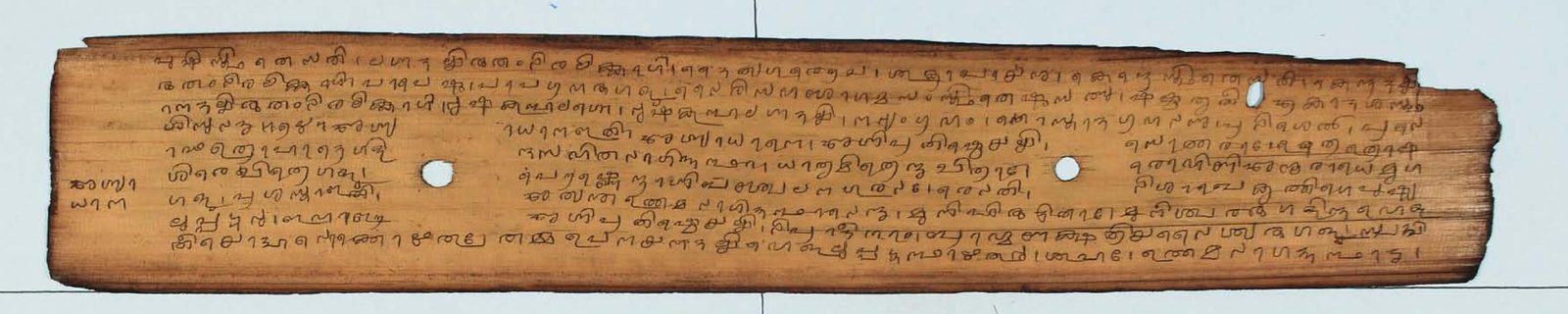
A day, in this reckoning, is not one thing measured one way. It is five things running at once, each on its own clock, each turning over at its own hour. The almanac's whole job is to report where those five counters stood when the sun came up, and when each of them will hand over to the next.
That is a peculiar idea if you have grown up with a calendar where a date is simply a date. So let me take the five apart, one at a time, and say what each one measures and what people have actually done with it. I will take them in the traditional order, which happens also to be roughly the order of how much any ordinary household needs them.
The tithi (तिथि) is called the lunar day, but what it measures is an angle: 12 degrees of the widening gap between sun and moon, which is why it stretches and squeezes and will not sit inside a date. The panchang settles that by naming each day after whichever tithi was running at sunrise, and the working behind that rule is laid out in how to read a panchang.
Tithi is the limb of observance. Ekādaśī (एकादशी), pūrṇimā (पूर्णिमा), amāvasyā (अमावस्या), the day a family sits for a shraddha, very nearly every fast and festival in the year: all of them are pinned to a tithi and not to a date. That is the entire reason they move about against the English calendar. They are not moving. You are watching them from a different kind of clock.
The vāra (वार) is the weekday, and it is the odd one out: the only limb of the five with nothing to do with the moon. It runs sunrise to sunrise, and it carries a planetary lord. Ravivara belongs to the sun, Somavara to the moon, and so on down to Shanivara and Saturn.
There is a piece of very old bookkeeping folded into that sequence, and it is worth doing once on your fingers. List the seven bodies in order of how slowly they appear to move, from Saturn down through Jupiter, Mars, the sun, Venus and Mercury to the moon. Now hand out the 24 hours of a day to them in that order, going round and round the list as often as you need. Whoever gets the first hour of the day is that day's lord.
Seven into 24 goes three times, with three hours left over. So a day uses up three whole rounds of the list and then three names of a fourth round, which leaves the next day to open on the name that stands three along from the one you started with. Begin a Saturday with Saturn and count three: Jupiter, Mars, the sun. Sunday. Begin Sunday with the sun and count three: Venus, Mercury, the moon. Monday. Keep going and the chain closes on itself, producing exactly the weekday order we all use, in Sanskrit and in Latin alike.
Those 24 shares are the horās (होरा), and the chain is why the hora tables at the back of a thick panchang are laid out the way they are. That table is simply the same list, continued down the page.
Vara's traditional use is the most everyday of the five: which day suits which errand, which day a particular kind of work goes well. It is also the anchor for the daily divisions people know by name. Rahu kaal is assigned by weekday and by nothing else at all.
The nakṣatra (नक्षत्र) is the moon's station among the fixed stars. Twenty-seven of them, each 13 degrees and 20 minutes wide, together closing the circle. A little over 13 degrees of travel a day, which is why the station changes about once a day; anyone who watches the sky for a season ends up with a working calendar without meaning to. On any given night the moon sits in one station; the next night it has moved to the next. Rohini tonight, Mrigashira tomorrow, and so on round the ring.
This is the oldest of the five as a named set. A list of 27 appears in the Taittirīya Saṁhitā of the Krishna Yajurveda, and a list of 28 in the Atharvaveda, both of them long before the twelve rāśis (राशि, the zodiac signs) enter Indian use at all. When people say the nakshatras are the older layer of Indian sky-reckoning, that is what they mean.
Its uses are the widest of any limb. A child's naming syllable was taken from the birth nakshatra. Marriage matching is largely nakshatra work. Most muhurta rules for beginning a thing name a nakshatra before they name anything else. And in the dasha system most Indian practitioners use, the moon's station at birth decides which planetary period you were born into and how much of it had already run, a calculation set out step by step in the arithmetic of vimshottari.
The yoga (योग) is the limb almost everybody skips. Take the sun's longitude and the moon's, add the two together, and cut the running total into 27 parts of 13 degrees and 20 minutes. That total climbs by about 14 degrees a day, so a yoga lasts a little under a day and hands over at an odd hour like everything else.
The 27 have names, Vishkambha at one end of the list and Vaidhriti at the other, and tradition read them as the temper of a day rather than its appointments: the weather, not the diary. That is a light way to hold a column, and I think it is the right weight for this one. On a sheet the yoga behaves exactly like the rest: a name, and the minute at which it gives way to the next.
Two of them, Vyatipata and Vaidhriti, are conventionally kept clear of ceremonies, and the reason is geometry rather than folklore. They mark the moments when sun and moon reach equal declination, matched heights above or below the celestial equator, the two of them balanced on either side of the same beam. Somebody noticed that symmetry a very long time ago and thought it worth marking. You may or may not think it matters. It is at least a real thing in the sky, which is more than can be said for some of what gets printed.
The karaṇa (करण) is half a tithi (6 degrees of that widening gap instead of 12), so two of them fit inside every tithi and 60 inside a lunar month. The list holds only 11 names, which looks like a mistake until you count it out. Seven of the 11 rotate steadily through the month and come round eight times each, and seven eights are 56. The other four sit fixed around the new moon and turn up once apiece; 56 and 4 make 60. The month comes out exactly, and the list is the odd length it is for a reason.
Karana is the finest sieve in the box. When someone choosing a muhurta has already settled on a morning and has to pick between two hours inside it, karana is often what decides. The one name that has travelled outside the trade is Vishti, also called Bhadra, kept clear of new undertakings. On a sheet you will usually find two karanas on the day's line, with the hour at which the first hands over to the second, and if you have never noticed them there it is because nothing in an ordinary week asks you to.
Put all five together and you have a complete address for a moment. Half past eleven on the morning of Monday the fifteenth of next month, on the Delhi sheet, is Shukla Pratipada, Mrigashira nakshatra, Ganda yoga, Kimstughna karana. Five coordinates, in the way a train is identified by its line, its number, its class and its platform. You need every one of them to find it on the right morning.
They do not carry equal weight in a house, though, and it is worth saying so plainly. Tithi and vara are the two most families actually live by, and between them they settle nearly every date anybody argues about. Nakshatra comes out for ceremonies and for matching. Yoga and karana belong largely to the specialist, and someone who never learns them has not missed very much.
What all five have in common is that they describe. They tell you where the moon stands, what the day is called, and which stretch of a longer count you happen to be standing in. They do not tell you what will happen inside the day, and a household that grasps the difference is a household that is much harder to frighten, which is close to the whole reason this place exists, as why we are building bhagol sets out.
So this fortnight, an invitation rather than an exercise. The next time somebody at home says a day is a good day, or not a good day, ask them which of the five they mean. Not to argue. You will get an answer, and it is always more interesting than you expect. Once you know which instrument is being read, you can go and read it yourself.
Twice a week
Essays like this one, Tuesdays and Saturdays. One email per essay, and the archive is never mailed out. Subscriptions open shortly; the RSS feed is live now.
Nothing else arrives, ever.