Entering the Hora Shastra by a side door
A guided first reading of a very large book: where to enter, what to write down, what to skim, and which passages later hands almost certainly added.
Two ways in. The gist assumes you have never met any of this before.
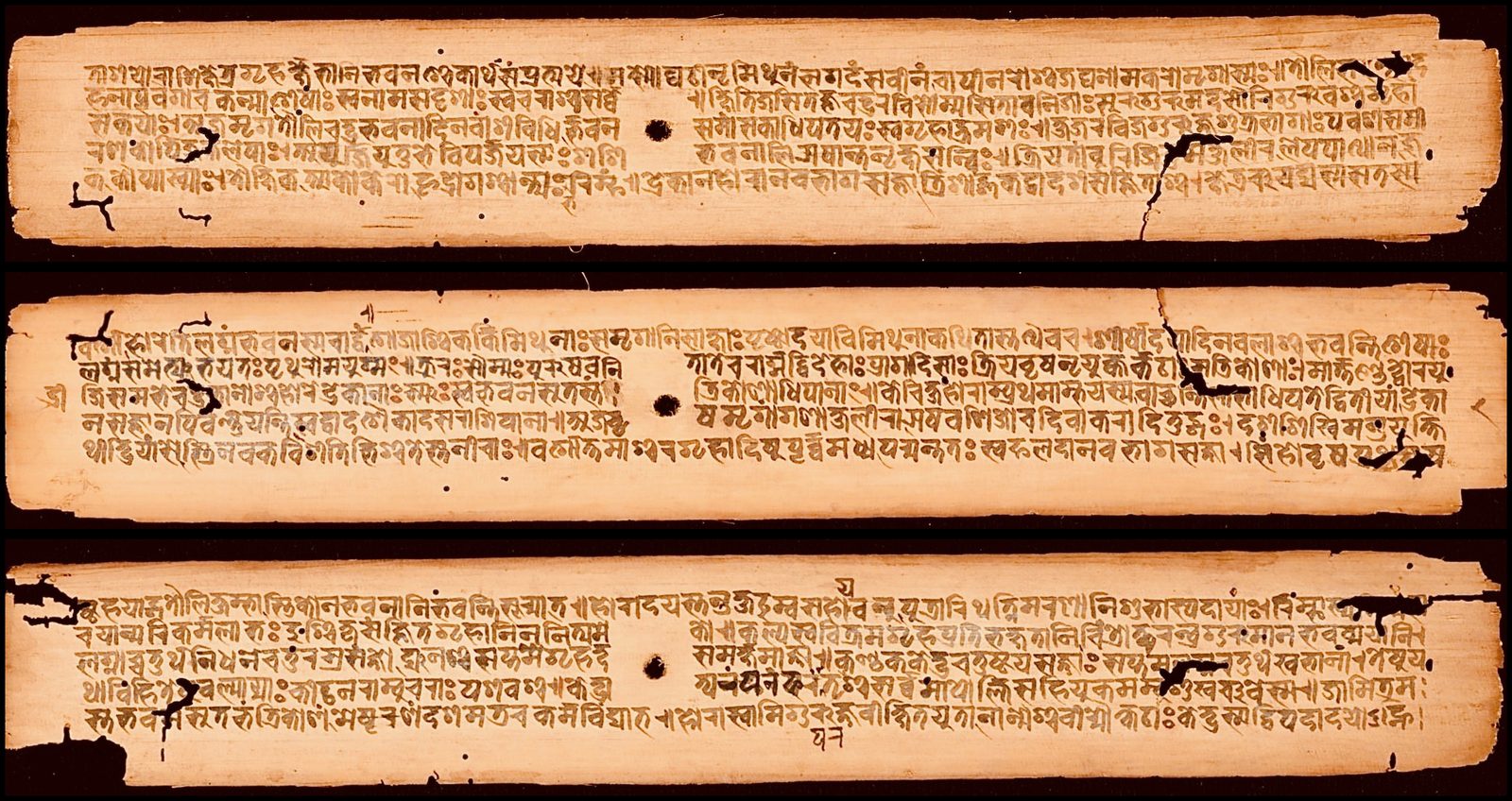
Nearly everyone who abandons the Bṛhat Pārāśara Horā Śāstra (बृहत्पाराशरहोराशास्त्र) abandons it near the beginning, which is a failure of the entrance and not of the reader. The book arrives heavier than anyone expects: two volumes and ninety-seven chapters in the English edition most people in India own, with more of them in the second volume than the first. The chapters are numbered but not grouped, so the contents page cannot tell you which runs belong together. The translator's own additions sit alongside the verses, marked but easy to slide past, and learning to see the join early will save you a good deal later, because the two are not the same author and do not always agree.
Chapter one is cosmology: the unfolding of the universe, the three guṇas (गुण), the powers of Vishnu. Chapter two assigns the incarnations of Vishnu to the nine grahas: Rama to the Sun, Krishna to the Moon, Parashurama to Venus, and so on. These are handsome chapters and they tell you a great deal about how the compiler wanted his subject understood. They teach you nothing you can use, and a reader who has come with a real question in mind will feel very quickly that the book is refusing to speak to them. Most readers who give up conclude from this that the Hora Shastra is impenetrable. The book is merely badly signposted, in the way of most works that were assembled rather than written.
Where to go in
A contents page that will not group its chapters will certainly not tell you which one is worth standing in front of first, and for a new reader that is the only question there is. There are two good side doors here.
The first is chapter three, on the characters and descriptions of the grahas. It is a portrait gallery (complexions, temperaments, elements, the metals and cloths and directions each graha is said to govern), and it is self-contained, concrete, and vivid enough to hold anyone's attention for an evening. It also contains, almost in passing, an instruction that repays noticing: that the positions of the grahas for a given moment are to be taken according to dṛggaṇita (दृग्गणित), computation matched to observation. The text does not treat the sky as something to be assumed. It sends you out to measure it, which is a more interesting attitude than the book is usually credited with, and it is the same attitude that produces apps disagreeing about where your Moon is.
The second door is the block on daśās (दशा), which in the common numbering opens at chapter forty-six. The dasha chapters are the working core of the tradition and the reason most people have picked up the book at all. They are also, taken in small doses, unusually readable: the structure is plain, the divisions are arithmetic, and you can see immediately what kind of statement is being made.
Take one of those doors. Read forward until you tire, then jump. Come back to chapter one much later, when you are curious about the book's idea of itself rather than its instructions. It reads entirely differently at that point, and rather well.
A notebook of words
Not a notebook of conclusions. A notebook of words.
A few dozen Sanskrit terms carry most of the book's argument: bhāva (भाव), rāśi (राशि), dṛṣṭi (दृष्टि), aṃśa (अंश), bala (बल), kāraka (कारक), and their relatives. Every translator handles them differently. One will keep the Sanskrit and gloss it once; another will render bhava as "house" throughout and leave you unable to tell when the text means a house and when it means the sign occupying it. Write down the Sanskrit word, the translator's English, the chapter where it first appears, and the sentence in which you finally understood it. That last column is the one that matters. You will come back to it more than you expect.
Do the same for chapter numbers, because they are not stable. Editions do not agree on the total, as the Parashara essay sets out, and even between editions that do agree, a chapter can sit one place higher or lower. If you note a passage as "chapter twenty-eight" and nothing else, you may not find it again in someone else's copy. Note the chapter's title as well as its number, always.
Keep one real chart open beside the text
This is the single change that turns the Hora Shastra from unreadable into absorbing, and it costs nothing.
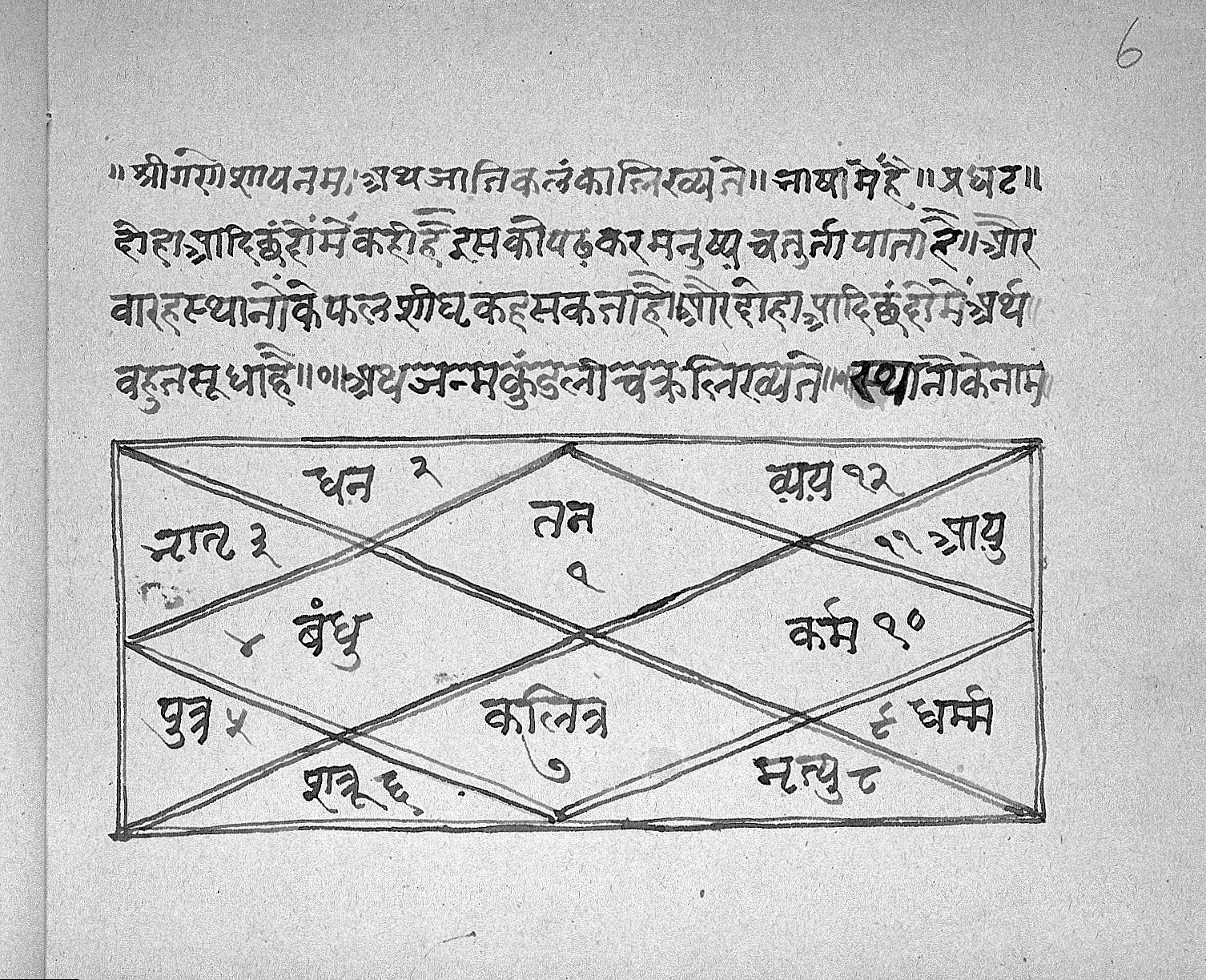
The book is a catalogue of conditions. If such a graha stands in such a bhava, then such results. Read as a stream of general statements, that form is exhausting within an hour; there is no holding that many conditionals in the mind at once, and no reason to try. Read with one chart in front of you, the same paragraph becomes a question you can actually answer: does this apply here, and if it does, does the description fit anything I know about this person?
Use a chart you know intimately. Your own, or a parent's, or the one belonging to the relative whose life you could narrate at length. Familiarity is the whole point: you need a case where you can check the text against something. And keep firmly in view what the chart is and is not, because what the computation actually asserts is narrower than what the book will say about it. That is no criticism of the book; the gap between a measurement and a reading is simply real, and holding the two apart is most of what careful practice consists of.
You will find, doing this, that some passages land with a small shock of recognition and many do not. Write down both. A reader who records only the hits is not reading; they are collecting.
Expect repetition, and later hands
Nine consecutive chapters of the book, one for each graha, work through the sub-periods within that graha's dasha and state their effects. They are catalogue chapters and they read like catalogues. Read one of them properly, skim the other eight, and return when you have a specific case in front of you. I doubt anyone has ever read those nine chapters straight through with pleasure, and I do not believe the compiler expected it.
The yoga chapters overlap each other in the same way. Combinations for wealth and combinations for penury sit beside chapters on royal yogas and on further yogas, and a rule will occasionally appear twice with different weightings. This is what a compiled text looks like from the inside. Two sources said nearly the same thing; the compiler kept both, because discarding one would have meant ruling against a teacher.
Then there is the question of later layers, and here I want to be careful about the difference between an argument and a proof.
Editors have long flagged three regions. The chapters near the end (on the consequences of curses carried from a previous birth, and on remedies for birth during an eclipse, at gaṇḍānta, on amāvāsyā, or of a daughter after three sons) belong to the genre of śānti (शान्ति), propitiatory ritual, rather than to chart analysis; the vocabulary changes, the reasoning changes, and the reader's role changes from analyst to patient. A second flagged region is the run of chapters on bhava padas, upapada, argala and kārakāṃśa, which speak the technical vocabulary of a different school entirely. A third is the material on bodily marks and moles, which reads like the sāmudrika (सामुद्रिक) literature of body-signs rather than like horoscopy.
None of that constitutes proof. The evidence is stylistic and doctrinal, the manuscripts are late, and reasonable editors have reached different conclusions. It is enough, though, to read those sections with a different ear: not with less respect, but with an awareness that you may have crossed a seam. The chapter is late. The observation inside it may still be worth having.
One more thing, which is really the whole method. The Hora Shastra is written in lists, and a list is a finding aid rather than a creed: compiled for someone who already has a case in front of him and needs reminding of what has been said about a configuration like this one. Treat the lists as an index into a tradition's accumulated experience, to be consulted, weighed and often set aside. Treat them as liturgy and you will end up reciting a text that was never written to be recited, and, worse, believing that a sentence about a configuration is a sentence about a person.
Pencil, not pen. Date the margin the first time you read a chapter. And when a rule contradicts a rule you met eleven chapters earlier, put a small mark beside both and leave them standing. Do not resolve the contradiction on a first reading. By the second, those marks will be the most interesting thing in the book.
Twice a week
Essays like this one, Tuesdays and Saturdays. One email per essay, and the archive is never mailed out. Subscriptions open shortly; the RSS feed is live now.
Nothing else arrives, ever.