Computed sky · Meghnad Chitnis
What a birth chart actually computes
A chart is ten numbers and a set of stated conventions. The pipeline from clock time to signs and houses, sorted into what is fixed, chosen, and read.
Two ways in. The gist assumes you have never met any of this before.
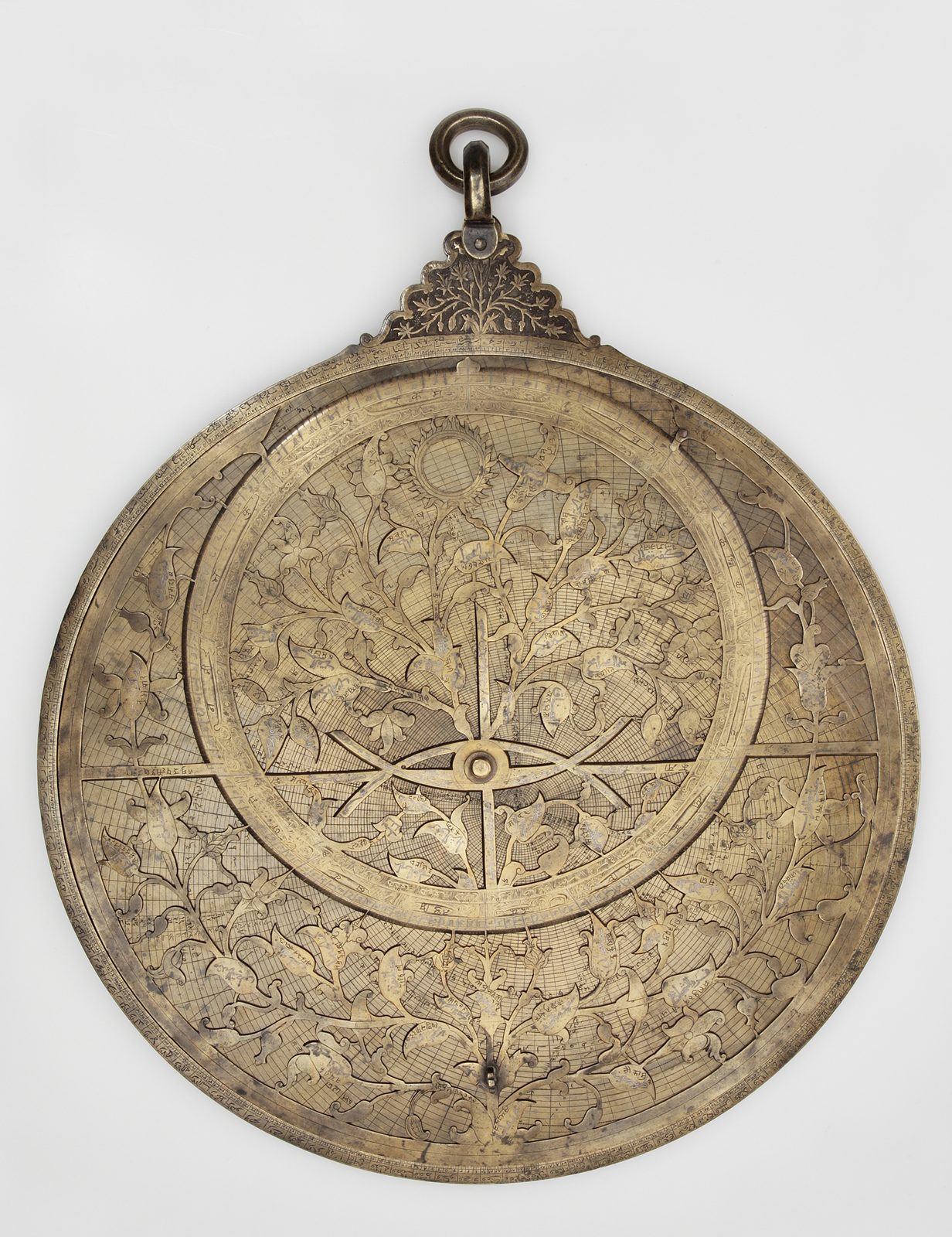
A birth chart is a shorter object than it looks. Given one instant of time and one point on the surface of the earth, it reports the ecliptic longitudes of nine grahas (ग्रह) and of the lagna (लग्न), the degree of the ecliptic rising in the east at that moment, each expressed in a stated convention. Ten numbers. Nine of them independent, since Ketu is always Rahu plus 180 degrees.
Everything else on the page is those ten numbers sorted into boxes. A sign is a number divided by 30. A nakṣatra (नक्षत्र) is the same number divided by 13° 20′. A quarter of a nakshatra is that divided again by four. Houses are the same numbers measured from the lagna instead of from zero. Nothing is added between the ten numbers and the diagram, and it is worth knowing that, because a diagram with twelve boxes and a dozen glyphs looks like it contains more than it does.
The pipeline that produces the ten numbers has about seven stages. None of them is mysterious. Some of them are choices.
It starts with the clock, which is the stage that ruins more charts than any other. A wall clock reports a legal time, and legal time is a political arrangement. India has run on a single offset of five and a half hours from Greenwich since 1 January 1906, reckoned from the meridian at 82° 30′ east, but the older city clocks did not surrender at once. Calcutta kept its own time, roughly 23 minutes ahead of the national standard, until 1948. Bombay kept its own, about 39 minutes behind, until 1955. A birth written down as "quarter past nine in the morning, Bombay, 1951" is not one instant; it is two instants 39 minutes apart, and the note in the register rarely says which clock the ward was reading. Wartime clock changes in the 1940s add another layer. Software resolves this from time-zone tables, and time-zone tables are historical scholarship rather than physics.
Once the instant is pinned to Universal Time it becomes a Julian Day number, a plain running count of days that removes calendars from the problem entirely. There is a further small correction between the uniform time astronomers use for planetary theory and time measured by the earth's actual rotation, which is not quite uniform; at present the two differ by a matter of tens of seconds.
The place contributes two numbers, latitude and longitude, and the longitude does more work than people expect. The earth turns 15 degrees an hour, so one degree of longitude is 4 minutes of clock. Mumbai sits near 72° 53′ east, which is 9° 37′ west of the meridian that defines Indian time (call it 38 and a half minutes). The sky over Mumbai is therefore that far behind the sky the wall clock implies, and the correction is not optional.
From date, time and longitude comes local sidereal time, which is the clock the sky actually keeps. The earth completes one turn against the stars in 23 hours 56 minutes 4 seconds, not 24 hours, and that shortfall of just under four minutes a day is the whole reason the constellations rise earlier each night.
In parallel, the ephemeris supplies positions, taken from the same JPL data the ayanamsha essay described. Two of the nine grahas are not bodies at all. Rahu and Ketu are the two points where the Moon's orbital plane cuts the plane of the ecliptic, and points can be computed but not photographed.
Then two coordinate changes. Planetary positions arrive in equatorial coordinates and a chart wants ecliptic ones, which is a rotation through the obliquity (the tilt between the two planes, currently a little over 23° 26′ and shrinking by about 47 arcseconds a century). And there is a question of where the observer stands: positions computed from the centre of the earth differ from positions seen at its surface, negligibly for the outer planets and by as much as a degree for the Moon, which is close enough for the width of the earth to matter.
Last comes the lagna. The ascendant is the point of the ecliptic crossing the eastern horizon, so it falls out of local sidereal time, the latitude of the place, and the obliquity: three numbers and a single trigonometric expression. It is the fastest-moving quantity in the chart by a wide margin. Every degree of the ecliptic rises once per rotation, so the ascendant averages 360 degrees in 1,436 minutes, which is about 15 arcminutes for every minute of clock time. Four minutes of doubt in a birth time is about a degree of ascendant. The 38 and a half minutes of Mumbai's longitude correction, if you skipped it, would be nine or ten degrees, a third of a sign. And "average" is doing real work in that sentence, because signs rise at wildly different speeds depending on latitude and season; near the poles the disparity becomes extreme.
That is the machine. Now the part I think matters more than any of it: knowing which of those steps could have gone otherwise.
Deterministic
Most of the pipeline involves no choice at all. The Julian Day. The sidereal time. The ephemeris positions, to a precision far beyond anything a chart uses. The coordinate rotations. The obliquity. The ascendant, once the inputs are fixed.
Two correctly written programs given the same instant and the same place must agree here, and if they do not, one is broken and the fault can be located. This is a real property and not a small one. It means a chart is falsifiable in the ordinary engineering sense: I can hand you my inputs, you can redo the work, and any disagreement between us has a cause with a name.
Convention
Everything below is a choice, defensible in more than one way, and it changes the printed chart.
The ayanāṁśa (अयनांश) is the largest of them: the offset that converts seasonal longitudes into star-fixed ones, differing between named systems by arcminutes, which is enough to move a Moon across a sign boundary. Whether Rahu is computed as the mean node or the true one (the two part company by as much as a degree and a half). Whether the Moon is given geocentrically or from the surface. Which house system draws the bhāvas (भाव): whole-sign, where the rising sign is the first house entire and the arithmetic is trivial; or a cusp system such as Sripati, or Placidus as the Krishnamurti school uses, where houses are unequal arcs and a graha can sit in one sign and a different house. Whether a dasha year runs 365.25 days or 360. Which time-zone table was consulted.
Not one of these has a single correct answer that arithmetic can supply. They are inherited positions, argued over for centuries by schools that read the same sky with different grammars, which Rukmini lays out. What software owes you is not the right choice. It is the choice it made, printed where you can see it, and held constant so that today's chart is tomorrow's chart.
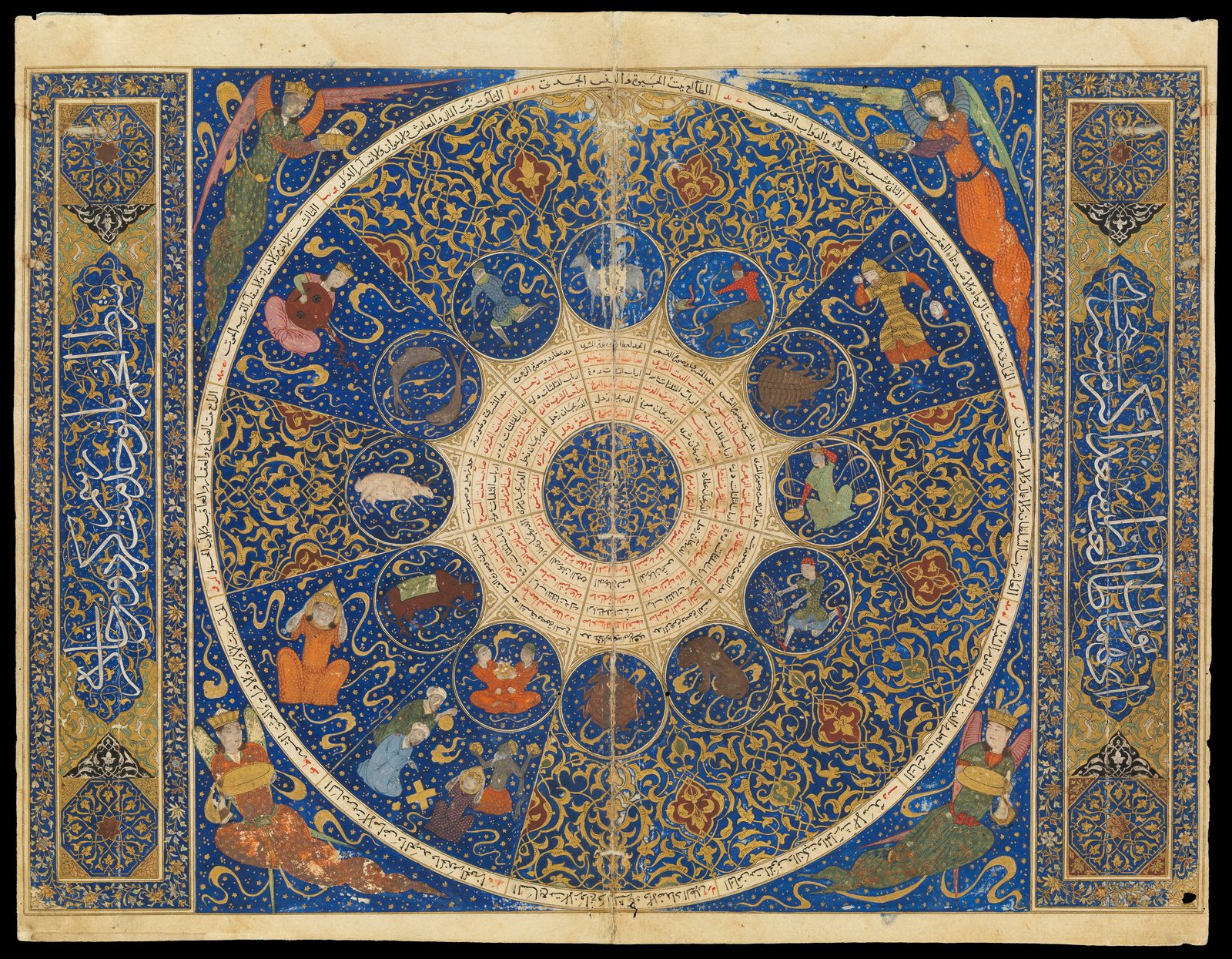
Interpretation
The boundary is sharper than it is usually drawn, and I can put a pencil on it.
"The Moon's sidereal longitude is 217° 42′" is deterministic, once the ayanamsha is named.
"The Moon stands in Vrishchika, in the second quarter of Anuradha, and (given a lagna and a house system) in one particular bhava" is deterministic too, and is nothing more than that same number sorted into boxes whose edges somebody chose.
"The Moon in Anuradha means…" is interpretation. It begins at the exact word "means", and it rests on none of the machinery above. It rests on texts, on training, on a practitioner's judgement, and on how willing that person is to say "I think" where thinking is what is happening.
I have no quarrel with anyone working in the third bin. It is where the tradition lives, and a careful reading is a serious piece of work. My quarrel is with a chart that lets the confidence of the first bin leak into the third. It shows you an arcsecond and lets you assume the sentence printed under it was computed too.
An honest chart is a two-part document, and it should look like one on the page: ten numbers that any competent program must reproduce, and beside them the list of decisions taken to get there. That is everything the arithmetic has to give, and the line under it can be drawn cleanly.
What follows on the next page is a person talking. Weigh it the way you weigh a person.
Twice a week
Essays like this one, Tuesdays and Saturdays. One email per essay, and the archive is never mailed out. Subscriptions open shortly; the RSS feed is live now.
Nothing else arrives, ever.