Why two panchangs disagree
Two sheets, two festival dates, one family argument. The four honest reasons panchangs differ, and why the disagreement is bookkeeping, not blasphemy.
Two ways in. The gist assumes you have never met any of this before.
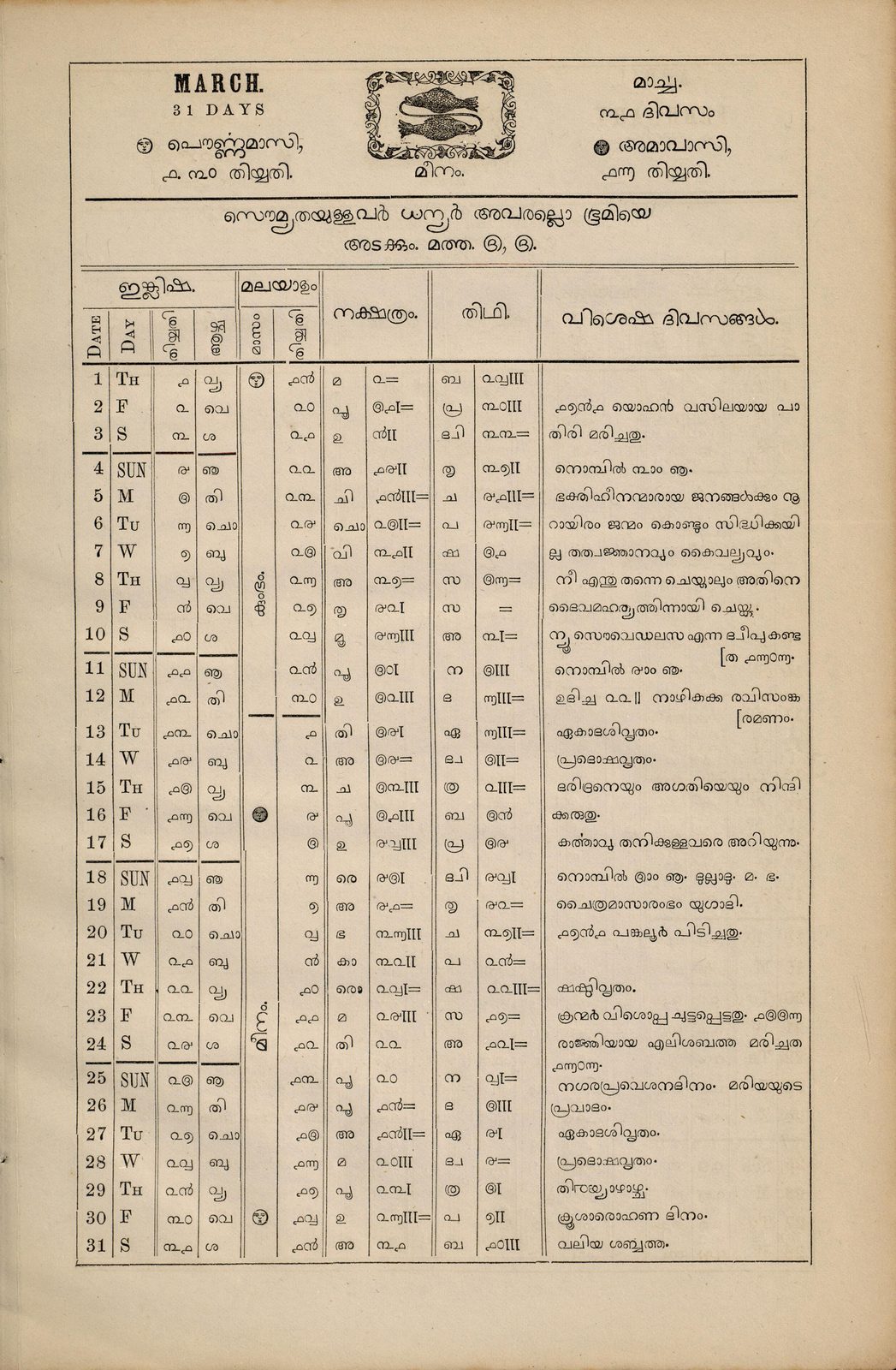
Put two panchangs on the table, side by side. Printed ones, if you can (the folded sheet from the temple, the fat annual somebody's father still orders every year), rather than two screenshots, because what I want you to look at is on the cover.
Now read the front of each one out loud. Somewhere on it, usually in type nobody bothers with, each sheet names a city. It will very often name a method as well. Those one or two lines are the sheet telling you, before you have opened it, most of what it is going to disagree with the other one about.
There are four honest reasons two panchangs give different dates for the same festival. Every one of them is bookkeeping, and none of them means anybody is wrong.
The city on the cover
A panchang is not computed for India. It is computed for a place.
The arrangement is an old one. The classical siddhāntas reckoned longitude from a meridian running through Ujjain, ancient Avanti, and every serious astronomical text of the period (the Surya Siddhanta, the Aryabhatiya, Brahmagupta's work) carried instructions for converting to wherever the reader actually stood. Ujjain was the reference. Everything else was a correction from it.
Modern sheets do the same thing with a modern city, which is the line you have just read off the cover. It matters because a Hindu day begins at sunrise, and sunrise is local. The sun reaches Guwahati about an hour and a quarter before it reaches Ahmedabad, and both cities keep Indian Standard Time. So the same instant of the same morning can fall before sunrise in one place and after sunrise in the other, and if a lunar day happened to change over inside that hour, the two cities are now on different dates for perfectly sound reasons.
There is a smaller version of the same problem inside a single city, because publishers differ by a few minutes on what counts as sunrise: the upper edge of the sun or the middle of the disc, with or without a correction for the way the atmosphere lifts it into view early. Usually those minutes change nothing. Once in a long while a boundary falls inside them, and a whole festival moves.
Tithis that will not sit inside a day
This is the big one, and it is worth going slowly.
A tithi (तिथि) has to be assigned to a calendar day somehow, and here is the thing most people never learn: there is more than one rule, and the rule depends on the observance.
Many things go by the tithi running at sunrise, the udaya tithi. Some go by midday. Some go by the stretch just after sunset. Some go by midnight. These are not competing systems; they are different observances with different logic, and they have been that way for a very long time. A festival that commemorates a midday event asks about midday. One that turns on lamps after dark asks about after dark.
Watch it work on a real case, the one coming up in September.
Ganesh Chaturthi this year falls on Monday the 14th. But on the Delhi sheet, chaturthi tithi does not begin until 07:06 that morning, after sunrise at 06:05. At sunrise on the 14th, the tithi still running is tritiya. And chaturthi is still running at sunrise the next morning, since it does not end until 07:44 on the 15th. If the sunrise rule were the only rule, the answer would plainly be the 15th.
It is not the 15th, because Ganesh Chaturthi goes by madhyahna, the middle of the day: the daylight span cut into five parts, with the third part being the relevant one. On the 14th that window runs from 11:02 to 13:31, and chaturthi is running throughout. On the 15th, chaturthi will have been over since a quarter to eight in the morning. So the 14th it is, and every panchang worth the paper agrees, and anyone applying the sunrise rule from memory gets a different answer and is not being careless. Only using the wrong rule for that particular festival.
Now take a case where the almanacs themselves split. In 2024, amavasya (the no-moon tithi that carries Diwali) began in the middle of the afternoon on 31 October and ran until early evening on 1 November. Two evenings, one tithi. The rule that matters for the Lakshmi puja is pradosha, the stretch after sunset, and on the 31st the tithi covered that stretch completely while on the 1st it barely reached into it. Most authorities settled on 31 October, and a gathering of astrologers and Sanskrit scholars met in Jaipur to say so publicly. Plenty of households kept the 1st anyway, because that was what their own sheet said and their mother had always used that sheet.
The same structure produces the two ekadashi dates you may have noticed on the same calendar. Where a sliver of the tenth tithi survives into the last stretch of night before sunrise, one tradition treats the eleventh as mixed and moves the fast to the following day, while another goes by what is running at sunrise and keeps it where it is. Two rules, honestly held, applied to the same sky.
Two ways to name a month
The third reason causes more argument than it deserves, because it is mostly about labels.
Some regions end the lunar month at the new moon and some end it at the full moon. The amānta reckoning, used across the south, the west and much of the east, closes each month at amāvasyā (अमावस्या). The pūrṇimānta reckoning, used across most of the north, closes it at pūrṇimā (पूर्णिमा), the full moon.
The two agree on the name during the bright fortnight and differ by exactly one month name during the dark one. Maha Shivaratri falls in Magha for an amanta household and in Phalguna for a purnimanta household, and it is the same night, the same tithi, the same moon. The two households keep the same night at the same hour and write a different word at the top of the page.
When two relatives are arguing about whether something falls in Shravana or Bhadrapada, it is worth asking first whether they disagree about the day at all. Often they do not.
Old tables and a newer sky
The fourth reason is the one that sounds most alarming and is in fact the most ordinary.
Every panchang has to know where the sun and moon actually are. There are two broad ways of finding out. The older way works from tables handed down in memorised verse form, ultimately derived from the Surya Siddhanta: the vākya tradition, still very much alive in Tamil Nadu. The newer way computes positions to match what is observed, which is what dṛk gaṇita (दृक् गणित), reckoning by sight, means.
Both use the same rules for deciding festivals. They differ in the numbers fed into those rules. Over centuries the inherited tables drifted from the sky by enough to matter at boundaries, and in the 1870s an astronomer at the Madras Observatory named Chinthamani Ragoonatha Chary, himself from a family of almanac-makers, began publishing corrected panchangas in Tamil and Telugu computed the newer way. He died in 1880, and the argument he pressed has never entirely finished. In parts of Tamil Nadu you can still buy both kinds side by side.
A related and much-misunderstood choice sits nearby. Sidereal calculation needs an agreed offset between the moving equinox and the fixed stars, and different schools use slightly different values. That choice moves nakshatra boundaries and moves the moment the sun enters a sign. It does not move a tithi by so much as a second, because a tithi is the gap between two bodies and any shared offset cancels out of a gap. If you want that properly explained, why your moon sign changes between apps is the place.
The Republic did try to tidy some of this. In November 1952 the Council of Scientific and Industrial Research appointed a Calendar Reform Committee under the astrophysicist Meghnad Saha; it examined some 30 calendars in use across the country, reported in 1955, and its national calendar, based on the Saka era, was adopted alongside the Gregorian on 22 March 1957 for official purposes. What it did not do (deliberately) was tell anybody's family which day to keep a festival. The civil calendar was standardised. The almanacs were left alone.
Which is roughly where I want to land.
Two panchangs disagreeing is not a crack in anything. It is what happens when a tradition old enough and wide enough to cover a subcontinent keeps honest records in several places at once, each anchored to a real horizon and a real sunrise. Several almanacs at once is the normal historical condition of this material, in the same way that several schools of interpretation have run side by side for centuries; the many schools of jyotisha takes that up in its own right. A family that picks one sheet and stays with it is doing exactly what families have always done.
This week, go and find the panchang your household actually uses, and do to it what I asked you to do at the start. Read the cover, out loud if there is anybody about. It will name a city, and very often a method.
Then put the second sheet beside it (the temple's, or whichever one has been contradicting yours) and read that cover too. Almost everything that separates the two of them is printed on the front of both.
Twice a week
Essays like this one, Tuesdays and Saturdays. One email per essay, and the archive is never mailed out. Subscriptions open shortly; the RSS feed is live now.
Nothing else arrives, ever.