Your chart, their hopes
What a parent is actually holding when they hold your birth chart, why the insistence rises when your life moves, and how to hear the sentence under it.
Two ways in. The gist assumes you have never met any of this before.
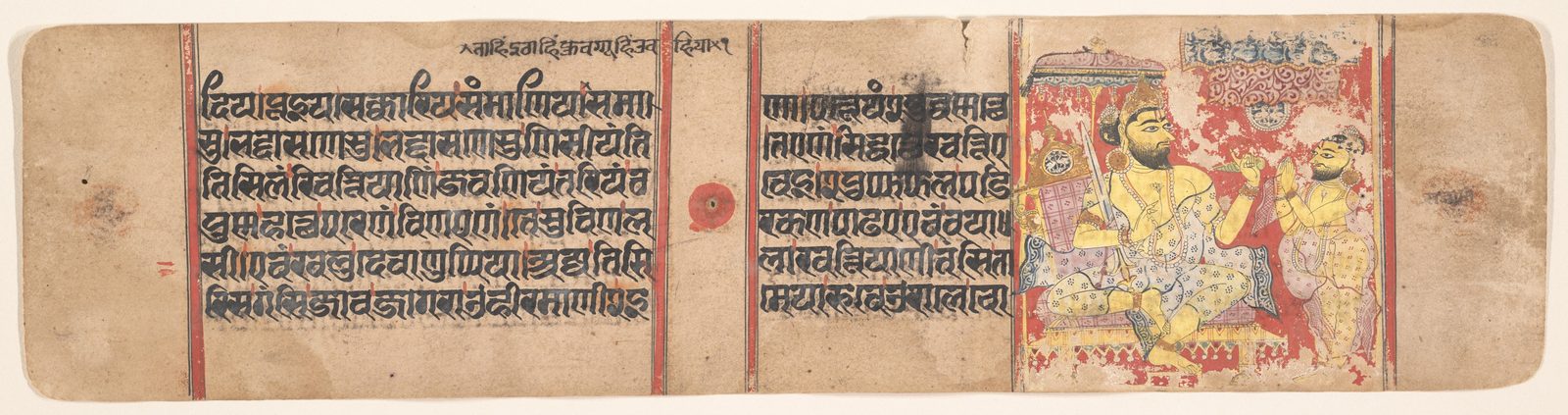
The person who consults your birth chart most often is not you. In a great many houses it is your mother, before six in the morning, on a day you will never hear about. That chart is the kundli (kuṇḍalī, कुंडली), drawn up for you as a baby, and I have written about the object itself, and about asking to see your own, in the kundli in the locker. This piece is about her.
She is awake at ten past five. Nothing woke her.
The steel almirah has a key that must be lifted a little before it turns. Behind the folded saris, under the cloth bag with the property papers, the document is where it always is. She takes it out without switching on the light. She does not open it. If she did open it she could not read the boxes and the figures, and neither can anyone else in the house. What she needs is written on the outside anyway, in ballpoint, in the corner: a date, a time, the name of a town.
She copies the three of them onto the back of an envelope. Then she puts the roll back exactly where it was, because it goes back exactly where it was.
At half past seven she makes the call. It lasts 11 minutes and nine of them are about his knee, the school his granddaughter has got into, and the rain. Then she asks, and she is careful about how. She does not say that she is worried. She says she was just thinking, and is next month all right, or should it be after. He asks for the details, which she reads off the envelope although she knows them by heart, and there is a pause on the line while he looks something up.
She writes on the envelope: after 14, before 27, morning better. The envelope goes into the drawer with the rubber bands and the spare keys. Then she makes tea, and by the time the rest of the house is up she looks exactly like somebody who has been making tea.
No particular mother, and no particular morning. This is roughly the shape a great many of them take, and the person the morning was about was not present at any point in it.
The man on the phone is the pandit (paṇḍit, पंडित), the priest and astrologer this household has used for two generations. He is not my subject. What she is holding when she holds your chart is.
Fear with nothing to do
Here is the difficulty a parent of a grown child has, and almost nobody says it out loud. The fear does not go away, and the work does.
When you were four there was always something to be done about it. A sweater. A doctor by evening. A hand held across a road. By the time you are 27, there is almost nothing left for a parent to actually do. Feed you. Offer money you say you do not need. Give advice you receive with visible patience. The feeling is the same size it always was. The outlet is a fraction of what it was.
The chart gives the feeling something to do. Look again at that morning and count the actions: open, find, copy, dial, wait, ask, write, replace. Eight things done before breakfast by a person who was otherwise going to lie in the dark until the milk came. Some of the steadying comes from the answer. A good deal of it comes from the doing, which is why the answer being vague so rarely disappoints anybody.
I want to be careful here. I am not saying the chart is only a way of keeping the hands busy, or that a parent who consults is frightened rather than sincere. Most are both, in the ordinary way that people are two things at once. What happens when those calls stop being occasional, and what the habit costs the person making them, Raman has set out in astrology and the anxious mind. I am staying out of the consulting room.
Why there is more of it than there used to be
Leave her at the stove a moment. Something has changed in one generation that explains the volume, and it can be counted.
Your grandmother's fear was divided. In 1960 the average woman in India had close to six children, by United Nations estimates; today the figure is about two. Whatever she felt in the bad weeks was spread across a houseful of futures, and the noise of that house limited how much could land on any one head. Your mother has one child, or two. The same quantity of feeling now has one or two places to go, and one of them is you.
There is a second thing, less obvious. A study of middle-aged American parents, published in 2012, looked at how the problems and successes of grown children showed up in a parent's own well-being. Having one child with problems went with the parent doing worse. Having one child doing well did not, on its own, lift them. That is one country and one survey, and I would not stretch it. But it matches what anyone who has watched a family knows. A parent's weather is set by whichever child is having the hardest year. Your good news does not cancel your brother's bad news, and your ordinary Tuesday is less ordinary in the next room than it is in yours.
Now notice when the calls to the pandit cluster. Not evenly across the year. They cluster around results, an offer from another city, a visa appointment, a proposal, a scan, the day a lease is signed. The insistence rises exactly when your life is most in motion, and the reason is not that your parents have grown more religious as you have grown older. It is that they have grown less informed.
When you lived at home they could read your face at dinner. They knew who called you and how you slept. Now they have a phone call on Sunday in which you say things are fine, because things are fine, and because the long version would take an hour and worry them anyway. The chart is the one thing left in the house that still claims to report on you. It is available at half past seven, it does not need you to be free, and it never says it is busy this week.
Read that way, the insistence is not an attack on your independence. It arrives because of your independence, and it is loudest in the months you are furthest off.
The sentence under the sentence
So the call is made, and a few days later the result of it reaches you, usually in one line. Pandit ji said not to sign anything this month.
There are two standard replies and both are bad. The first is to obey, which settles nothing and teaches everyone that this is how requests are now made. The second is to argue the astrology. Suppose you are well read and you win. You have shown that no text supports the instruction, the fear is exactly where it was, and a person you love is now defending a book she has never opened against a child who is enjoying himself. Winning that argument costs more than losing it.
Under the sentence there is usually a plainer sentence, which was not said because it could not be. Something like: I am frightened about this and I do not know how to tell you so without being told I am being silly. The pandit is what makes the fear sayable. His name takes the request out of the parent's own mouth, so that if you refuse, they have not personally been refused, and if it all goes well, nobody was wrong about anything. A parent who no longer feels entitled to give an adult child orders sometimes needs somebody else's name to do it for her.
Not every such sentence has fear underneath it. Some are pure habit, because this is what the household has done for forty years and nobody has thought about it since. And some, in some families, are leverage: an authority that cannot be argued with, used by somebody who wants what they want. Reading the sentence generously is a first guess, not a rule, and the way you test a guess is by asking.
The move that works is to answer the worry rather than the doctrine. Something plain: you are worried about this new place. Say it as an observation, not as a diagnosis. Do not say that she only believes it because she is scared, which is a way of telling a person that her own words do not count, and is also just another way of winning. Then have the conversation that was wanted in the first place: what exactly is worrying her, what you have already arranged, when you will call.
Then give away information, because information is the actual shortage. The name of your landlord, the route you take home at night, the date the result is due. A parent who knows those three things has less use for a phone call at half past seven. This is not surrender. Neither is moving a signing date from the 12th to the 16th in a week when four days is all it costs you.
One more thing, and it is the half people miss. Parents do not only carry the frightening lines. Nearly every family keeps one hopeful sentence from that document and repeats it for thirty years: that this one would study far from home, that this one would look after everybody, that the difficult stretch was early and is over. The line gets quoted at weddings and to neighbours and to you, until you are tired of it.
Ask which line she has repeated the most. She will know it without looking. It is a fairly exact record of what she has been hoping for you, in the only language the house had for saying so.
Twice a week
Essays like this one, Tuesdays and Saturdays. One email per essay, and the archive is never mailed out. Subscriptions open shortly; the RSS feed is live now.
Nothing else arrives, ever.