The many schools of jyotisha
Parashari, Jaimini, Tajika, nadi, and the regional computation traditions: one sky read through several different grammars, and why that is a strength.
Two ways in. The gist assumes you have never met any of this before.
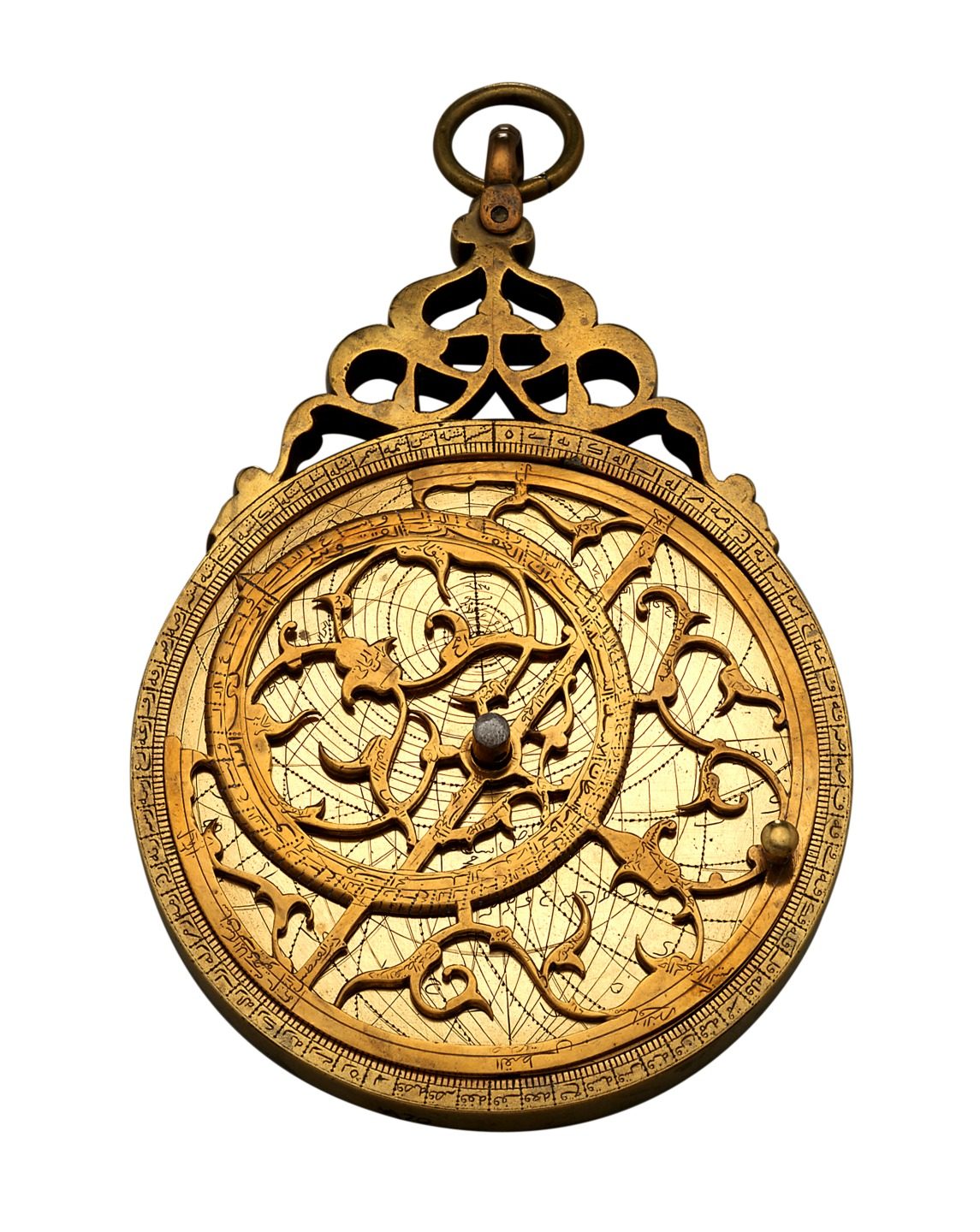
A school in jyotiṣa (ज्योतिष) is not a building and only sometimes a lineage with a register. It is a set of default moves: which objects you look at first, what counts as a relationship between two of them, which measurements you trust, and what you consider yourself entitled to say once you have finished looking. Two practitioners can hold the same chart, agree entirely about the positions, and produce different readings without either of them being careless. They are speaking different grammars over the same sky.
The mainstream is Parashari, named for the Hora Shastra but never confined to it. Aspects cast by grahas along fixed rules, houses read through the fortunes of their lords, the Vimshottari daśā (दशा), the divisional charts, ashtakavarga: this is what most people in India mean when they say Vedic astrology without qualifying it, and it is the grammar in which the overwhelming majority of modern manuals and software are written. It is also broader than any single text. Many later handbooks belong to it, and the astrological work that carries the deepest commentarial tradition is not the Hora Shastra at all but Varāhamihira's Bṛhajjātaka of the sixth century, which has a shelf of old Sanskrit glosses on it, where the Hora Shastra has none older than the last century.
Then there is Jaimini, and it is genuinely a different instrument.
The text is a set of sūtras attributed to Jaimini, the name shared with the author of the Mīmāṃsā aphorisms, and it is compressed to the point of unreadability without help. Its machinery is its own. The significators are not fixed by nature but assigned by measurement: whichever graha stands at the highest degree becomes the ātmakāraka (आत्मकारक), the one that carries the self, and the rest take their offices by descending degree, so that in your chart Saturn may hold a post that Venus holds in mine. Aspects run between signs rather than out from planets. The dasha families are counted in signs, not in the fixed year-allotments Parashari uses. Very little of this can be translated into Parashari terms without damage, which is why practitioners who mix the two casually tend to produce mush.
Its date is honestly unsettled. Tradition places it in remote antiquity; scholarly estimates put the surviving text considerably later, and I have not seen an argument that closes the matter. What can be said plainly is that the sutras cannot be used without a commentary, that the commentaries disagree with one another, and that even the sutra text circulates in variant readings, so that two Jaimini practitioners may be working from versions that differ in the words themselves. The style is the cause. A sutra here can be a handful of syllables, the case endings carrying what a sentence elsewhere would spell out; where one commentator reads a compound as a single word, another reads it as two, and two lineages come to teach different rules from the same line, each of them reading in good faith. A school that has to be reconstructed from its commentaries in every generation has been under continuous reinterpretation rather than sitting still.
Borrowed grammar
Tajika is the branch that reads the year rather than the life. Its central instrument is the varṣaphala (वर्षफल), a chart cast for the moment the Sun returns each year to the exact position it held at birth, and the whole apparatus of judgement built on that return.
It is also the branch that never pretended to be indigenous. The name itself arrives through Persian tāzīg, meaning Arab, which descends in turn from the Arabic tribal name Ṭayyiʾ. Its technical vocabulary is Arabic in Sanskrit dress: ithaśāla, the yoga of application between two grahas, is ittiṣāl, joining; the sensitive points it works with are sahams, the lots of the Greek and Arabic tradition. One of the earliest substantial Sanskrit works of the school is Samarasiṃha's, from the thirteenth century, and Martin Gansten, who has read that transmission more closely than anyone, argues that a principal source behind it is the ninth-century Arabic introduction to astrology of Sahl ibn Bishr, arriving in Sanskrit possibly through four languages, with the Indian epitomists sometimes misunderstanding a doctrine and innovating out of the misunderstanding. Three centuries later Nīlakaṇṭha, an astrologer at Akbar's court, produced the Tājika-Nīlakaṇṭhī in 1587, which remains the school's standard handbook. In 1649 Balabhadra, working for a Mughal governor of Bengal, finished the Hāyanaratna, an encyclopedia of the same material.
That same year, 1649, at Edakkad near Thalassery in north Kerala, a Namboothiri of the Panakkattu house completed Praśna Mārga, whose subject is the moment a question is asked. Two books, one year, two grammars, almost certainly no knowledge of each other.
The nadi traditions are two different things sharing a name, and it is worth keeping them apart. One is a body of Sanskrit texts: the Deva Keralam, also called the Chandra Kāla Nāḍī (नाडी), ascribed to an Achyuta who left no place, no lineage and no date, running to thousands of verses and drawing on a whole family of further nadis named for the grahas. These are books, and they can be read as books. The other is the palm-leaf practice of the Tamil country, the olai chuvadi, where a seeker is said to be matched to a specific leaf inscribed long ago. The second makes a different kind of claim from anything else described here. Every other school offers a rule about a configuration. A leaf offers a record about a person. Whatever one concludes about it, the two are not the same sort of statement and should not be argued about as though they were.
And beneath all of these sit the computation traditions, which are arithmetic rather than doctrine: in the Tamil country the vākya panchangs work from inherited tables where the dṛggaṇita (दृग्गणित) ones compute the sky as measured. Temples follow one or the other, festivals land on different days, and the argument is about arithmetic rather than about meaning. It runs alongside the older and quieter disagreement about where the sidereal zodiac begins, and the two together are most of the reason two panchangs on the same shelf can print different dates.
What the disagreement is for
If jyotisha were physics, this plurality would have resolved. Competing descriptions of a force do not coexist for many centuries; one of them turns out to predict better and the others are quietly dropped. That has not happened here. Jaimini has not defeated Parashari. Tajika has not been absorbed or expelled. The vakya panchangs have not conceded to the drigganita ones, and both are still printed.
The conclusion I draw is not that the tradition is confused. It is that a system of this kind is a lens rather than a measurement. Each school fixes what to attend to and what to leave out, and the choice of what to leave out is the school. The sky does not change between them. The reading does, because a reading was always an interpretation performed with a chosen set of tools, and choosing different tools gives you a different account of the same instant. This is exactly why a reading is a decision tool and not a prophecy. A prophecy that came in four incompatible dialects would be worthless. A structure for thinking that comes in several is simply a field with more than one method in it, which is the ordinary condition of every serious discipline.
So the plurality is where a field of this kind ends up, and nothing to apologise for. The embarrassment would be a single school announcing that it had closed the question, and then having to explain why the other three survived it. What the schools give a careful reader is a way to be specific: not "astrology says", but "in this grammar, with these tools, this is what stands out."
Which leaves a plain use for all this. When two astrologers tell you incompatible things, the question worth putting is which grammar each of them is working in. And then, once you know that: what does that grammar say it cannot see?
Twice a week
Essays like this one, Tuesdays and Saturdays. One email per essay, and the archive is never mailed out. Subscriptions open shortly; the RSS feed is live now.
Nothing else arrives, ever.