Nakshatra files · Yamini Sardesai
Rohini, and the moon who would not keep the rota
An orange point comes up in the east a few hours before the sun. That is Aldebaran, and this is the story of the moon who would not leave her.
Two ways in. The gist assumes you have never met any of this before.
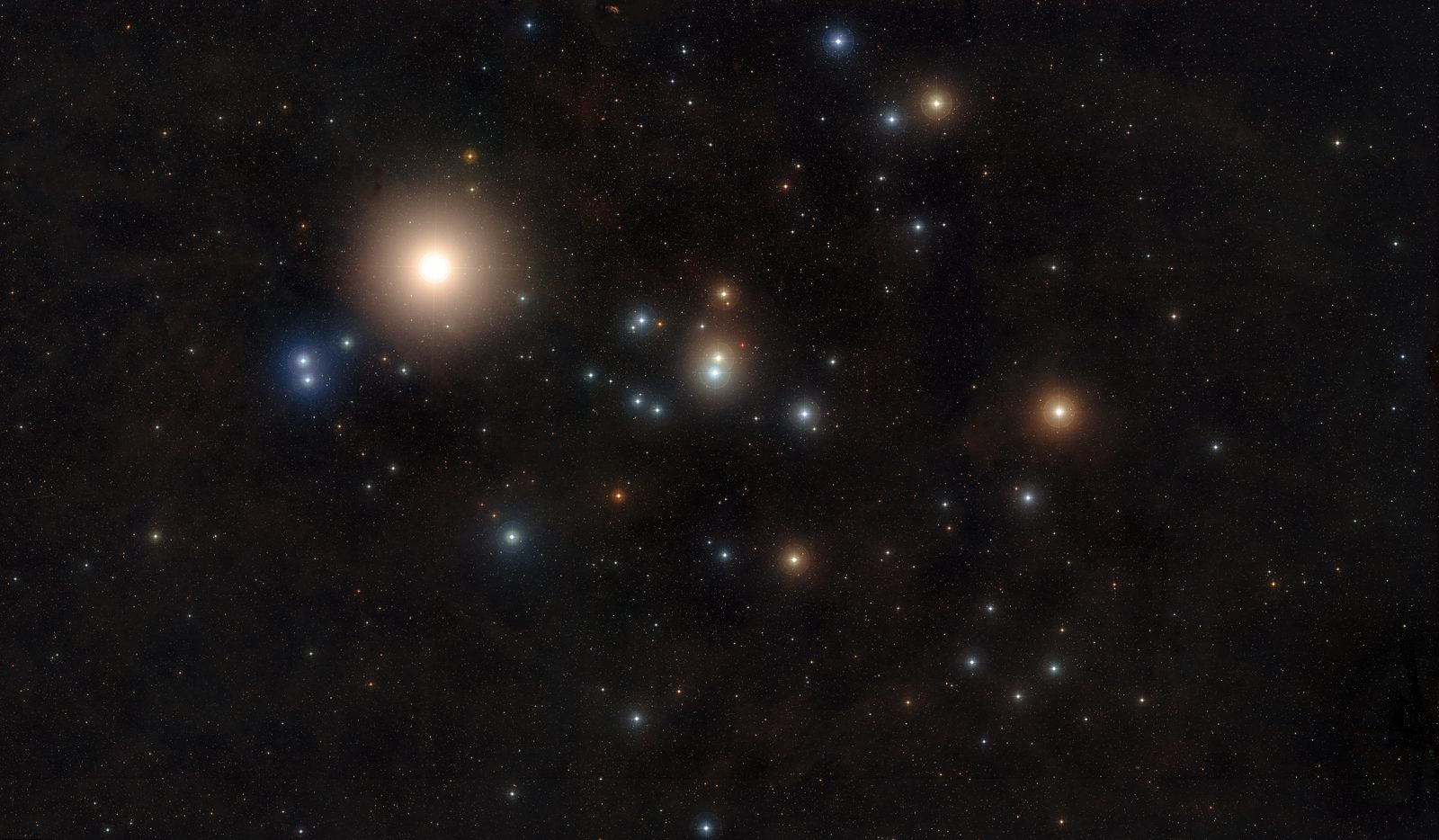
Rohini is the fourth of the 27, and the story people tell about her is a story about favouritism. The moon married 27 sisters on a single day: one wife for each night of his circuit, and a rota he was expected to keep. Their father Daksha had made the arrangement and Daksha was a careful man about arrangements. Twenty-seven daughters, twenty-seven nights, no favourites.
The moon kept to it for a while. Then he came to the fourth of them, Rohini, and did not want to leave.
The other 26 noticed, as people do. They went to their father, who called his son-in-law in and said the obvious thing about fairness. The moon listened and went back to Rohini. He was called in again, and again he listened, and again he went back. In the end Daksha lost his temper and cursed him with a wasting sickness, and the moon began to shrink, night after night, until there was almost nothing of him left in the sky.
What happens next depends on who is telling it, but in the version I like best, Shiva intervenes and cannot cancel the curse, only halve it. So the moon wastes for a fortnight and recovers for a fortnight, forever. He still goes round all 27. He still slows down at the fourth one.
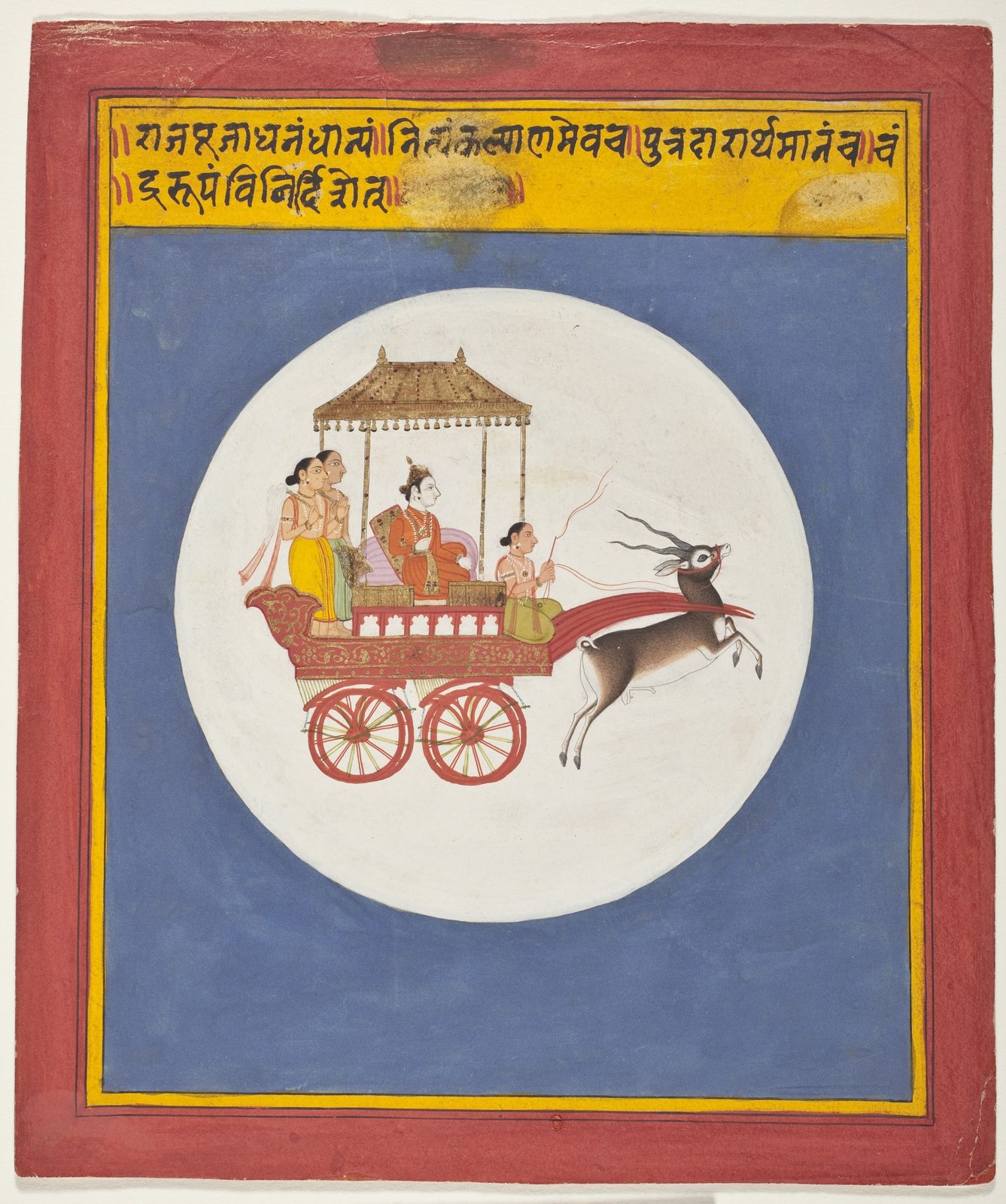
Notice what kind of story it is. It is an explanation, offered by people who were outside every night, for two things they had observed and could not otherwise account for: that the moon shrinks and returns on a fixed schedule, and that it comes back to the same star every 27 and a bit days. They stitched those two observations to a household quarrel about favouritism, which is the material every family has to hand. You can walk outside and check both halves of it this month.
Tomorrow morning, at about 1:50, an orange point will come up in the east. That is not a kind hour and I am not going to pretend otherwise. Aldebaran has only lately come back to us: it spent the early summer behind the sun, and it is still climbing out, rising a little under four hours ahead of it and never getting much above 40 degrees before the light takes it around five. So set the alarm for three. By four she will stand the better part of three fists above the horizon: your own fist, at the end of a straight arm, which is the only instrument this series has ever needed.
That is Aldebaran, the brightest star in the Bull and the 14th brightest in the whole sky. Its magnitude wanders a little, between about 0.75 and 0.95. It is an orange giant with a surface around 4,000 kelvin, cool as stars go, which is exactly why the colour. It is roughly 44 times the diameter of the sun and puts out something over 400 times the sun's light, and it lies about 65 light years away. Of all the nakshatra stars this is normally the easiest to be certain about. Just now there is one thing to check. Mars is crossing the Bull this month, about 12 degrees below and to the left of her and making for the horns, and it is orange too. It is clearly the fainter of the two, it is the lower of the two, and it is the one that will be somewhere else by September.
The colour is worth being honest about. Some of the red you will see belongs to the star and some of it belongs to your own air, because everything near the horizon reddens, which is why the sun goes orange when it sets. So the red one is at her reddest in the first hour after she rises, when you are looking at her through the most atmosphere. That is a slightly disappointing sentence for a romantic and a very useful one for an observer. Watch her across two hours and she will cool from ember to a steadier copper as she climbs.
Behind her, once she is properly up, a lopsided V of fainter stars should come clear: the Hyades, the face of the Bull, with the orange one at the end of one arm of it. Should, and this week probably will not, for a reason I will get to. Hold on to that V anyway. I will come back to it.
The six I wrote about earlier this month will be up before her, a little to the north, already clear of the rooftops by the time she arrives. Krittika first, then Rohini. That is also the order they come in on the list, and on a July morning you can stand there and watch the list happen.
The name is not elaborate: rohiṇī (रोहिणी) is simply the red one, the feminine of rohita, red (a word the Atharvaveda spends on the red of dawn, on a red deer, on a red fish). Somebody looked up, saw the colour, and said so. The symbol the handbooks give her is a śakaṭa (शकट), a cart: that same V read not as a face but as a bullock cart seen from behind, shafts running forward. That reading belongs to a later season than this one: the rains done, the roads carrying what the year produced. In the last week of July the carts are still under cover and the fields are still drinking. The symbol is patient. The presiding figure is Prajapati, the lord of creatures, whose whole work is making more; the tradition puts Krishna's birth here too, with the moon standing in Rohini. Growth and appetite, then, and the wanting that gets crops planted and the good plates brought out for guests.
I will not do the thing where this becomes a paragraph about how charming Rohini people are and who they should marry. That genre exists in enormous volume and it is worth nothing. A chart asserts a position and a moment and stops there; the personality is added later, by a human being, and you are entitled to ask how.
But I do think there is something in this station worth taking seriously, and the story is where it lives. The moon's problem was not that he wanted Rohini. It was that he wanted her more than he wanted the arrangement he had agreed to, and he would not choose between the two, and so the choice was made for him at a cost of half his light every month. That is not a warning about being born under a red star. It is a question you can hold: what am I actually hungry for, what am I spending to have it, and have I decided that trade or merely drifted into it. The tradition put appetite and consequence in the same story on purpose. It did not moralise about either.
A word about the moon, because it is not on your side this week. It is one night short of full: the Ashadha full moon, Guru Purnima, comes tomorrow evening. So it is up the whole night, 98 per cent lit, and it does not set until about 5:07, which is near enough to sunrise. It is nowhere near the Bull, and it will be well over in the west by the time you are out, and Aldebaran is far too bright to care about any of it. The Hyades are the ones who will suffer. A V of fourth-magnitude stars under a full moon is asking a great deal of anybody. So take the ember this week and come back for the cart in a fortnight, when the moon has gone out of the morning sky and the whole slow face of the Bull will be there behind her.
Go out at three, then. Find the low orange star and stay with her while she climbs. She is the one thing in that quarter of the sky the moon cannot argue with.
One last thing about her, and it is the V. Every photograph you have ever seen puts Aldebaran at the head of the Hyades, the brightest daughter of that family. She is nothing of the kind. The Hyades lie around 150 light years off and she is at 65, less than half the distance; she simply happens to fall along the same line of sight, and has been taken for one of them for as long as anybody has been looking. On the morning you finally get the V, she will hang at the tip of it and she will be more than 80 light years in front of it, standing in the doorway with the room a long way further back.
Twice a week
Essays like this one, Tuesdays and Saturdays. One email per essay, and the archive is never mailed out. Subscriptions open shortly; the RSS feed is live now.
Nothing else arrives, ever.