Ekadashi, and why two dates circulate
Two households keep the same fast a day apart, and both are right. The eleventh lunar day is decided by a dawn window that two traditions measure differently.
Two ways in. The gist assumes you have never met any of this before.
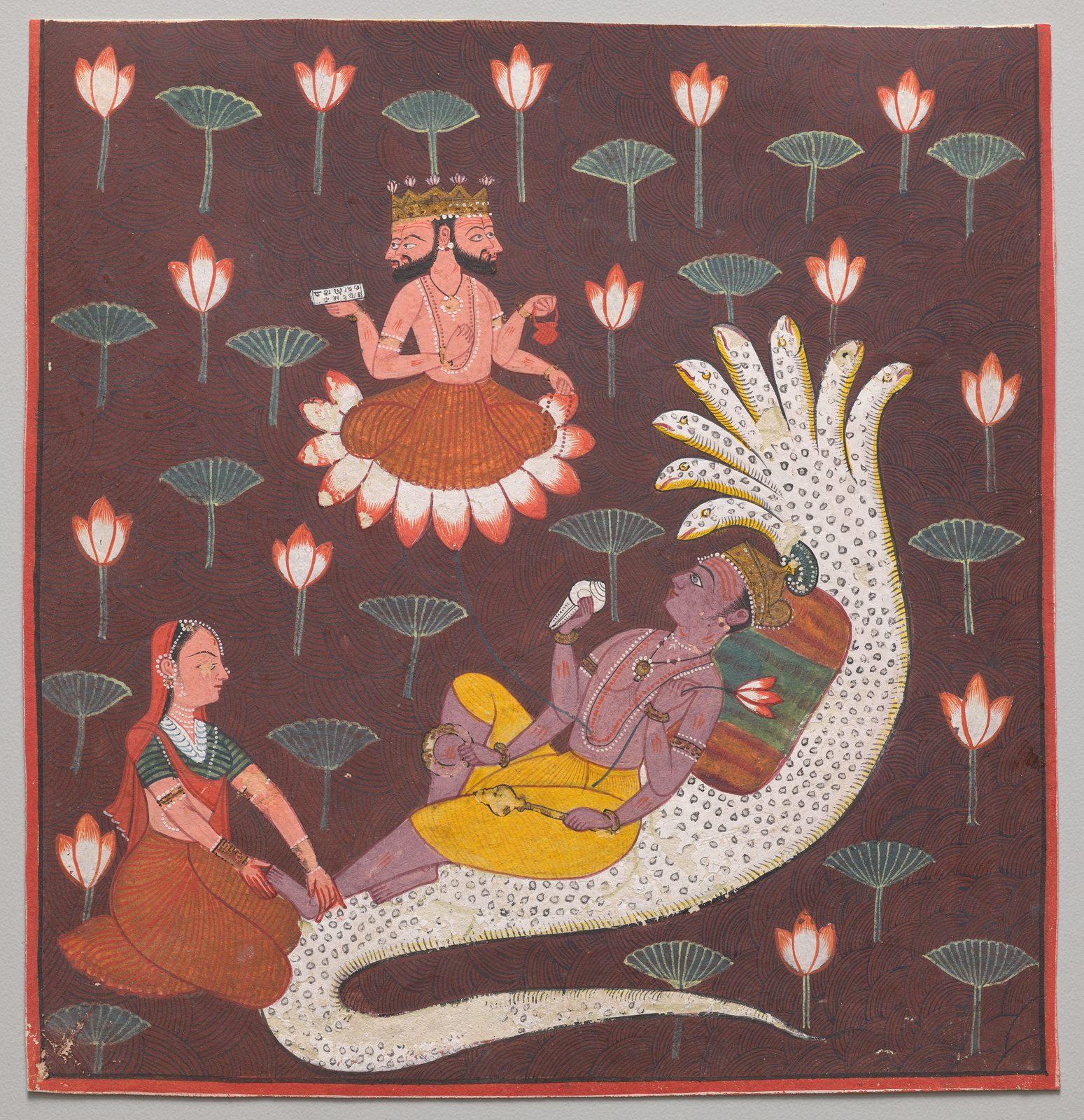
The ekādaśī (एकादशी) fast falls on two different dates in some months, and both dates are correct. Two rules decide it, both old, both written down, and the only thing they disagree about is which minute of the morning you look at.
Suppose two houses on one lane. One keeps the fast on Friday. The other keeps the same fast on Saturday. They are neighbours, they read the same sky and very often the same calendar, and their two dates fall a day apart. I have invented the two households. I have not invented the two dates: those appear on real sheets in real months, one printed under the other. Neither house is careless. Each is following the rule it was handed.
Start with what is being counted. A tithi (तिथि) is a lunar day. It is not a stretch of the clock but a stage in the widening gap between the moon and the sun, so it comes out a little longer or shorter than one of our days and will not sit inside a date. Ekadashi is the eleventh of them, counted from the new moon and counted again from the full moon, so it comes round twice in a lunar month. In a great many houses it is the observance kept most regularly of all.
For nearly everything else on a panchang, one question settles the date. Look at the minute the sun comes up, ask which tithi is running, and that tithi names the whole day. Which day is your fast, actually works that rule through on real sheets, so one line will do here.
Ekadashi asks that question as well. Then it asks a second one. The second question is where the two dates come from.
A second question, asked before it is light
The second question is about the tenth.
The eleventh is not supposed to be mixed with daśamī (दशमी), the tenth. Where the tenth reaches into it, the books call that touch a vedha (वेध), a piercing, and an ekadashi so touched is viddha (विद्ध), pierced. A pierced eleventh is set aside and the fast is kept elsewhere. Every tradition I have read agrees on that much.
What is not agreed is the minute at which you look.
One line looks at sunrise. If the eleventh is running when the sun comes up, and the tenth has finished, the day is clean. Calendars label this line smārta (स्मार्त), from smṛti, the remembered texts: the ordinary householder practice most families in the country follow without ever needing the word.
The other line looks earlier, in the dark. Its window is aruṇodaya (अरुणोदय), the first grey of dawn before the sun's edge appears. Most authorities set this window at four ghaṭikās (घटिका), the old sixtieths of a day, which works out to 96 minutes before sunrise. A Vaishnava handbook states the same length as two muhurtas instead, a different unit for the same span. Molesworth's Marathi dictionary records three ghatikas, 72 minutes. So even the length of the window is stated more than one way, and that is worth knowing before anybody in your house calls anybody else wrong. Calendars label this line vaiṣṇava (वैष्णव): households in the devotional traditions centred on Vishnu.
Take round numbers and watch the difference bite. Sunrise at six. The dawn window, at 96 minutes, opens at 4:24. Suppose the eleventh begins at ten past five.
At six the eleventh is running and the tenth is over, so the smarta line keeps the fast that day.
At 4:24 the tenth was still running, so the dawn was touched, and the vaishnava line moves the fast to the next day.
One tithi, two readings, 50 minutes between them, and two neighbours cooking on different mornings.
Two houses, one July morning
Now a real case, from this year's Delhi sheets. [VERIFY: written for a publication window of August to December 2026; the July case is past and fixed, but recompute the sunrise and tithi times if this piece is dated outside that window.]
Yogini ekadashi. The eleventh tithi began at 08:16 on Friday 10 July and ended at 05:22 on Saturday 11 July. Sunrise in Delhi was 05:31 on the Friday and 05:32 on the Saturday.
Four numbers. Read them slowly.
Friday's sun came up at 05:31, and the eleventh did not begin until 08:16. So the tenth was running at that minute. By the naming rule, Friday belongs to the tenth.
Saturday's sun came up at 05:32, and the eleventh had ended 10 minutes earlier, at 05:22. So the twelfth was running. Saturday belongs to the twelfth.
The eleventh was never on duty at a sunrise. It began after one and finished before the next, and no date took its name. The day that never happens takes that mechanism apart. The settled convention is that such a tithi belongs to the day on which it began and ended, which here is the Friday.
So the smarta line keeps the fast on Friday. It falls on a day the tithi column calls the tenth, and that is the part which unsettles people. It need not. The eleventh really did live inside that Friday, from breakfast time until the next dawn.
The vaishnava line cannot use Friday. Its window opened at 03:55 that morning, and the tenth was running then and went on running past sunrise. Friday's dawn was pierced from end to end. So the fast goes forward to Saturday, a day the tithi column calls the twelfth.
Look at what just happened, because it is the shape of the whole disagreement. Neither household will keep the eleventh on the tenth. One of them accepts a day named for the tenth because the eleventh genuinely lived inside it. The other refuses the tenth's dawn at any price and takes the twelfth instead. When these rules have to fall off one side or the other, both of them fall forwards.
The rest of the printed line follows. Breaking the fast is called pāraṇa (पारण). It happens the next morning, within the twelfth lunar day, but not during that day's first quarter: a stretch called hari vāsara (हरि वासर), kept clear of the first meal. On these sheets hari vasara ran until 10:32 on the Saturday. The Friday fast was therefore broken in the afternoon, in a window printed as 13:50 to 16:36. The Saturday fast was broken on Sunday morning, between 05:32 and 08:18. Two fasts, two first meals, one lane.
Months like that July are where the two lines part most visibly, because a vanished eleventh forces the question. In most months the eleventh is running at a sunrise with the tenth long gone, both lines look at their own minute, both find the same clean day, and the calendar prints one date and nobody notices there was ever a second rule.
Reading your own line
Here is the practical part, and it is shorter than the arithmetic.
Go and look at your sheet, or your app, at any ekadashi. Most of them now print both answers when the answers differ. The second one usually carries a word beside it: vaiṣṇava, or gauṇa (गौण), the secondary one, or the name of a particular tradition or temple. That small word is the whole signal. It is not a correction of the line above it and it is not an afterthought. It is a second household being addressed on the same page.
Which line is yours is not a question the numbers can answer, and it is not one you should try to settle by reading. Ask whoever keeps the observances in your family. In most houses the answer comes back in four words and has not changed in living memory. If your family is in a devotional tradition centred on Vishnu, or you have a temple or a teacher whose calendar you follow, that calendar is your line. If nobody knows and nobody ever knew, the first date is the ordinary default, and it is the one the calendar prints for households in general.
One more thing, said gently, because it is the only part where a household can genuinely tangle itself. Take a line and keep it for the year. The whole purpose of these rules is that a family does not have to re-decide every fortnight, and a house that picks whichever of the two dates suits the week has quietly given itself a job that nobody has ever had to do.
The tenth and the twelfth have been argued over in print for centuries, on the same shelf of decision books I pointed at when we did the sunrise rule. Four hundred years of careful people disagreeing about 96 minutes is not a sign that the subject is broken. It is a sign that somebody wanted to get it right and knew that more than one answer could be defended.
Which brings it back to the page in your hand. Most months it prints one date and nothing underneath. On the mornings when it carries a second line, one kitchen on the lane stays dark while the next one is cooking, and both households have read the same sheet correctly.
Twice a week
Essays like this one, Tuesdays and Saturdays. One email per essay, and the archive is never mailed out. Subscriptions open shortly; the RSS feed is live now.
Nothing else arrives, ever.