Astrology and the anxious mind
Consulting can steady a worried mind or quietly hollow it out. The test is not whether the reading was right, but whether you act more afterwards or less.
Two ways in. The gist assumes you have never met any of this before.
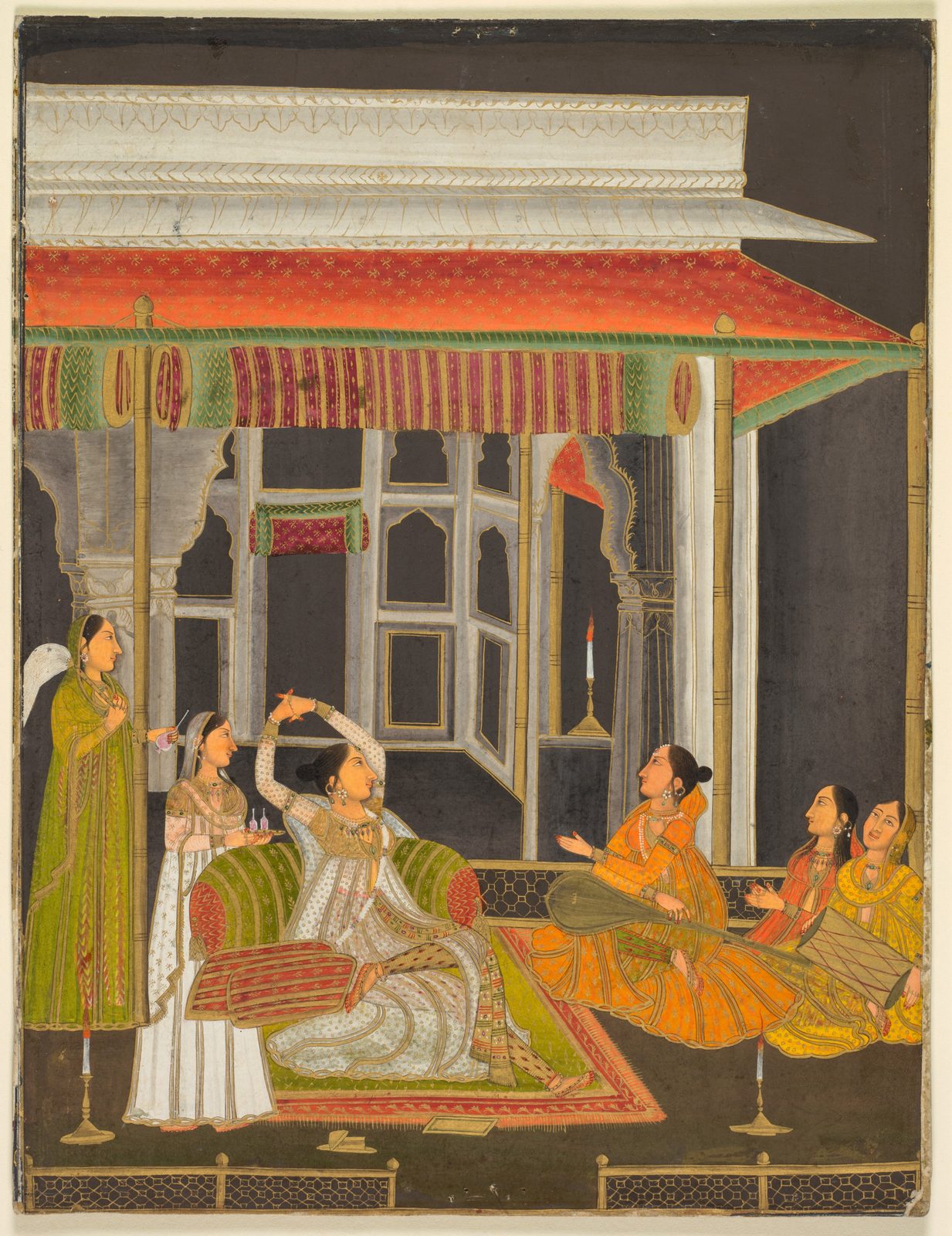
For some people a standing appointment with an astrologer is the steadiest hour of the month. Let me start there, because it is the side of this that gets less air, and it is also the side I believe. They are not being foolish. The hour is not being wasted on them.
Worry that runs loose has no shape. It shows up at 6:40 in the morning and is still there at eleven at night, having changed subject four times without once changing temperature. What a scheduled consultation does, before a single planet is named, is give that worry an address. You know where it goes. When the thought arrives on a Tuesday afternoon in the middle of something else, there is somewhere to put it down: I will ask on the fourteenth. For a certain kind of person, that sentence is worth more than most of what gets said inside the consultation itself.
There is a second thing, quieter, which is the assertion of endings. A system that speaks in periods is, whatever else it is doing, insisting that periods end. And to a mind that has privately concluded the present condition is permanent (that is what a bad year does to a person, it goes back and edits the future so it looks like now), a claim that this stretch has a boundary does more than comfort. It makes a structural statement about time, and it does part of its work whether or not you fully believe the machinery behind it. Add to that the plain relief of vocabulary. A mess with no name is harder to carry than a mess with one, and being told that the last ten months have been a period, with an ending already written into the word, at least gives you a handle on ten months that previously offered nothing to hold.
So I am not going to pretend the calming is imaginary. It is not. What I want to describe is where it turns.
Where it turns
The turn is undramatic. Nobody notices it happening, because the only thing that changes at first is an interval.
Once a month becomes once a week. Once a week becomes the morning check: the day's windows, the transit note, whatever the app puts on the screen at seven. Then twice, because the first look was ambiguous and deserves fresh eyes. Then a second app, because the first was vague. Then a third, because the second contradicted the first. And now there is a genuine puzzle to solve, and a puzzle is absorbing in a way that formless dread is not.
Small mercy on that last point: the apps disagree for reasons that are arithmetic rather than cosmic, which Meghnad has set out at length. Two of them can place your moon in different signs and both be doing their sums correctly. If you have been reading the contradiction as a message, it is only a settings difference.
But the apps are the surface. The thing underneath is what happens to relief when you take it often. Reassurance has a half-life. The first time you are told the coming weeks look ordinary, the ease lasts for days. By the fortieth time it lasts until you reach the car. Nothing has gone wrong with the astrologer, and nothing has gone wrong with the method. What has changed is you. You have learned, at a level well below argument, that the sensation of being all right is a thing that arrives from outside and therefore has to be fetched. So you fetch it more often. The interval contracts to match the half-life, and once that loop is running it needs no further help from anyone.
You can catch yourself in it by one tell. You start asking the same question in different clothes (to a second astrologer, a third, a forum, a cousin who knows a bit) and then you keep the kindest answer as the real one. At that point you are not consulting. You are shopping.
The daily windows deserve a mention here, because they are where this most often lives. Rāhu kāla (राहु काल) is a timekeeping convention with a history and a defensible use, which Priya has laid out without the fear attached. It is also, for a certain kind of morning, an inexhaustible supply of small permissions to go and ask for. There is a version of consulting the window that is planning. There is a version that is asking the day whether you are allowed to have it. From the outside the two are indistinguishable, which is why only you can tell them apart, and why it is worth being honest with yourself about which one you are doing at 7:05 in the morning.
Nobody hands over their life in a single transaction, in any case. It goes in small denominations. Should I send the message now or after four. Should I sign today or Thursday. Should I wear the blue one. Each of these is too trivial to argue about, and that triviality is exactly the mechanism: you are never surrendering a decision, only outsourcing a preference, forty times a month, until the ordinary faculty that reads a day and picks a time has gone a season without use and begins to behave like any other unused thing.
One honest test
Most people try to settle this by asking whether the readings turned out to be accurate, which goes nowhere. You cannot audit an impression of a ten-month stretch the way you audit a weather forecast, and the argument about whether it came true will keep you busy for years without once telling you the thing you actually want to know.
Try a question you can answer instead. After a consultation, do you do more, or less?
Not feel. Do. At the end of the hour, do you leave with something you intend to do this week, or with a fresh list of things you now intend to avoid? Over a month, count the actions you deferred on the strength of something you read or were told: the call not made, the form not submitted, the conversation pushed to a better window. If that count is climbing month over month, the consulting has begun organising your life around avoidance and giving the arrangement a respectable name.
Two corollaries, both worth sitting up for. First, a practitioner who is good for you becomes less necessary over time. If you needed one twice a year and now need one twice a month, something in the arrangement is working against you, whatever else it may be doing well. Second, imagine cancelling the next appointment and not rebooking. Notice what comes up. Mild indifference is a good sign. Something closer to alarm is information, and it is information about the arrangement, not about the future.
The five-app morning
If any of that landed, here are a few plain things to try. None of them is dramatic and none of them requires you to give up anything you value.
Cut to one source and one cadence. Not because the others are wrong, but because you are running on the disagreement. Sample widely enough and contradiction is guaranteed, and a guaranteed supply of contradiction is a guaranteed supply of reasons to look again.
Write the question down before you open anything. If the answer would not change something you do before dinner, you are not asking a question, and knowing that in advance is usually enough to stop the hand.
It also helps to put a gap between the impulse and the checking. Not a vow: an hour. Treat it as an experiment rather than a discipline, since the finding on most days is that a fair number of impulses simply do not survive the hour.
The last one is the hardest. Ask a question once, to one person, and the moment you notice yourself rewording it for a second opinion, you already know what the asking is for. Then tell somebody who is not being paid. Not as confession, only because saying "I checked four times before lunch" to another human being restores a sense of proportion that no screen has ever supplied.
I am not a doctor, and none of this is medical guidance. If the checking has eaten the first two hours of your day, or if the relief has stopped arriving at all, that is a doctor's question, not an astrologer's. It is not mine either.
Tomorrow morning, before you open anything, finish this sentence: I am checking because I want to know whether ____. If the blank names something you could act on before dinner, ask, and then go and act. If it does not, you are not asking anything. You are pacing the corridor. The corridor is free, and it leads nowhere, and you are allowed to sit down.
Twice a week
Essays like this one, Tuesdays and Saturdays. One email per essay, and the archive is never mailed out. Subscriptions open shortly; the RSS feed is live now.
Nothing else arrives, ever.