The temple committee's calendar
Two temples a mile apart keep one festival on two days. How a diaspora committee actually fixes a date, and why both answers hold.
Two ways in. The gist assumes you have never met any of this before.
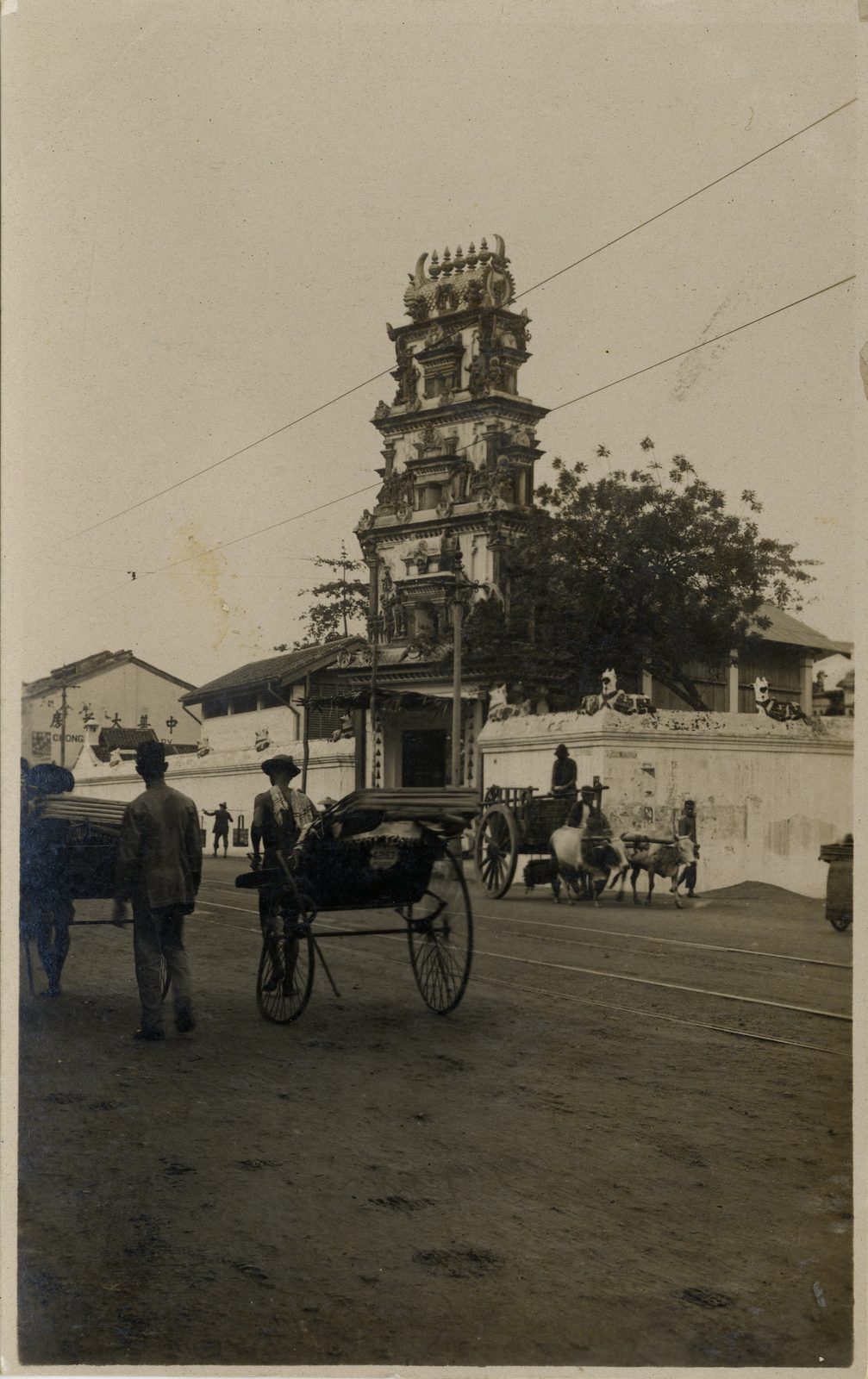
A Hindu temple outside India fixes its festival dates in a committee meeting, and most of the fixing was done years earlier by people who have since moved away or died. The meeting itself looks like this.
The hall is booked until nine, and it is twenty to. Eight people sit around two folding tables pushed together. The tea has gone cold in the paper cups. A laptop throws a spreadsheet onto the wall, slightly crooked, and beside the laptop, held flat under a stapler, is a printed panchang (pañcāṅga, पञ्चाङ्ग), the Indian almanac sheet that sets out the measurements of each day.
Item four on the agenda is one festival. The question is which day the temple will keep it.
This committee is a composite. I have put it together out of the ordinary business of halls in a dozen cities, and nobody in it is a real person. The meeting is real enough to be dull, though, and the dullness is the point. It is what timekeeping looks like when an institution does it rather than a sky.
Watch first what the committee does not do. Nobody in the room computes anything. Nobody argues about the moon. The sheet under the stapler already has an answer printed in it. The argument, when it comes, is about which of two printed answers this temple uses, and about which evening people can actually get to the hall.
The sheet the temple already has
A temple abroad is never handed a blank calendar. Three decisions were taken for this one before anybody in the hall tonight had a vote.
The earliest was the choice of priests. A priest is trained in one line, and the training settles the form of the ritual and a good deal of its timing along with it. A large temple abroad can easily carry four kinds of priest on one staff page: two trained in different lines of temple ritual, laid down in manuals called agamas (āgama, आगम), one trained in Vedic household rites, and one of the Madhva line. That is four inheritances under one roof, which is a common arrangement abroad and a rare one at home.
The decision was made a second time in the choice of a sheet. Somebody, once, wrote to a matha (maṭha, मठ, a monastic seat) in India and asked for its annual panchanga. Or ordered a regional publisher's calendar in bulk. Or found a North American publisher who would typeset the temple's own calendar, carrying the temple's programmes and its logo, and send it free. Those publishers ask which tradition you want. One of them says plainly on its front page that it makes calendars for four of them, Smarta, Shaiva, Vaishnava and Shakta. In other words, the same year can correctly take more than one shape.
Taking a sheet means taking its rules. Look at what that does to a calendar serving several communities at once. The yearly changing of the sacred thread can appear twice on one temple's list of events, as two separate entries: once for the Yajur tradition, once for the Vaishnava one. Neither entry corrects the other. The calendar is doing an honest job for two congregations who happen to share a car park.
[VERIFY: the staff page above and this double listing are given unnamed on purpose, since the committee in this piece is a composite. If we would rather name the two temples, their current staff page and events calendar need checking first.]
Then there is the city. A panchang is computed for a place, because the day it describes begins at a local sunrise. The publishers who serve temples abroad are blunt about this, and warn on their own front pages that a sheet made in India will not do for the rest of the world unaltered. So the committee, or somebody long before it, also chose a city, and that choice quietly decides where the boundaries of the day fall. I worked one whole case of this through in your festival, eight thousand kilometres later, and the short version is that a tithi (तिथि), the step of the moon's separation from the sun that most observances are pinned to, is the same for the whole planet, while the sunrise or sunset it gets measured against is yours alone.
So the sheet on the table already encodes three inherited decisions: a line of training, a publishing authority, a city. Nobody in the room chose any of them. Most committees could not tell you when they were made.
What bends it
Now the part that gets treated as an embarrassment and should not be.
The temple has one priest, or two, and a festival needs one of them at a particular hour. The prayer hall holds 200 people. The community is nearer 900. The school hall down the road, which is the only room large enough, takes bookings a year in advance and is cheapest on a Saturday. Half the families drive 40 minutes to get there. The children have school on Wednesday morning, and so do most of their parents. The car park needs stewards, and the stewards have jobs.
None of that is a reason to keep a festival on the wrong day. It is a reason to be exact about what is being scheduled.
The committees that do this well split the day in two, out loud, in the minutes. There is the rite, kept at its own hour, on the day the sheet gives, with the priest and whoever can come. Then there is the gathering: the hired hall, the 400 plates, the children's programme, on the Saturday. The first is timekeeping. The second is a party held in honour of the first, and moving a party has never moved a festival.
Write both lines down and the argument does not come back next year. Write only "Saturday" and somebody will ask, quite reasonably, what happened to the tithi, and the committee will find it has no answer on paper, only in the memory of a man who has since retired to Bangalore.
There is one more thing a committee decides, and it is the most useful thing it does. It publishes. A congregation of 900 households cannot each hold a separate opinion about a lunar day and still eat together. So the calendar goes out in November, on paper, and gets stuck to 900 fridge doors, and for the next twelve months that piece of paper is the community's answer. That is not a compromise with tradition. That is what an almanac has always been for.
A mile apart
Now put a second temple a mile away and let it do exactly the same work.
Count the choices that are genuinely open to each of them. Which authority's sheet, from a matha or a regional publisher or an American one. Which city that sheet is computed for, which may be the temple's own city or the founder's. Which rule applies to this particular observance, since some are anchored at sunrise, some at midday, some at the stretch just after dark, and why two panchangs disagree sets out where those rules come from. And which weekend the hall was free.
Four choices, each one defensible, made independently by two sets of volunteers who have never discussed the matter. Two dates come out. Both temples are keeping the festival correctly and neither has made an error, in the same way that two households in two Indian states have kept different dates for centuries without anybody thinking it a scandal.
What is new abroad is only the compression. In India the two conventions sit two hundred miles apart and rarely meet. Here they sit at either end of one bus route, and a family may well belong to both buildings, and so the difference arrives in the kitchen as a question: which one is right. The answer is that the question has the wrong shape. Ask instead which tradition each temple keeps, and the two dates stop being a contradiction and become what they are, two institutions each doing its own bookkeeping honestly.
Want to know where your own temple's dates come from? Ask this year's committee two questions. Neither one challenges anybody's authority. Whose panchang do we use. Which city is it computed for. A committee that is doing its work will answer with a name and a place, in about four seconds. A committee that cannot answer has usually not made an error either. It has inherited something and never been asked, which is worth knowing before anyone starts an argument at the tea urn.
The hall is booked until nine. At ten to, the secretary types one line into the minutes: agreed, and a date. Underneath it, because one of the trustees insisted, the hour the tithi turns and the city the sheet was computed for. Both lines will be true for one year. Then eight people will sit down at the same two tables and do it again.
Twice a week
Essays like this one, Tuesdays and Saturdays. One email per essay, and the archive is never mailed out. Subscriptions open shortly; the RSS feed is live now.
Nothing else arrives, ever.