The business start date
An opening date is asked for after the venture is already decided. What timing can honestly contribute to a shop with rent running, and what it cannot.
Two ways in. The gist assumes you have never met any of this before.
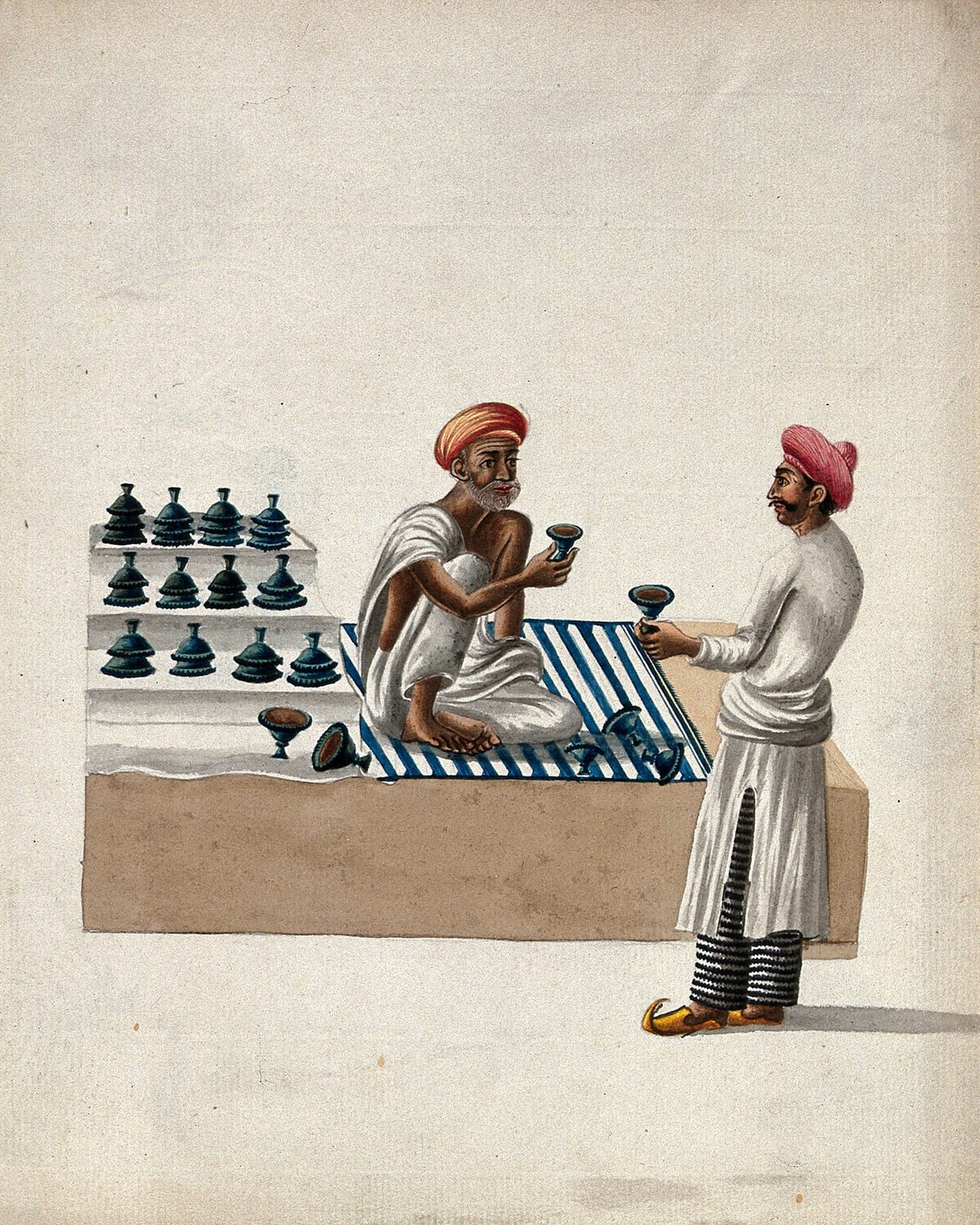
An opening date is one of the few things anybody brings to an astrologer after the decision has already been made. Most errands in this series arrive while the matter is still open: the job not yet resigned from, the proposal not yet answered, the question genuinely a question. A wedding date is this one's near cousin, asked once the match is agreed. A shop goes further still. By the time somebody sits down to ask which morning to raise the shutter, the lease is signed, the deposit is gone, the first order of stock is placed, and two people have given notice at jobs they were doing perfectly well in. Nothing is being weighed. A sequence is being started.
Stay with that inversion, because everything honest about the request follows from it. A muhūrta (मुहूर्त) is an elected time, a moment chosen in advance for beginning something. When the beginning is commercial, the choosing sits on top of commitments that have already stopped being reversible, and the first of them is a rent that started running the day the agreement was witnessed. Somewhere in the city there is a room with your name on it and nothing in it, and it is charging you by the day for the privilege of being empty.
So the useful question is not which day is best. It is how wide the window is, and what each end of it is made of.
Both ends of the window
Take the near end first, because it is the one people describe least accurately. The earliest possible day is not the day you would like to open. It is the day the shop can actually trade: the electricity connection transferred into the firm's name, the trade licence in hand rather than in a queue, the shelving bolted, the two staff able to work the till without being watched, and enough stock in the room that a customer who walks in at 11 in the morning has something to buy. Write that date down. It is a fact about the shop, not about you, and it is checkable by anybody standing in the doorway.
Now the far end, which is the one nobody prices out loud. Suppose the rent is 45,000 a month and the two salaries come to 34,000 between them. Then a day of not opening costs a little over 2,600 rupees, and a week of not opening costs about 18,000, and the money comes out of exactly the same working capital you were planning to open with. The far end of the window is the day at which the waiting has eaten enough of that capital to change what the shop is on its first morning. That date is also checkable. It is arithmetic, and it will sit still while you look at it.
Between those two dates you have a window, and it is usually narrower than the person asking imagines and wider than nothing. Say it runs 12 days, from the 3rd to the 14th.
Hand that window to a panchang and something happens which is worth watching closely. You do not get one day back. You get several. Any fortnight holds more than one morning a careful practitioner would sign off on, and the honest answer to a bounded question is a short list rather than a single line. That plurality is the whole of the good news, and it is the part that gets left out when a date is being sold rather than chosen. How the grid on an almanac page is built, and which of its entries are measured, which divided and which merely looked up, is Priya's page rather than mine. The standard manual behind those pages is the Muhurta Chintamani of Rama Daivajna, composed at Kashi around 1600, and its business is which days are held fit for which undertakings. I am describing what it is for, not teaching what it says.
I have argued elsewhere in this series that most working decisions are settled by four or five facts that will not move for anybody. The commercial opening is the case where those facts do not merely sit beside the chart. They draw the box the chart is allowed to answer inside.
What the day is actually holding together
That is the arithmetic, and arithmetic is not why anyone asks. Walk to the other end of the request, where the reasons are human and no less real, because they explain why this consultation happens at all when the deciding is over.
A date is a thing several people can be told. That is its first and largest function, and it has nothing to do with the sky. The landlord wants to be photographed under the signboard. The supplier who extended credit without paperwork wants to be seen being thanked. The uncle who put in money, the brother-in-law who did the wiring at cost, the two staff and their families, a priest, a garland of marigold and mango leaves, and the first entry written into a new ledger: all of that has to converge on one morning, and somebody has to name the morning first.
Thomas Schelling gave this shape a name in The Strategy of Conflict, published by Harvard University Press in 1960. He called it a focal point: a choice people converge on not because it is best but because each of them expects everybody else to converge on it too. A date carried by an almanac that is already in the house, that nobody in the family invented and nobody can be accused of having arranged for their own convenience, is about as focal as a choice gets. It ends the negotiation without anybody losing it.
The tradition half knows this about itself, and says so in public every year. On Diwali night, which this year falls on Sunday 8 November, merchant households perform chopḍā pūjan (चोपड़ा पूजन), the worship of new account books: the old year's ledger is closed and the new one is opened with the first auspicious entry written in by hand. The exchanges do the same thing in a suit. Both the Bombay and the National stock exchanges hold a short ceremonial trading session on Diwali evening, an hour in which the prices are real and the purpose is almost entirely ceremonial. In Gujarat the shops that shut for the festival do not straggle back one at a time; they reopen together on Labh Pancham, the fifth lunar day after Diwali. None of this is a claim about what the sky does to commerce. It is a very old arrangement for getting a large number of independent people to start again on the same morning.
Herbert Simon's word for the underlying move, from a paper in Psychological Review in 1956, was satisficing: rather than searching for the best option, you set a threshold, take the first thing that clears it, and stop. The value is in the stopping. A choice that is genuinely arbitrary inside a bounded window can absorb an unlimited amount of deliberation and return nothing for it, and a family that has already spent four months on a lease is in no condition to spend another three weeks on a Tuesday.
The point where it turns
There is a place where all of this stops working, and it is easy to name. The date outranks the lease.
It sounds like this. The window was the 3rd to the 14th. The date that comes back is the 30th, and the 30th is accepted, and the shutter stays down for another 16 days at 2,600 rupees a day, and nobody in the room says the number out loud. What has been bought is not a coordination device. It is a month of rent paid for a property of the day itself, and the moment an almanac starts overriding the constraints that made the window, it has stopped helping anyone coordinate and become a tax on readiness.
Here is the thing that tends not to get said. No day protects a business. A date cannot be responsible for what happens to a shop, and the classical literature does not pretend otherwise; the sellers do. Anyone offering you an opening morning as though it underwrites the next three years is describing a product that does not exist, and a practitioner who will not release a date until something has been bought has answered a question nobody asked. What a guarantee is worth in this market is Nikhil's ground, and he has been over it.
So here is the whole honest contribution, in one sentence. Timing gives you a reason to stop choosing a day that had no reason to stop being chosen, and it gives several people a dignified way to agree on the same one in advance.
The shutter goes up at 7:10. The garland is wired to the frame while the tea is still coming. The priest is finished by 8:00 and takes his packet and goes, and somebody's mother wipes the glass of the counter a second time because the first time was before the dust settled. The till drawer is opened, counted, and shut. At 9:20 a man puts his head in, asks whether they are open, and buys a torch battery, and the first entry goes into the book in a hand that is trying to be neat. Nobody at the counter is asking which day it is. The day is working because everybody agreed to it.
Twice a week
Essays like this one, Tuesdays and Saturdays. One email per essay, and the archive is never mailed out. Subscriptions open shortly; the RSS feed is live now.
Nothing else arrives, ever.