The guarantee nobody has to keep
Hundred percent accurate, solved in three days: what a guarantee is everywhere else in commerce, what Indian law says about the claim, and why it stays free.
Two ways in. The gist assumes you have never met any of this before.
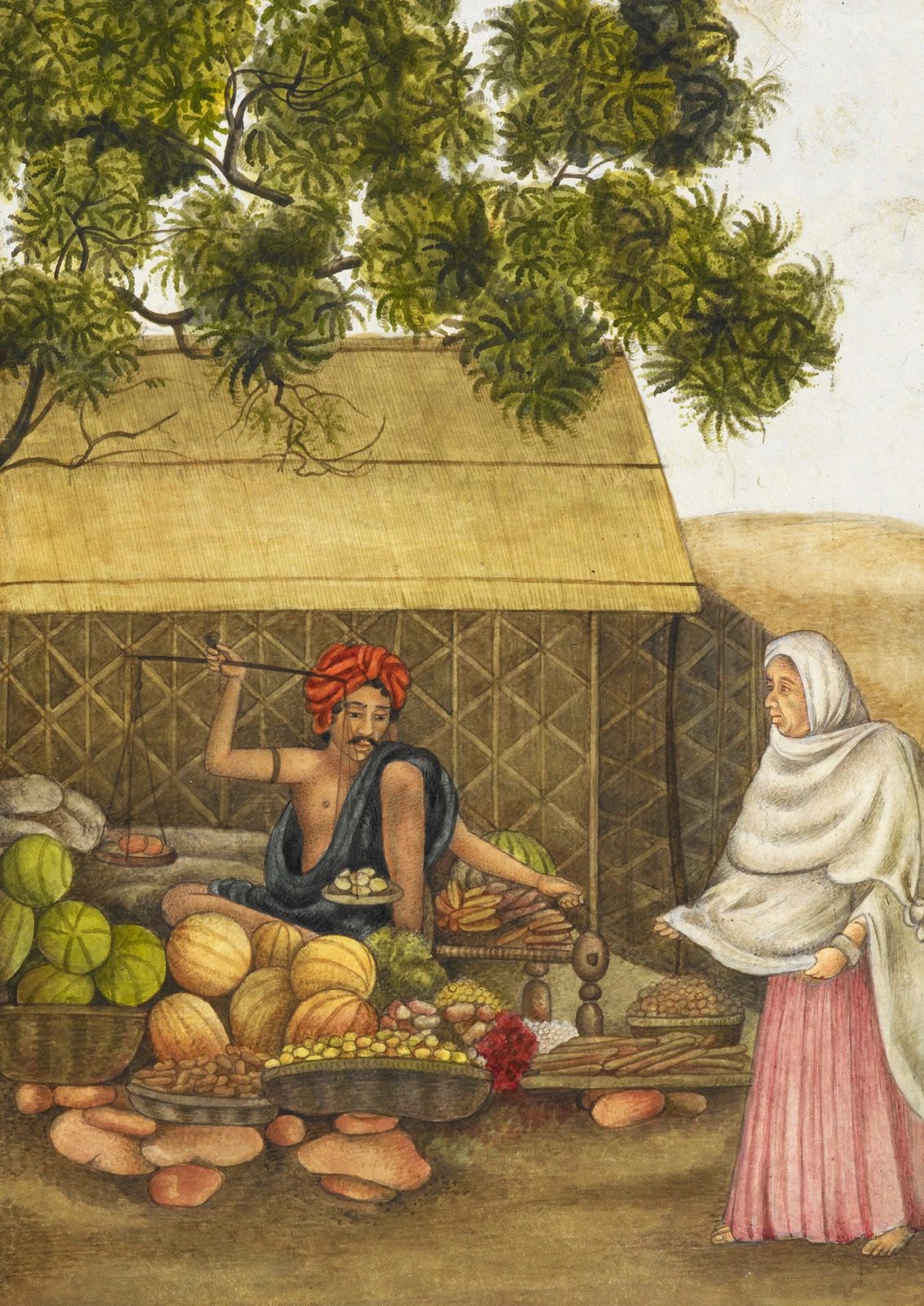
The two guarantees this trade advertises, hundred percent accurate and your problem solved in three days, are both missing the one part of a guarantee that ever costs a seller anything.
Everywhere else in commerce, a guarantee is a liability somebody has agreed to carry. Buy an electric fan. The box says one year. That single line commits the seller to three things. A standard: the fan is supposed to run. A period in which the standard can be tested: twelve months. And a remedy, meaning what the seller must do at their own cost if the fan stops. Repair, replacement, or your money back.
Remove the remedy and the other two stop doing any work. A standard nobody has to meet, tested during a period after which nothing happens anyway, is not a guarantee. It is a hope, dressed up.
Indian law starts in the same place and is blunter about it. Section 126 of the Indian Contract Act, 1872 defines a contract of guarantee as a contract to perform the promise, or discharge the liability, of a third person in case of his default. Look at what the definition is built around. Default. In law the word does not describe things going well. It names who pays when they do not.
Now set the two advertised sentences against that definition. Both have its shape. Neither has its substance, and they come apart differently, so take them one at a time.
Hundred percent of what
Accurate about what?
A statement can only be accurate or inaccurate if it could have come out the other way. "The loan will be sanctioned before the end of October" is that kind of statement. In November somebody can look and say yes or no. "A testing phase is indicated in matters of career" is not. There is no month in which it is false.
Almost everything sold under the accuracy claim is of the second kind. A reading that resolves can be scored, and a reading that can be scored can be wrong. Raman has written about what that leaves a buyer choosing between, which is rooms rather than results; his guide to choosing an astrologer is the companion here.
Then the number. A hundred percent is a fraction, and a fraction needs a denominator: a hundred out of a hundred of something. To stand behind it a person would need three things. Predictions written down in advance, each stated so that it could fail. Some agreed way of deciding afterwards which of them came out. And a count kept by somebody with nothing riding on the total.
Nobody who says the sentence has any of the three. If a practitioner did have them, that file would be the most valuable document in the industry. It would be published, not mentioned.
The fourth day
The second sentence works differently, and it is the more expensive of the two.
"Solved in three days" borrows the shape of a delivery promise. A deadline is the one part of a guarantee it genuinely supplies. What it leaves out is everything the deadline is for. What counts as solved is written down nowhere. Who decides is not stated. Nothing is named that happens on the fourth day.
In practice the customer is the only one placed to judge, and has usually paid already. The word these advertisements reach for in Hindi is समाधान (samādhāna), a solution or a settling, and a settling is the one outcome the arrangement is not built to reach.
Consider what the fourth day is inside this design. It is not a failure. It is the next appointment. The explanation for the delay is that something larger has been found: an obstruction that needs a longer rite, a stone of the wrong weight, a day badly chosen. The unmet promise becomes the evidence for a bigger one.
That is how far this promise has drifted from the one printed on a fan's box. When a fan fails inside its year, you carry it back and somebody else is out of pocket. When a three-day promise fails on the fourth day, the failure is billable.
I want to be exact about the target. Plenty of careful people name a period, attach the conditions to it and promise no outcome. The sentence I am examining is the other one: a period with no conditions and no remedy. What usually stands at the end of it is a purchase, and I have set out the questions worth asking at that counter in the gemstone question.
What the statute already calls it
India has a law that uses the word.
The Consumer Protection Act, 2019 defines a misleading advertisement at section 2(28). Among other things, it is an advertisement that gives a false guarantee to the consumer, or is likely to mislead about the nature, substance, quantity or quality of a product or a service. Service is in the text. A consultation is a service.
The same Act lists unfair trade practices at section 2(47). One of them is giving the public a warranty or guarantee of the performance, efficacy or length of life of a product or of any goods that is not based on an adequate or proper test of it. What the law attaches to that clause matters more than the clause itself. If somebody defends the claim by saying a proper test was done, the burden of proving it lies on them. Not on you.
Be careful with that clause. It is written about products and goods, and an hour with an astrologer is neither. I will not stretch a provision past what it says. The principle inside it is what carries: in Indian consumer law, a person who advertises a guarantee of performance is expected to produce the test it rests on.
The Act also created the Central Consumer Protection Authority. Section 21 lets it order a misleading advertisement discontinued and impose a penalty of up to Rs 10 lakh, rising to Rs 50 lakh for a repeat, and it reaches the endorser and the publisher as well. Section 89 provides imprisonment of up to two years, with a fine, for a service provider who causes a false or misleading advertisement prejudicial to consumers.
Then there are the guidelines the Authority notified on 9 June 2022, which set out when an advertisement is not misleading. Two conditions read as though somebody had this trade open in front of them. An advertisement must not mislead by exaggerating the accuracy, the scientific validity or the practical usefulness of what is offered. And it must not suggest that a claim is universally accepted where there is a significant division of informed or scientific opinion about it.
Now the honest part, because a law on a page is not a law in use. I went looking for orders applying any of this to astrological advertising and did not find a body of them. I can show you that these provisions exist and fit. Not that they have been used here.
What I can show you is smaller and, to my mind, more useful. Consumer forums have been willing to treat a paid horoscope as an ordinary service. On 31 August 2016 the Union Territory consumer forum in Chandigarh decided the case of a woman who had paid Rs 4,500 online for a kuṇḍalī (कुण्डली), a birth chart, and a varṣaphala (वर्षफल), a reading of the year ahead. The file that came back described her as male. The forum directed the firm, V. D. Vashisht and Associate, to refund the Rs 4,500 with Rs 3,000 as compensation and Rs 2,000 towards costs. The Tribune reported the order.
Look at what that forum decided and what it stayed away from. It did not rule on Saturn. It found that the thing bought had not been delivered as described, and that the predictions in the file were general rather than about the person who paid for them. Delivery is the only sort of question a forum is equipped to answer. It is also the only sort you can usefully press across a counter.
Why nobody stops saying it
Follow the incentive.
The sentence costs nothing to produce. No stock, no premises, no staff. It costs nothing to break either, because a break cannot be established: no standard was stated, no test period ran, and no remedy was named that anybody could claim.
Cheapness alone does not explain how far it travels. The sentence also sorts its readers, and the sorting is the part worth seeing.
Suppose two people meet the same advertisement. The first wants information, and "hundred percent" tells her the person saying it is not being careful, so she keeps scrolling. The second wants the worrying to stop, and to him those three words are the entire offer. The advertisement did not persuade him. It found him.
That sorting works quietly and needs nobody in the chain to lie. A careful practitioner who says "I can tell you what the chart weighs and I cannot tell you what will happen" is telling the truth and losing the second person every time. Over a few years the calm sentence keeps the customers it can, the guaranteeing sentence keeps its own, and the second group is larger and arrives readier to pay. Nothing had to become more dishonest for the guarantee to spread. It only had to stay free.
So, one request, and it is not a confrontation.
Ask for the guarantee in writing. One sentence: what is promised, by when, and what happens if it does not. Ask on a quiet day, in a flat voice, when nothing has just frightened you. Then read what comes back, because the sentence changes when it goes on paper. Hundred percent becomes guidance. Three days becomes a period. The remedy, if it appears at all, appears as no refunds.
That edit is what you were trying to find out. Everywhere else in commerce it is printed on the box before you get there, and somebody had to sign it.
Twice a week
Essays like this one, Tuesdays and Saturdays. One email per essay, and the archive is never mailed out. Subscriptions open shortly; the RSS feed is live now.
Nothing else arrives, ever.