The tests that were run
Three published tests of astrology, each with the pass mark fixed in writing before any data existed, and the criticisms of those tests taken seriously.
Two ways in. The gist assumes you have never met any of this before.
Three of the best-known tests of astrology were built with astrologers in the room, and in every one of them the mark a practitioner had to hit was fixed, in writing, before any data existed. That is the part that usually goes missing. The picture people hold is of an ambush: a sceptic, a hidden camera, a practitioner made to look foolish on terms he never agreed to. What the record contains is a negotiated protocol, a pass mark set in advance and often set by the astrologers themselves, a result, and a third act in which everyone explains what the result meant.
Berkeley, 1985
Shawn Carlson published "A double-blind test of astrology" in Nature on 5 December 1985, volume 318, pages 419 to 425. The National Council for Geocosmic Research, an American astrological research body, nominated advisers, who reviewed the design and made many suggestions; Carlson records that every suggestion was worked in provided it could be followed without biasing the experiment. Once satisfied that this was a fair test, they set the number: against a chance rate of 33 per cent, they named 50 per cent, in both parts of the study, as the minimum effect they expected to see. They then compiled a list of about 90 astrologers who knew the California Psychological Inventory and were esteemed by their peers, and said a random sample from it would score at 50 per cent. Of those invited, 28 accepted. The reading rule was fixed in advance too: a move of 2.5 standard deviations either way, and no data examined until all of it was in.
The part that matters here is the second. Each astrologer received a natal chart and three profiles from the California Psychological Inventory, a 480-question personality test: one profile belonged to the person the chart was cast for, two were drawn at random, and the astrologer ranked them. Correct first choices came in at 40 out of 116, a rate of 0.34 against the chance figure of 0.33, and 3.3 standard deviations below the 0.50 the astrologers had signed for. Carlson concluded that the data made a strong case against natal astrology as practised by reputable astrologers.
Indiana, 1990
The commonest objection to Berkeley is that the instrument was borrowed: the California Psychological Inventory asks what psychologists want to know, not what an astrologer would ask. Two psychologists at Indiana University set out to answer it, and the answering is the interesting part.
John McGrew and Richard McFall published their study in the Journal of Scientific Exploration, volume 4, number 1, pages 75 to 83, 1990. Before the Indiana Federation of Astrologers would take part there was, in the authors' word, a protracted negotiation, during which the astrologers cast the first author's horoscope to satisfy themselves about him. Then they were asked to write down everything they would need to match a chart to a person. They produced 61 questions, covering hobbies, family, health, moves across the country, attitudes to authority, punctuality, favourite colours, personal energy cycles. They asked for full-face and profile photographs, to judge astrological body types, and for open-ended answers rather than boxes. They asked that every volunteer be 30 or 31, a two-year band rather than a floor. The protocol was adopted only after the federation approved it as fair and reasonable.
Six astrologers, nominated by the federation as of superior ability, each received 23 case files and 23 sets of birth data to match. Correct first choices ranged from zero to three, median one. A control subject, a psychology graduate student with no astrology, scored three, equalling the best astrologer in the study. Mean stated confidence was 73.5 per cent, and confidence bore no relation to accuracy; the correlation was 0.03. Compared with each other, pair by pair, the six agreed on an average of 1.4 of the 23 cases.
That last number is the one the authors dwell on, and their explanation is not a jeer: a chart carries hundreds of signals, some pulling against each other, so any reading requires the reader to weight some and set others aside.
Pune, 2009
The Indian trial differs in one respect that has to be stated plainly: the astrologers did not write this protocol. Jayant Narlikar, Sudhakar Kunte, Narendra Dabholkar and Prakash Ghatpande published "A statistical test of astrology" in Current Science, volume 96, number 5, pages 641 to 643, on 10 March 2009. What was agreed beforehand was agreed in public: the design was announced at a press conference in Pune on 12 May 2008 and explained at seminars, along with the precautions against rigging. One of the four authors, Ghatpande, had practised as an astrologer some years earlier, and cast the charts.
The question was narrow on purpose. The team took birth details for 200 school children, 100 whose school records marked them as academically bright and 100 attending special schools. (The paper uses the clinical vocabulary of its time for the second group; these were children with intellectual disability, and that is how I will refer to them.) Every case became a code, so that neither participant nor experimenter could identify anyone, and the key was lodged with Pune University's statistics department.
The pass mark was arithmetic, and published before a single answer came back. Each participant received a random 40 of the 200 charts and marked each one A or B. Chance alone gives a mean of 20 correct with a standard deviation of 3.16, so the bar was set at 28 out of 40, which is what rules out chance at the 1 per cent level for a set that size.
The response before the data existed was not one thing. Some practitioners agreed at once, some asked for extra conditions with no bearing on the test, some called for a boycott, and several well-known names stepped back. In the end 51 astrologers sent in the stamped envelopes and received their sets, and 27 returned answers. The best single score was 24 out of 40; the average across all 27 was 17.25, slightly under the 20 a coin would deliver. Two organisations had agreed to answer as institutions; one did, scoring 102 out of 200 against the 117 required.
Then the third act. The authors report that many participants cited their own score, below what a coin would give, as evidence of their predictive power, and that the paper had to restate what a score must reach before it means anything. The trade has no convention for reading its own numbers, and nowhere that teaches one.
The cross-examination
So far I have been reporting. The harder half is that these protocols have been attacked in print by people who did the arithmetic, and the objections do not dissolve.
Suitbert Ertel, a psychologist at Göttingen, published a reappraisal of Carlson in the Journal of Scientific Exploration, volume 23, number 2, pages 125 to 137. His case is specific: that Carlson analysed his data in slices and never tested the totals, and that test power, effect size and sample size went unconsidered. Pooling the samples, Ertel reports the astrologers matching profiles to charts above chance, at p = 0.054 on the forced choice and p = 0.04 on the ten-point rating scale. He is careful about what that buys, and I will be too. It is not enough, he says, to call astrology empirically verified; his claim is the narrower one, that Carlson's verdict does not stand as written.
The second objection was raised first by Carlson himself. In his own paper he notes that his subjects could not pick their own profile out of three at better than chance either. If people cannot recognise a true description of themselves, the experiment returns a null result however well astrology works, and Carlson says so: selecting astrologically derived information about oneself is a poor test of astrology, a problem he puts at roughly 30 per cent of experiments claiming a positive effect. McGrew and McFall built their study on that hole, which is why the 61 questions exist.
The third is size. Six astrologers in Indiana, 23 cases. In Berkeley, 28 astrologers off a list of about 90, some of whom did not follow through after accepting, and 116 usable subjects in part two out of 224 data envelopes sent. In Pune, 27 answers out of 51 sets sent. Nobody who declined was measured, and there is no knowing which way that pulls.
What survives the objections is not a proof. It is smaller and steadier: on the task that was set, under conditions the practitioners helped write, nothing was found that beats a coin, and the strongest published defence puts the effect at the edge of significance rather than in the room with you.
Its limits need saying as carefully as the results did. All three asked whether a chart can be matched to the person it belongs to, given a description of that person. It is a single claim, and not the claim most people are paying for.
Nobody was asked to name a good week to sign a lease, which is muhūrta (मुहूर्त), the choosing of times. Nobody was asked whether a stone helps, whether two charts should be married, or what a daśā (दशा) period brings. Nor were the public forecasts that arrive with a name and a date attached, easier to score than any of this and scored by nobody; I went through that absence in the ledger nobody keeps. And nothing here touches why a reading feels so exact while you are sitting in front of it, which has its own literature, set out in the reading that fits everyone.
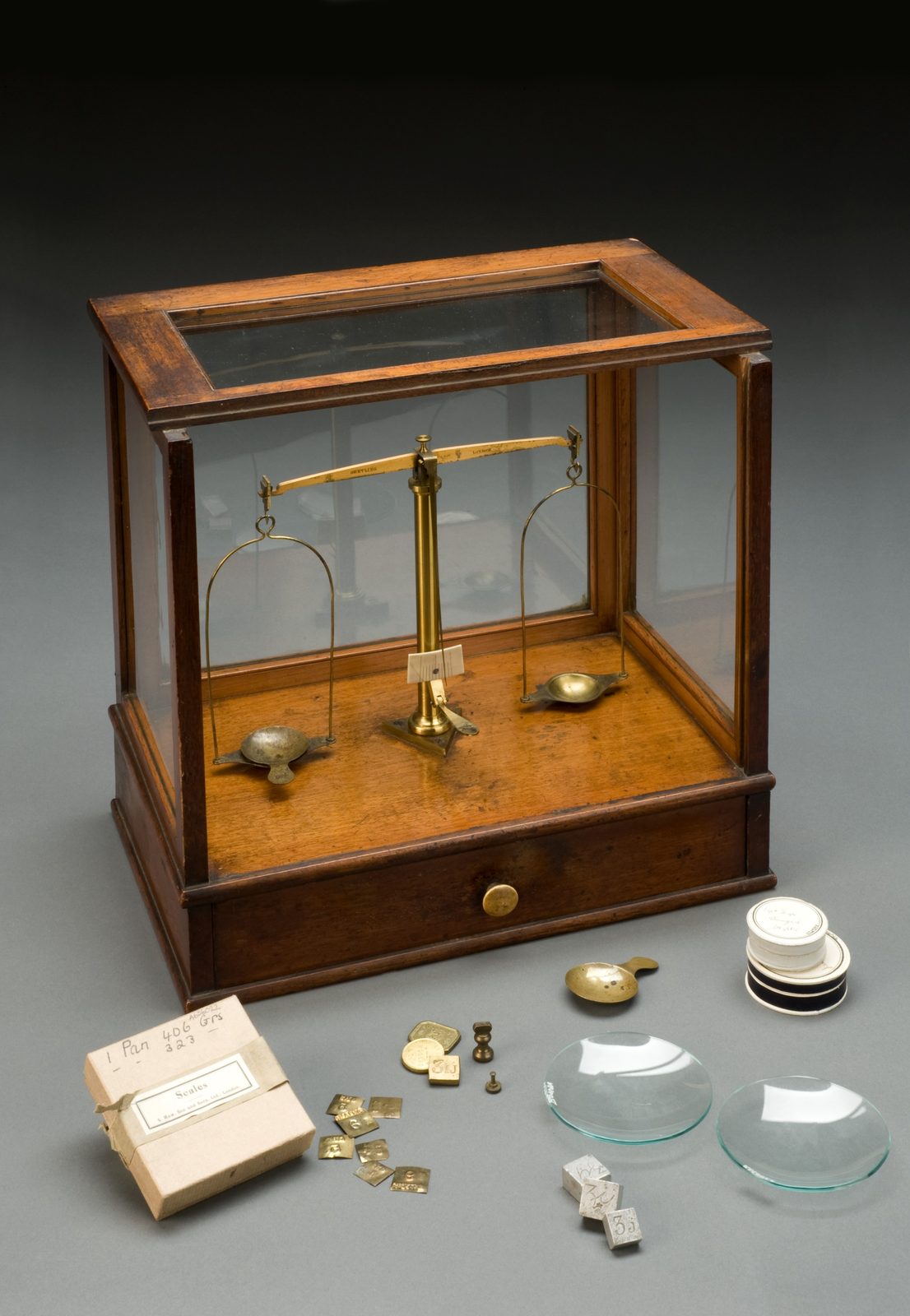
Hold the boundary where it falls. What was weighed, three times, with the astrologers' consent and often their design, was chart-to-person matching in a room with no client in it. What is sold, on the authority of the same system, is the timing of a wedding, the price of a stone, the fate of a match, the shape of a year. The tests were run on the smallest object in the shop. Everything else on the shelves has never been on the scale at all.
Twice a week
Essays like this one, Tuesdays and Saturdays. One email per essay, and the archive is never mailed out. Subscriptions open shortly; the RSS feed is live now.
Nothing else arrives, ever.