Which day is your fast, actually
A lunar day will not sit inside a calendar date, so one rule decides which date carries its name. The whole rule is a single minute: your own sunrise.
Two ways in. The gist assumes you have never met any of this before.
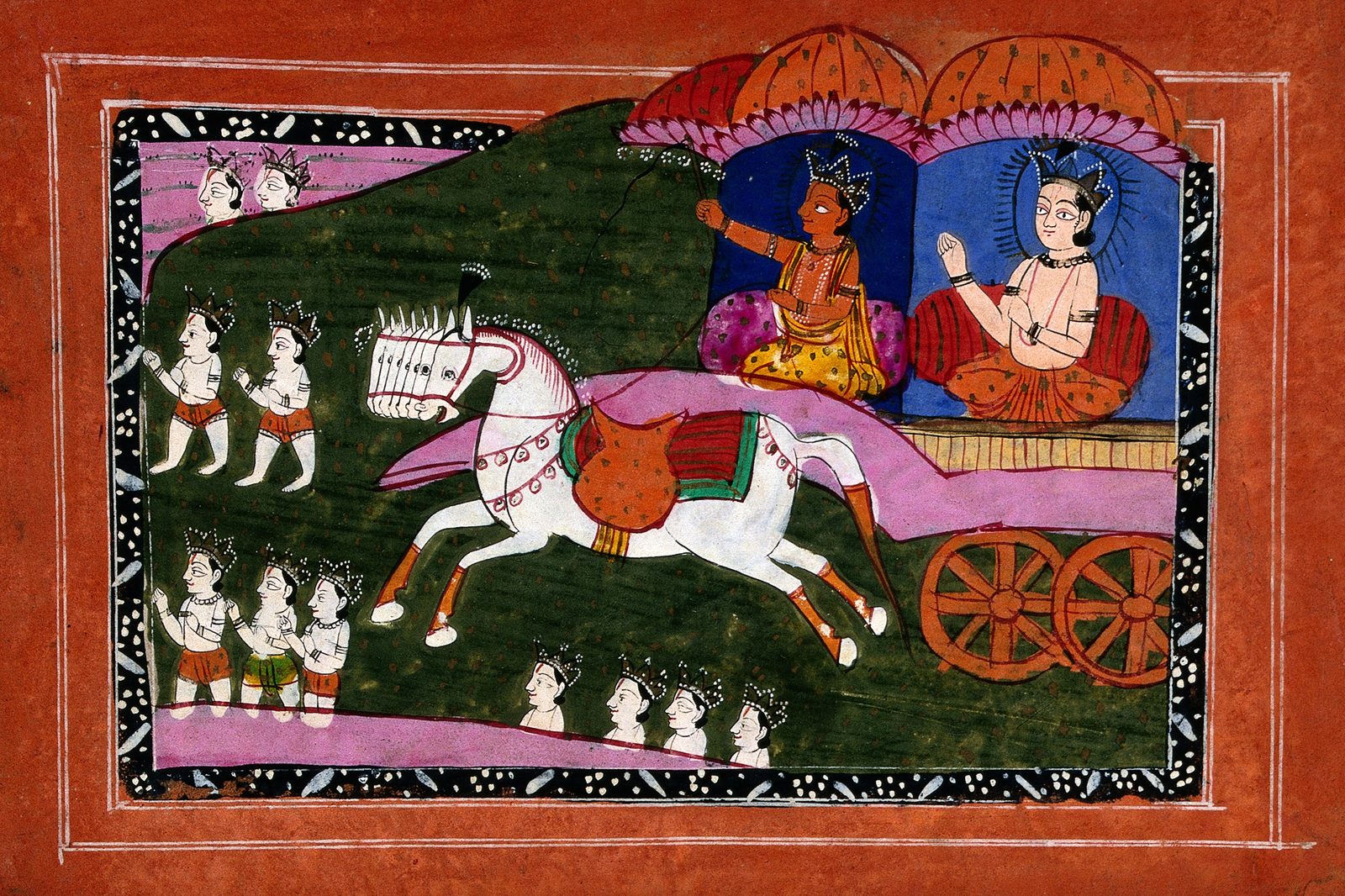
One minute of the morning settles which date a fast belongs to. Most families have never been told which minute, which is why a conversation like this one happens in a great many houses, nearly always in the evening, usually with two phones on the table.
"The fast is on Thursday."
"It cannot be. Look at the screen. It already says ashtami."
"Then why does the sheet say Thursday?"
Nobody in that room is being careless. They are looking at the same sky, and very often at the same panchang (पञ्चाङ्ग), the printed almanac sheet. One small rule sits between them, and once you have it, this argument stops happening in your house.
The rule, and the minute it turns on
Begin with the day itself. Here a day runs from one sunrise to the next sunrise. It does not run from midnight to midnight.
Now the thing being counted. A tithi (तिथि) is a lunar day, and it is not a day of the clock at all. It is a stage in the widening gap between the moon and the sun. One tithi ends when that gap has grown by another 12 degrees. Because the moon hurries in some parts of its orbit and dawdles in others, a tithi comes out a little longer or a little shorter than one of our days. So it drifts in and out of our dates. It begins on one afternoon and finishes on the next evening. The five limbs of a day takes apart the whole set of measurements, this one included.
The almanac therefore needs a way to decide which of our dates carries which tithi's name. Here it is.
Look at the moment of sunrise. Ask which tithi is running at that moment. That tithi gives its name to the whole day, until the next sunrise. This is the udaya tithi (उदय तिथि), the risen tithi.
Read that once more, because the rest of this follows from it. The test is one minute long. It does not ask which of the two dates held more of the tithi. It does not ask when the tithi began. The sun comes up, the almanac looks, writes down what it sees, and then stops looking until tomorrow.
Two months on a wall calendar
Take the eighth day of the bright fortnight, śukla aṣṭamī (शुक्ल अष्टमी), a tithi that a good many households keep a monthly fast on. Two real cases from this year's sheets, both computed for Delhi.
In August, ashtami begins at 19:19 on Wednesday the 19th and ends at 21:18 on Thursday the 20th. Sunrise in Delhi on both mornings falls a few minutes before six.
Apply the test twice.
Wednesday, a few minutes before six. Ashtami has not begun. It will not begin for another 13 hours. Saptamī (सप्तमी), the seventh, is running. Wednesday is saptami.
Thursday, a few minutes before six. Ashtami began the previous evening and will not finish until nine at night. Ashtami is running. Thursday is ashtami.
So the fast is kept on Thursday, and Thursday is where the almanacs put it.
Now go back to the two people with their phones. They were looking on Wednesday evening, and the screen was telling the truth. Ashtami had indeed started, at 19:19. It had simply started too late in the day to give Wednesday its name.
A second surprise waits for the same family the following night. Anybody who checks the phone at ten o'clock on Thursday will find navamī (नवमी), the ninth, because ashtami ran out at 21:18. The fast was kept on the right day. The tithi ended while it was still going on. This is ordinary, and it happens most months.
November runs the other way round. Ashtami begins at 04:19 on Tuesday the 17th and ends at 06:04 on Wednesday the 18th. Sunrise in Delhi that week is around a quarter to seven.
Tuesday, a quarter to seven. Ashtami began two and a half hours ago, in the dark, while the house was asleep. It is running. Tuesday is ashtami.
Wednesday, a quarter to seven. Ashtami finished 40 minutes ago. Navami is running. Wednesday is navami.
The same test, and the opposite feeling. In August the tithi arrived too late to count for the day it started on. In November it left too early to count for the day it ended on. The sheet is not being awkward. It is asking one question each morning and accepting the answer.
The day, or the hour
There is a second thing in most households that is kept by tithi rather than by date, and it makes the point from another side.
Suppose someone at home was born at half past nine at night, and the tithi running at that minute was shukla ashtami. That is their janma tithi (जन्म तिथि), the birth tithi. In many northern families it is the birthday that actually gets marked, whatever the school certificate says. Across much of the south the birth nakshatra is used for this instead, which is a different custom with the same instinct behind it.
By the rule we have just used, that person's tithi birthday in August this year falls on Thursday the 20th. And at half past nine on Thursday night, ashtami has been over for 12 minutes.
Sit with that for a moment, because it is not a flaw. The day named after a tithi and the hour at which the tithi was actually running are two different things, and in most years you cannot have both. Households keep the day. That is precisely what the rule is for. It hands you a date you can write on a calendar, invite people to, take leave for, and cook for.
Why the sheet and the family disagree
Three ordinary reasons, and not one of them means somebody has blundered.
The first is the one we have just watched. Someone read the start time and assumed the tithi belonged to the date it started on.
The second is the city. Sunrise is a local event. The sun reaches one Indian city well over an hour before it reaches another, and both keep the same clock. If your sheet was computed for a city that is not yours, its sunrise is not your sunrise, and once in a while that difference lands on either side of a tithi's boundary.
The third is that not every observance uses sunrise. Some ask about the middle of the day, some about the stretch just after sunset, some about the middle of the night, usually because the thing being remembered is held to have happened then. Ekadashi (एकादशी) carries timing rules of its own that differ between traditions, and it needs an essay to itself. Why two panchangs disagree follows a festival through this properly and shows how two honest sheets end up on two dates.
One more line, so it does not ambush you. Sometimes the sunrise test returns an odd answer. A long tithi can be running at two sunrises in a row, so its number appears twice. A short one can slip between two sunrises without being caught at either, so its number is missing. Both have names, both have settled conventions, and each is a subject of its own.
The rule is old, and it was argued over in writing. Deciding which day an observance falls on is a whole branch of Sanskrit literature, the nirṇaya (निर्णय) or decision writing. Two old books from that shelf still settle most of these questions for the almanac-makers. One is the Nirnaya Sindhu, written by Kamalakara Bhatta around 1612. The other is the Dharma Sindhu, written by Kashinatha Upadhyaya in 1790. They are not light reading, and I am not recommending them to you. But a shelf of books spending four hundred years on which day is which tells you something worth hearing. Your family is not muddled. The question is genuinely fiddly, and it has been treated as fiddly for a very long time.
So here are the checks, and none of them needs anything you do not already have.
Find sunrise for your own town, and use that. Not the one printed on the cover of the sheet, unless the two happen to be the same place.
Then read both of the tithi's times, the start and the finish, and ask exactly one question of them. Was that tithi running at your sunrise minute? Do not count how many hours of it fell on each date. That is not the question, and counting hours is what sends most people wrong.
Then run the same test on the morning before and the morning after. Most days the number will climb by one. Sooner or later it will repeat, or a number will be missing, and you will know that the sheet has not been misprinted.
Do this once on a quiet morning, when nothing much is riding on it. The next time two phones disagree over dinner, you will not need to win the argument. You can just ask what time the sun came up.
Twice a week
Essays like this one, Tuesdays and Saturdays. One email per essay, and the archive is never mailed out. Subscriptions open shortly; the RSS feed is live now.
Nothing else arrives, ever.