The fortnight for the dead
Pitru paksha runs 26 September to 10 October. The fortnight indexed by people, not events: how to find your family's day, and why the afternoon decides.
Two ways in. The gist assumes you have never met any of this before.
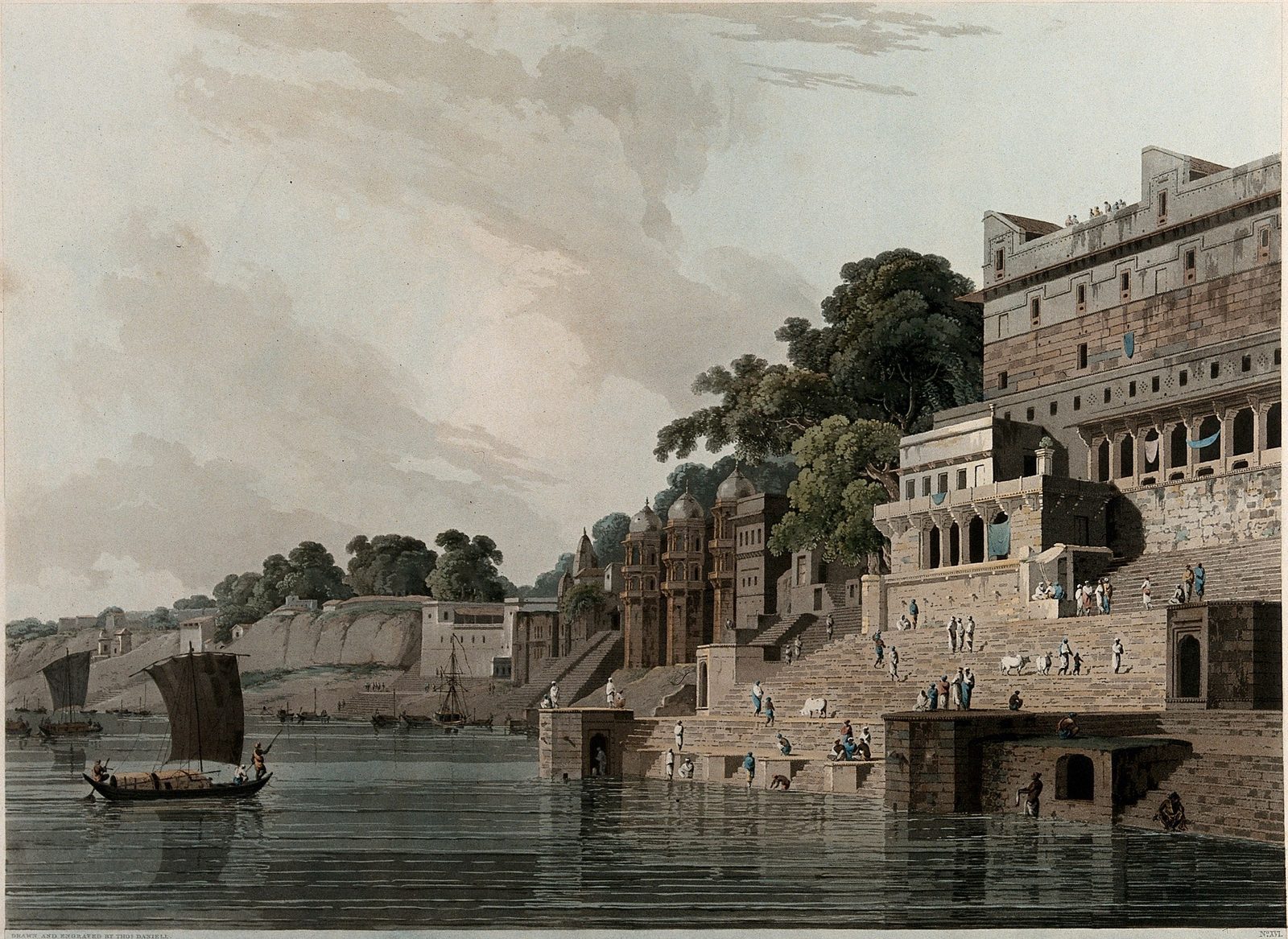
Pitṛ pakṣa (पितृ पक्ष), the fortnight kept for the dead, runs this year from Saturday 26 September to Saturday 10 October, and it is the one stretch of the calendar indexed by people instead of by events. Every other page of a panchang answers the question what day is it. These 15 dates answer a different one. Whose day is it.
That difference comes from a single rule. A household keeps śrāddha (श्राद्ध), its rite of remembrance, on the tithi (तिथि) on which its own person died, and during this fortnight it keeps it on whichever date that tithi falls. A tithi is a lunar day, a stage in the widening gap between the moon and the sun rather than a block of clock time. So the fortnight is not a schedule that everybody shares. It is a register, and each family reads one line of it.
Which makes this the rare occasion when the useful thing I can hand you is a lookup and not a description. What follows is calendar mechanics: how the fortnight is located, how a death becomes a date inside it, and which minute of the day decides. What the rite itself consists of belongs to your household and to whoever conducts it for you, and it is not my subject.
Finding the fortnight
Begin at the full moon. The fortnight opens on the pūrṇimā (पूर्णिमा) of Bhadrapada, the full moon of the month that ends the rains, and closes on the amāvasyā (अमावस्या), the no-moon day at the end of the dark half that follows. This year that is 26 September and 10 October, and everything between them is the waning half of one lunar month.
One naming difference trips people every September, and it is only a naming. Calendars that run their months from new moon to new moon call this dark half Bhadrapada's. Calendars that run them from full moon to full moon have already started the next month, so they call the same days Ashwina's. Amanta and purnimanta sets out the two reckonings in full. Here you need only this: a sheet that says Ashwina and a sheet that says Bhadrapada are pointing at the same 15 dates, and neither of them is wrong.
The match, and the afternoon that makes it
Now the lookup. Suppose a grandfather who died on a ṣaṣṭhī (षष्ठी), the sixth lunar day. His day in this fortnight is the sixth lunar day of this dark half. The tithi is what carries over, not the English date, not the weekday, and not the half of the month he died in: a death on the sixth of a bright fortnight is still kept on the sixth here.
So which of our 15 dates carries the sixth? This is where the fortnight stops behaving like the rest of the panchang, and it is worth slowing down for.
Almost everything else on a calendar is dated by sunrise. Whichever tithi is running when the sun comes up gives its number to that whole day. Shraddha does not use that test. It uses the afternoon. Split the daylight, sunrise to sunset, into five equal parts; the fourth of those parts is aparāhṇa (अपराह्ण), and the rite belongs there. The same window fixes Bhai Dooj at the other end of the year, worked through in five days of Diwali. Because the rite is done in the afternoon, the date chosen is the one whose afternoon the tithi is running through.
Watch it decide. In Delhi on Thursday 1 October, that window runs from 13:22 to 15:45. The sixth tithi begins at 12:35 that day and ends at 10:15 the next morning. So it is running through the whole of Thursday's window, and by Friday afternoon it has been over for three hours. Thursday 1 October is the grandfather's day.
Notice what the sunrise test would have done with the same two numbers. The sixth had not begun when Thursday's sun came up, and it was still running when Friday's did. Sunrise would have named Friday. The afternoon names Thursday. A whole day apart, from one honest rule against another, which is the reason you look up a shraddha table rather than reading down the tithi column of an ordinary calendar page.
There is a wrinkle in this year's table, and it is better met in advance than on the morning. There are 16 tithis to fit into 15 dates, so one date carries two. This year it is Wednesday 30 September, printed for the fourth and the fifth together. The arithmetic is plain enough once you have the times. The fourth tithi ends at 14:55 that day and the fifth begins at the same minute, and 14:55 sits inside the afternoon window, which on 30 September runs from 13:22 to 15:45, the same two clock times as the Thursday: near the equinox the daylight shortens by only a couple of minutes a day, and the printed window barely moves across two dates. Both tithis touch that one afternoon. Neither touches any other. So both are kept on the Wednesday, and two families with two different dead people go to the river on the same day.
The days that carry their own names
Most of the fortnight is plain numbered days waiting to be claimed. A handful carry assignments of their own, and every printed table marks them.
Bharaṇī (भरणी) is a nakṣatra (नक्षत्र), one of the 27 star-segments the moon passes through, and on the day it runs during this fortnight a rite of its own is prescribed. Tables call it Maha Bharani, and it is associated with a death within the past year. This year it falls on Tuesday 29 September, sharing the date with the third tithi.
The ninth, Sunday 4 October, is kept in a great many households for the women of the family: mothers, grandmothers, the aunt who raised somebody. Calendars print it as matr̥ navamī (मातृ नवमी), the mothers' ninth, or as avidhavā navamī (अविधवा नवमी), for a woman who died while her husband was living. The fifth, this year on that crowded Wednesday, is similarly kept for those who died unmarried.
The fourteenth, Friday 9 October, is set aside for those who died by violence or accident, and it is not used for a death from illness or from age. I want to leave that day exactly there, as an assignment on a calendar. A tradition that counted its dead carefully noticed that some deaths are harder to carry than others and gave them a page of their own. That is all this line in the table is, and it is enough.
One line, one page
What a household actually needs to look up, weeks ahead, is short. Find the tithi your person died on, which is usually a question for whoever in the family keeps such things and is usually answered in four words. Then find that tithi's date in this year's shraddha table for your own city, because the afternoon window moves with your longitude and the times above are Delhi's. Write the date on the kitchen calendar. That is the whole lookup, and it is the only part of this fortnight the almanac can do for you.
Then there is the last day. Sarva pitr̥ amāvasyā, Saturday 10 October, is kept for everybody: for ancestors whose tithi nobody wrote down, for the ones too far back to name, for a family that meant to keep the right day and let it go past. Somebody designing this fortnight understood that memory fails, that records are lost in moves and in fires and in the ordinary way of two generations passing, and that a rule which only serves the well documented is not much of a rule. So the calendar keeps one day for the names nobody remembers, and ends the fortnight on it.
Twice a week
Essays like this one, Tuesdays and Saturdays. One email per essay, and the archive is never mailed out. Subscriptions open shortly; the RSS feed is live now.
Nothing else arrives, ever.