Solar months, and the twelve sankrantis
Six states begin a month when the sun changes sign. Twelve crossings a year, four rules for which morning the month opens, and one day with six names.
Two ways in. The gist assumes you have never met any of this before.
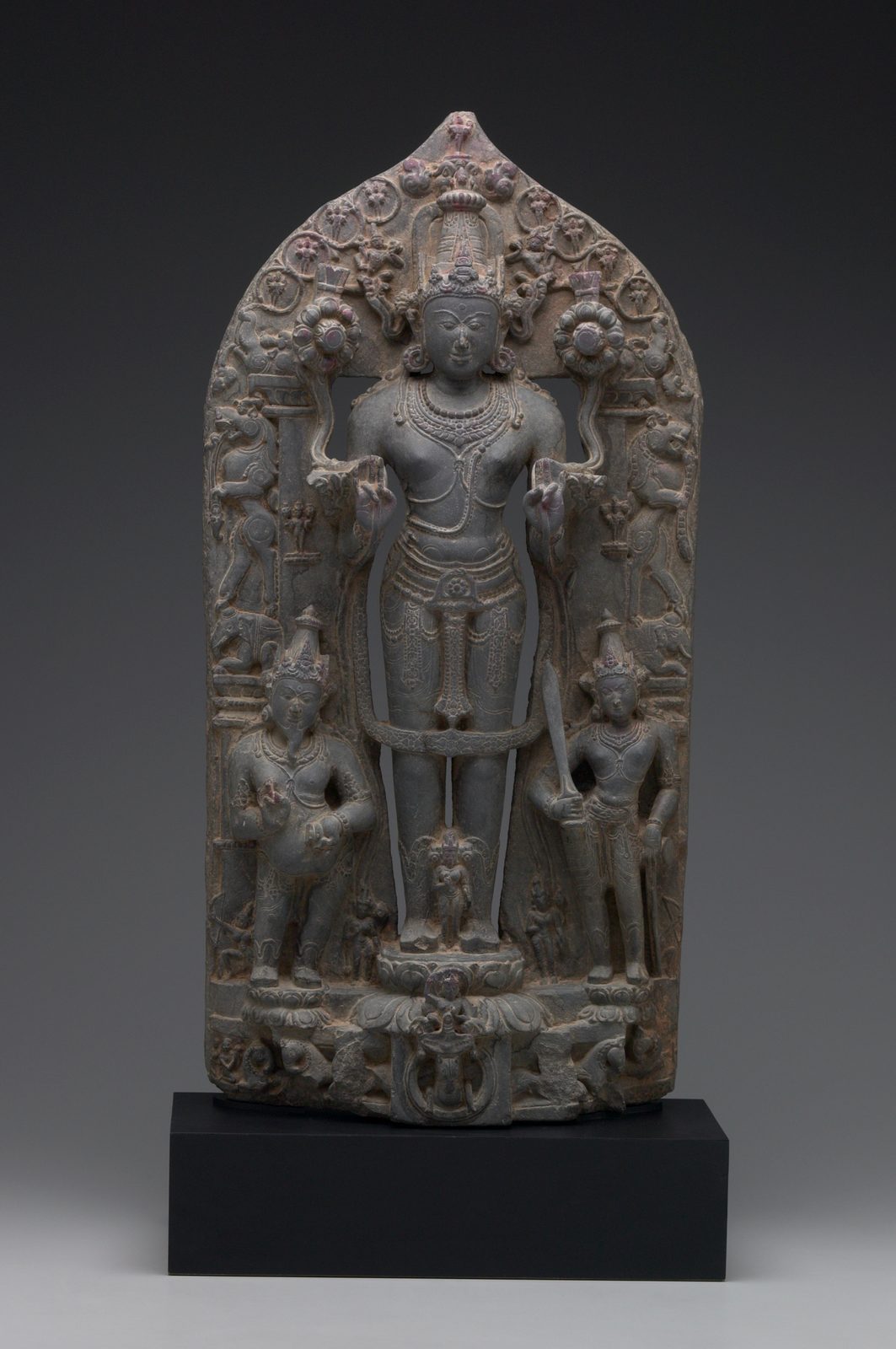
Which month is it? In six parts of the country that question is settled by the sun rather than by the moon, and on any morning of the year it has more than one correct answer.
Tamil Nadu, Kerala, Odisha, West Bengal, Assam and Punjab run their everyday months on the sun, not on the moon's shapes, which is what most of the rest of the country does. A month there begins at the instant the sun leaves one sign of the zodiac and enters the next, and that instant is handed over by the sky at a particular minute, whether or not anybody is awake to see it.
The instant has a name. It is a saṅkrānti (संक्रान्ति), a going across, and there are twelve in a year because there are twelve signs to cross into: Meṣa (मेष), Vrishabha, Mithuna, Karka, Simha, Kanya, Tula, Vrishchika, Dhanus, Makara, Kumbha, Mīna (मीन). The ram, the bull, the twins, the crab, the lion, the maiden, the scales, the scorpion, the bow, the sea goat, the water pot, the fish. Aries through Pisces, the same pictures in the same order, because the set came here from the Greek-speaking world a long time ago and stayed.
You already know one of the twelve. Makar Sankranti in January is the crossing into Makara, and it is the only one the whole country notices. I will come back to why.
First the shape of the year they make. Twelve crossings cut the year into twelve months, but not into twelve equal months, because the sun does not travel at an even pace against the stars. Look at this year's crossings in order: 14 January, 13 February, 15 March, 14 April, 15 May, 15 June, 16 July, 17 August, 17 September, 17 October, 16 November, 16 December. Count the gaps and you get months of 29, 30 and 31 days, with the short ones clustered around the turn of the English year and the long ones in the middle of it. A solar month is simply however long the sun takes to get across one sign, and that is between about twenty-nine and a half days and about thirty-one and a half.
Now the part everything else turns on. A crossing gives the month its first moment. It does not give the month its first day.
The sun steps into a new sign at some minute of some morning, afternoon or night, and a household needs a date, not a minute. Somebody has to say which of our days the new month opens on. The parts of the country that keep solar months have never answered that in one voice.
One morning, four rules
Robert Sewell and Sankara Balakrishna Dikshit set the four answers side by side in their 1896 handbook of the Indian calendar, and the four are still the ones being used.
In Odisha, the month begins on the day of the crossing, whenever in that day the crossing happens. In the Tamil country, the month begins on the same day if the crossing comes between sunrise and sunset, and on the following day if it comes after sunset. On the Malayalam coast the daylight is divided into five parts, and a crossing inside the first three of them opens the month that day, while a crossing later than that pushes it to the next morning. In Bengal, a crossing between sunrise and midnight opens the month on the following day, and a crossing after midnight opens it on the day after that.
Not one of those four rules argues about where the sun is. They agree about the sky completely. What they differ about is the paperwork.
Watch them work on a single crossing. On Tuesday 14 April this year the sun entered Mesha at 09:39 in the morning, and sheets computed from different tables put it a minute or two either side of that. One instant, one clock, the whole country.
Odisha takes the day as it comes, so the month opened that Tuesday, and Pana Sankranti, which Odia households keep as the year's first day, was the 14th. The Tamil rule asks whether the crossing beat sunset, and it beat it by nine hours, so Chithirai began on the 14th and Puthandu was kept that morning. Kerala's cut-off that day fell in the early afternoon, well after the crossing, so Medam opened on the 14th as well. In Punjab the desi months open on sangrand, the crossing day itself, and Vaisakh began on the 14th, with Baisakhi kept the same day.
Bengal is where the calendar parts company with its neighbours. A crossing at 09:39 falls between sunrise and midnight, so Boishakh did not open until the next morning. Poila Boishakh was Wednesday the 15th, and the Bengali year 1433 began there while the rest of the map had started it a day earlier.
Underneath the Bengal rule there is a habit of mind worth carrying away. In Bengal and in Assam the day the crossing falls on is counted as the last day of the month that is ending, not the first day of the one beginning. That is why the January crossing is kept in Bengal as Poush Sankranti, on the closing day of Poush, while the same crossing opens the month of Thai in Tamil Nadu and is kept there on the first morning of Thai as Pongal. In Assam the first day of Rongali Bihu, the one given to the cattle, falls on the closing day of Chot, and the new month arrives the morning after. Same sky, same minute, two households turning the page on two different mornings.
Same sun, several words
Stand on any day in the second half of April and ask what month it is.
In Tamil Nadu it is Chithirai. In Kerala it is Medam. In Odisha it is Baisakha, in West Bengal Boishakh, in Assam Bohag, in Punjab Vaisakh. One stretch of sun, six words, and no argument anywhere in that list.
Three habits of naming are crossing each other here. Kerala uses the sign's own name, so Medam is Mesha in Malayalam and the month tells you plainly which patch of sky the sun is standing in. Everywhere else the solar months borrowed the old lunar month names, the ones that belonged to stars first, which the twelve months and the stars they are named for sets out one by one.
Sewell and Dikshit noticed the sharper thing inside that borrowing, and it is my favourite fact in this whole subject. Bengal and the Tamil country both use the lunar names for their solar months, and they use them one step apart. The month of Mesha is Vaisakha in Bengal, and in the Tamil country it is Chittirai, which is Chaitra, with Vaisakha coming second. Odisha, Assam and Punjab count with Bengal on this. Two lists of the same twelve names, both correct, offset by one name.
This is not the disagreement you may be thinking of. When a Lucknow household and a Pune household give one festival night two different month names, that is the lunar split, the one between ending a month at the no-moon night or at the full moon, and amanta and purnimanta takes it apart. What is happening here has a similar shape and a separate cause.
Kerala adds one more wrinkle for the road. Its year does not begin at the April crossing at all. The Malayalam year opens with Chingam, the crossing into Simha, in the middle of August. The first of Medam is the older new year and is kept as one, but the year number turns over four months later.
The crossing everyone knows
Which leaves Makara, and why that one out of twelve reached every state, including the states that count their months by the moon and use the crossings for nothing else.
Part of the answer is that it lands where the harvest lands. It is Pongal in Tamil Nadu, Magh Bihu in Assam, Maghi in Punjab, Poush Sankranti in Bengal, Uttarayan in Gujarat, Makara Sankranti in Odisha. A day attached to new rice, to bonfires and to accounts settled gets remembered.
But the plain reason, I think, is one nobody says out loud. Makar Sankranti does not move. It falls on 14 January, occasionally the 15th, year after year after year. Every other date your family argues about is pinned to the moon and walks up and down the English calendar. This one sits still, and a festival you can find without looking anything up ends up in everybody's mouth.
It does move, mind you, very slowly. The line the sun is crossing is fixed to the stars and not to the seasons, so the crossing has been sliding later against the English calendar for centuries: it once sat on the December solstice and now comes more than three weeks after it. How that drift works, and how fast, is arithmetic for Meghnad's series rather than for this page.
Which brings the opening question back round, and it needs no sheet to answer. The neighbour from Thrissur, the cousin who married into a Bengali family, the man who runs the shop downstairs: on one morning, under one sun, each of them will name a different month, and not one of them is mistaken. So when your sheet and somebody else's disagree, the thing worth asking is not which of us is wrong. It is this: at what minute did the sun cross, and whose rule turned that minute into a morning?
Twice a week
Essays like this one, Tuesdays and Saturdays. One email per essay, and the archive is never mailed out. Subscriptions open shortly; the RSS feed is live now.
Nothing else arrives, ever.