A child's chart
A sentence spoken over a week-old baby can still be in use at nineteen. What a parent can honestly ask an hour for, and what to say at home.
Two ways in. The gist assumes you have never met any of this before.
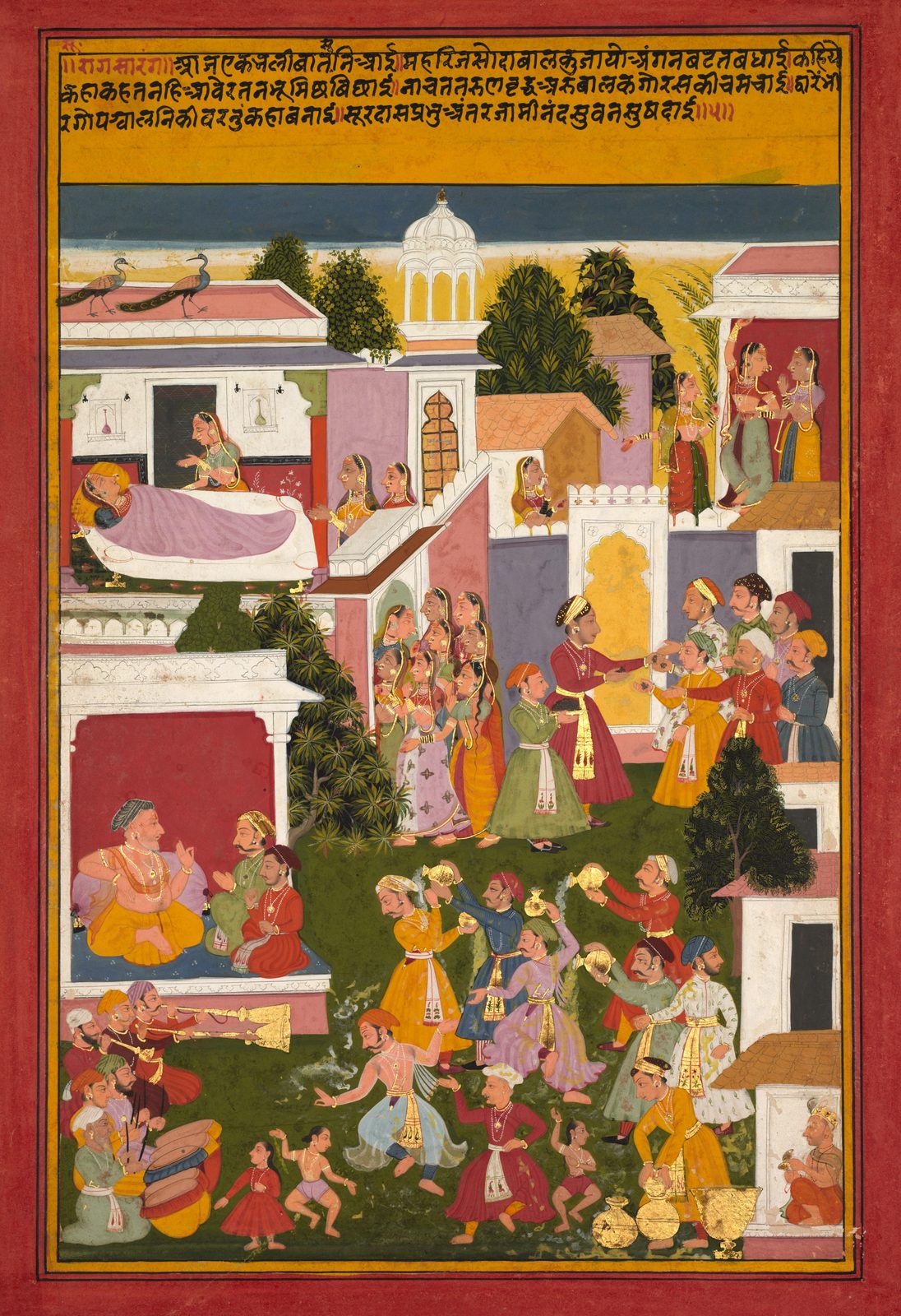
A child's chart is read out loud for the first time when the child is about a week old, and every person listening is an adult. The baby is asleep, or feeding, or being passed from one set of arms to another. Somebody holds the paper and reads. Most of it is technical and nobody present follows that part. Then, near the middle, comes a line about the kind of person this is going to be, and everybody follows that one. This one will be sharp. This one has a hard start and then it clears. This one will study far away and will not come back to live here.
Six people hear it. Nobody writes it down, because nobody needs to. By the time the tea is cleared the line has come off the paper and into the house, and it will stay there a good deal longer than the paper will.
That line is my subject, not the arithmetic underneath it: one sentence, and what it does over twenty years in a family where everybody concerned loves the child.
The boy in what follows is invented, a composite of how such a sentence ordinarily travels rather than anybody's actual son, and the house around him is invented with him. At four the line is an affectionate warning given at the door: this one is the difficult one, do not take it personally. At seven it explains a bad term at school, and having explained it, nobody looks for a duller reason. At eleven it reaches the class teacher ahead of him, as a parent apologising in advance. At fifteen he uses it himself in the middle of an argument, because it is the only account of himself anybody has handed him and an account is better than none: I am like this, ask them. At nineteen it has stopped being anyone's opinion. Nobody in that invented house could now tell you it started on a sheet of paper in his second week.
Let me be exact, because it is easy here to claim far too much. The sentence did not make him anything. Children are tougher than that, and much of what a person turns out to be arrives without anybody's permission. The real claim is about order, not about the sky. An adult has a whole life to hold a description against, twenty or forty years of it, too untidy to fit in one neat sentence, so he can say: that was one bad year, and here is what was in it. A child has nothing to hold it against. The description arrives first and the life is lived afterwards, in a house where it is already in daily use.
Two things then fix it in place. The first is what repetition does. Nothing survives being repeated except the shortest part of it. A careful practitioner may have said that one stretch of the childhood looks harder than the rest, that children are unsettled at that age anyway, and that none of it is a verdict. Three tellings later, one adjective is left, in general use among people who love the boy and have no idea they are quoting anybody.
The second is who supplies the evidence. A general statement fits almost anybody, because whoever hears it fills in the particulars from a life only they can see, and Nikhil has taken that apart in the reading that fits everyone. A four-year-old cannot do the filling in. His family does it for him, keeping the incidents that fit and letting the rest go the way most Tuesdays go.
None of it is ever said unkindly, which is what makes it hard to interrupt, and the hopeful version is the heavier one. A boy told from infancy that he is the one who will lift the family carries that into every examination hall, and he cannot put it down without looking ungrateful. The sheet the sentence came off is usually still in the house, in a locker or at the back of a steel almirah, and it will outlast everybody's memory of what was actually said over it.
What a parent actually brings
Now the hour itself, which is where my interest really sits.
A mother books an hour and brings her son's janma patrikā (जन्मपत्रिका), the birth horoscope drawn up in his first fortnight. She is rarely shopping for a prophecy. She has one of three things with her, and from across a table they look alike.
Sometimes it is a problem with an address. He is not speaking as much as his cousin did at that age. The school has used a word nobody at home understood and sent her home holding it. Sometimes it is a decision she has to make and would rather not make alone: which school, whether to move cities for the work, whether to keep him back a year. And underneath either of those, almost never said in the first ten minutes, sits the third: am I doing this badly, and is any of it my doing.
An hour can do honest work on the second and the third. On the first it can do nothing at all, and pretending otherwise is where the harm begins. A chart is not a paediatrician and it is not a class teacher, and neither is the person reading it out. The only decent answer to a frightened mother is that the people who can examine her child should examine him, and that she is welcome to come back with whatever decision is left.
The middle one is ordinary work: what has to be settled, and by when.
The third needs more care than it gets. A parent asking whether she is doing this badly has not brought a question about her son. She has brought one about herself and attached it to him, because that is the only way she can get it into a room and say it in front of another adult. It deserves an answer, and the answer is not in the chart.
One sentence opens a great many of these hours: is there anything in his chart I should know about. Taken flat it is a request for information, and it is not one. It is a request to be told that nothing is coming, made by somebody who worked out in the week he was born that nobody can tell her that. What an honest hour does is decline it kindly and out loud, rather than hand her a smaller worry instead, and then spend the time on the parts of her son's year that are hers to arrange.
One duty in that room belongs to the practitioner. Anything said about a child will be repeated to that child. Not perhaps, and not eventually: within the week, shortened, at a table with other people at it. So the test for a sentence about a nine-year-old is not whether it can be defended out of the texts. It is whether it survives being repeated by a tired parent on a Thursday with the qualifications gone. If it cannot, it should not be said, and it should not be printed on a sheet. The same test belongs to the parent: whatever you are about to be told, you will be carrying it at dinner.
What to ask for before you leave
Most of the pressure to have any of this done at all comes from inside the house, usually from the woman who had the chart made in a fortnight when nobody slept properly, and the negotiation that follows is a long one: who says what in front of the child, which elder is to be thanked rather than corrected, what a family owes a document it has kept for twenty years. That negotiation is Antara's ground and not mine, and she takes it apart at proper length in your chart, their hopes. What belongs to the hour is one narrow request, and you make it of the practitioner rather than of your mother-in-law. Ask him to say plainly, before you stand up, which parts of what he has told you he would not want repeated to a nine-year-old, and ask for the qualifications in his own words, written down.
That note is what your son gets when he asks, and he will ask, on an unremarkable evening in his twenties when nothing is being decided. What the household will have kept by then is one adjective. Write the long version the same evening, while you still have the words.
Twice a week
Essays like this one, Tuesdays and Saturdays. One email per essay, and the archive is never mailed out. Subscriptions open shortly; the RSS feed is live now.
Nothing else arrives, ever.