Your birth details
What bhagol holds today is an email address, if you subscribe. Why a birth date, time and place identify you, and the rules fixed before we collect any.
Two ways in. The gist assumes you have never met any of this before.
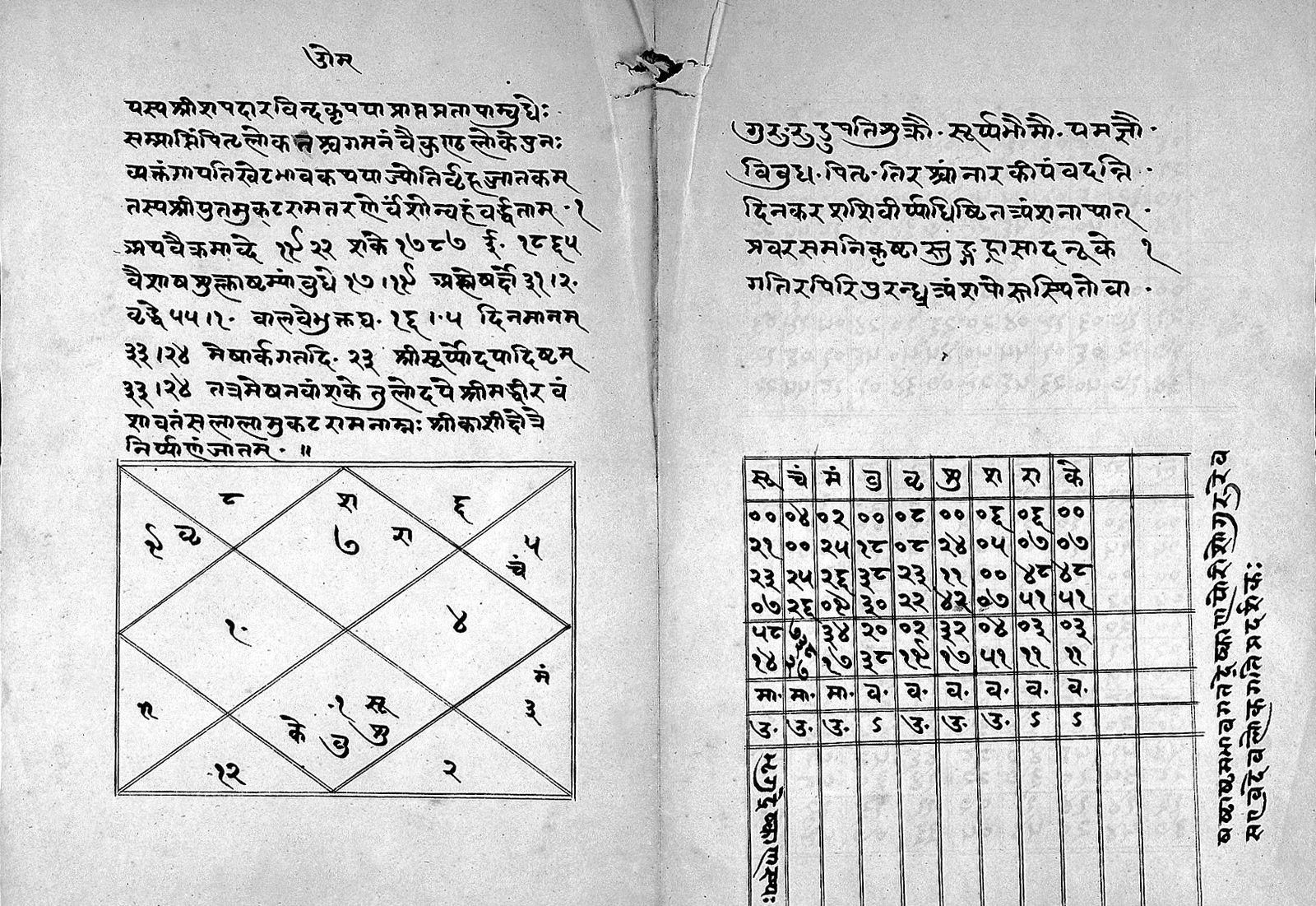
A date. A time to the minute. A town.
14 March 1991, 4:52 in the afternoon, Nagpur. I made those three lines up, and they are still about the most identifying thing a person can type into a form. Not because of what they say about you. Because of how few other people they leave standing next to you.
Start with the country. About 55 babies are born in India in an average minute.
Here is where that comes from. India holds about 1.45 billion people, and its birth rate is close to 16 births a year for every 1,000 people. Call it 20 instead. A bigger number weakens my case, so take the bigger number. That gives 29 million births a year, and a year holds 525,600 minutes. Divide one by the other and you get 55.
Fifty-five sounds like a crowd to hide in. It is not, because you were not born in the country. You were born in a town.
Take a city of 2 million people. At the same generous rate that is 40,000 births a year, which is about 110 in a day, and a day has 1,440 minutes. Divide 110 by 1,440 and you get less than a tenth of a birth in any one minute. In plain words: in that city, on your date, at your minute, almost certainly nobody else was born at all. Try it with a city of 20 million. That city has roughly 1,100 births a day, still fewer than one a minute.
That is what your birth details are. Not a description of you. A key.
The best measurement of this I know comes from the United States. Latanya Sweeney worked with data from the 1990 census. In a report published in 2000, she found that three plain facts, sex, five-digit postal code and full date of birth, were probably enough to pick out 87 of every 100 Americans as one particular person. Sex, town and date of birth alone picked out 53 of every 100. Philippe Golle redid the work in 2006 with the 2000 census. He got 63 in every 100 for the postal-code version rather than 87, and wrote plainly that he could not account for the gap. Take the lower figure. It is still most of a country identified by three ordinary facts.
Now notice what neither study used: a time of birth. A day has 1,440 minutes. Adding a recorded time splits each of those groups into as many as 1,440 pieces.
I have not found the equivalent study for India, and I am not going to carry an American percentage across an ocean and pretend it fits. Our cities are larger and our records are looser. The arithmetic above is mine, and you can redo it with whatever birth rate you prefer. One correction runs the other way. Times written down by hand bunch on the fives and the zeros, a habit Raman describes in what to bring, so a birth recorded at 6:00 shares its minute with more people than my sums suggest. That moves you from alone to one of a handful. It does not move you into a crowd.
So your birth details are not a fingerprint. Nobody will be arrested on them. But for matching one list of people against another they do a fingerprint's job. That is what matters once your details are sitting in a company's database.
The form at the entrance
This is the data the trade collects first, and it collects it by giving something away.
The pattern is standard and you have met it. A page offers a janma kuṇḍalī (जन्म कुण्डली), a birth chart, at no cost. The form asks for a date, a time and a place, which the calculation genuinely needs. Then it asks for a name, a sex and a phone number, which the calculation does not need at all. The chart that comes back is real and honestly free. The record left behind holds a person's identity, a way to reach them, and one thing worth more than either: the reason they came. A marriage. A child. An illness at home. Money somebody is afraid of losing. Nobody fills in that form on a calm afternoon for entertainment.
That file is more revealing than any chart made from it. A chart is a list of positions. A record of who asked what, on the day they were worried enough to ask, is a description of a life.
Indian law does not treat any of it as special. The Digital Personal Data Protection Act, 2023 has no separate class of sensitive personal data, so a birth minute and a shoe size sit under the same rules. The rules made under it were notified in November 2025, and the substantive duties arrive in stages over the 18 months after that. The Act does require consent to be specific and tied to the purpose you were told about, which is the part that bites here. I am not inclined to wait for the timetable. A rule we publish can be quoted back at us next week.
What this blog holds
An email address, if you subscribe. That is the entire list.
There is no account, no password and no profile. There is no free chart here and no form asking for a birth date, a birth time or a birth place, and none is coming to this blog. The address is never sold, never rented, never handed to a practitioner, and never used to advertise anyone else's product to you. You get an email when there is a new essay, and nothing else. Ask for it to be deleted and it is deleted, and we confirm that it is done.
The list is short because we have not yet built the thing that would need a longer one.
What the tool will need
Bhagol is building a chart tool, and when it exists it will need three fields: date of birth, time of birth, place of birth. That is the whole of the computation. A phone number computes nothing. Five rules are fixed already, before there is a field to type into.
- It lives somewhere else. Birth data belongs to the tool, in a separate and clearly marked part of bhagol, under its own written terms. This blog stays a place you can read without giving us anything.
- The terms are published before the first field goes live, not afterwards: what is collected, what it is used for, how long it is kept.
- Deletion on request, confirmed to you. How many working days that takes is not settled yet, so there is no number in this sentence. When it is settled it goes on the privacy page with a date on it.
- Only what the arithmetic needs. Any field beyond the three has to justify itself against a calculation rather than against a marketing plan, in writing, where you can read the justification.
- Never sold, never rented, never passed to a practitioner, with or without a fee. That one is already on the refusal list, and I expect it to be the most tested rule we have, because a list of people who asked about a marriage last week is worth real money to somebody.
The question you type is part of the record and carries the same rules as the birth time. If any of this changes, the change is dated on the privacy page, and it does not apply backwards to data given under the older terms.
Notice what is missing from that list. Which database. Which country the servers sit in. How many days a deletion takes. I do not know yet, and a founder who invents operational detail to sound careful is performing the exact trick this blog exists to complain about. So the rule is written now and the machinery is published when it is real.
A leaked password is changed in a minute. A phone number takes a week and some irritation. The date, the minute and the town never change, and neither does the fact that together they come close enough to a name.
Which is why the rules go down before the form exists. Written after the first hundred thousand records are in, the same rules are only an apology.
Twice a week
Essays like this one, Tuesdays and Saturdays. One email per essay, and the archive is never mailed out. Subscriptions open shortly; the RSS feed is live now.
Nothing else arrives, ever.