The label you grew up holding
A hedged line in a chart becomes a one-word family noun. How the compression happens, how to find the ink version, and how to stop confirming it.
Two ways in. The gist assumes you have never met any of this before.
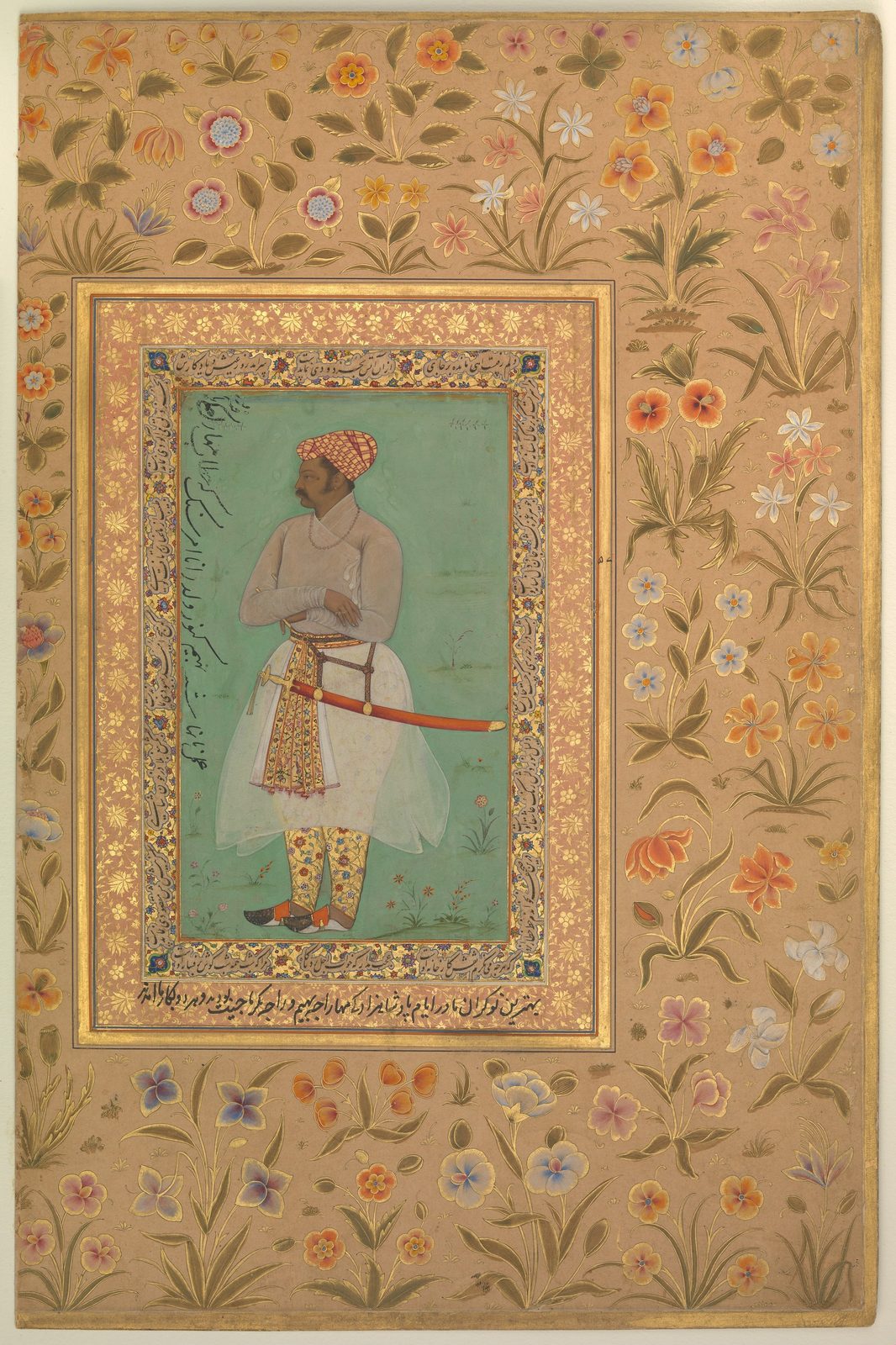
The one word your family uses about you may have begun as a line in your kundli (kuṇḍalī, कुंडली), the birth chart drawn up for you in your first fortnight, and in a great many houses it has been in continuous service ever since. The temper. The weak chest. The one who will settle abroad. Here is what the working life of such a word looks like. The three scenes below are composite, put together out of the ordinary shape of houses like mine, and nobody in them is anybody in particular.
At eight, it appears over a school report. The marks are fine and the remarks column is not, and somebody reads out the sentence about talking in class. An aunt supplies the word: he has that temper, it was in the chart, they told us at the very beginning. Nobody disagrees, because there is nothing available to disagree with. You do not know what a chart is. What you know is that the adults have a file on you and have had it since before you could speak.
At 17, it appears at a cousin's wedding, said sideways to a woman you have never met, while you are holding a plate. This one has the temper. It is not said unkindly. It is said the way a phone number is passed on, to spare the stranger the trouble of finding out for herself. Notice that the sentence has got shorter since you were eight. The chart is no longer mentioned. The word no longer needs it.
At 26, it appears in a conversation about a job. You are explaining why you cannot go on working under a particular manager, and somebody at the table who loves you says it as a finding: this is the temper, this is what we have always said. The word is now doing work the original sentence never claimed. It is accounting for a resignation.
Three appearances, 18 years from the first to the last, each one shorter and harder than the one before. That compression is my subject.
What got compressed
Whatever was said over you at two weeks old was almost certainly said with hedges in it. The trade's ordinary register is conditional. A tendency rather than a fact, in certain periods rather than always, to be watched in the early years, likely to settle later. Set beside the word your family now uses, the original is a slow, careful, faintly boring thing.
A household cannot carry hedges. That is not a criticism of any household. A family needs a version that can be said across a room while the tea is being poured, to a visitor who will be gone in an hour, about a child who is standing right there. Conditionals do not survive that room. Nouns do. So the sentence is filed down until it fits in one hand, and what it loses first is every clause that would have let it be wrong.
Watch also for when the word gets used, because it is not used evenly. It comes out when something has to be explained quickly and in public: a bad result, a raised voice, a refusal, an absence at a function. It is a device for closing a subject in front of guests. That is a real service, and it is worth admitting that the word has been useful to everybody in the room, including you.
Why it holds
Two ordinary things keep it in place, and neither of them requires anyone to be credulous.
The first is that a child cannot audit an adult's claim. At eight you have no access to the document, no language to read it in, and no standing to ask the only question that would have helped: who said that, and what exactly did he say. By the time you have all three, the word has been in use for twenty years and has stopped sounding like a claim at all. It sounds like your name.
The second is the scoring. Hits get counted out loud and misses are never entered. On the day you lose your temper, the word is confirmed in company. On the day you are patient, and on the 300 days after it, nobody says the chart was wrong. They say you have improved, or that it is under control now, which keeps the word and adds a compliment. Any sentence marked on that system will look accurate for a lifetime. Something like it happens with any general description of a person. In 1948 the psychologist Bertram Forer handed his class a single personality sketch, each student believing it had been worked out from his own answers, and the class rated it a close account of themselves. Why a general line feels exact when it is offered as yours is a subject of its own, and Nikhil has taken it apart at length in the reading that fits everyone.
I want to be careful about the next step, because there is a bigger claim nearby, and I do not think it is safe. In 1968 Rosenthal and Jacobson reported that raising a teacher's expectations of a pupil raised the pupil's measured intelligence. That finding has had a hard time since. Researchers have repeatedly failed to reproduce a strong effect, and a synthesis of the classroom experiments found that where teachers had already known the children for about two weeks, an expectation planted in advance did close to nothing. The literature is still argued over. So I am not going to tell you that a word made you what you are. Your family has known you for a great deal longer than two weeks, and the evidence for the strong version is thinner than the story is attractive.
What a label reliably does is smaller and duller. It decides what gets noticed, what gets mentioned, and what gets left out of the account of the evening. That is enough to keep a word alive for thirty years without changing a single thing about the person it is attached to.
None of this makes your aunt a fool. Compressing a child into something sayable is what every family does, with or without a chart in it. Families without one use a birth order, or a story about a bicycle from 1994. Yours had a document, and the document had authority. The habit is universal. The material was local.
Going back to the ink
There is a version of the sentence that does not move, and it is worth finding.
The document is on the shelf a household keeps for things that cannot be reissued. Getting it out is its own evening, and I have written about how that request lands and what else comes with it in asking to see your own chart. The part that matters here is the distinction set out there. What is written, what the astrologer said when he handed it over, and what the keeper remembers of what he said are three separate texts, and the third one has been travelling for decades. Before you go looking, decide that you are looking for the first.
Three things usually turn up. The written line is shorter than the household version. It is milder: a tendency where the family has a trait, a period where the family has a permanent condition. And often it is not there at all. The word came from the second text or the third, from something spoken once in a room you were not in, to adults who were tired and glad, and then carried by memory, which shortens and firms up everything it carries.
Do not expect the audit to settle anything at home. It will not. What it settles is in you, and you can only do it once.
Putting it down
Now the harder half, in two parts.
The first part is one sentence to the family, and its whole design is that it demands no recantation. A house cannot un-say a word it has used for thirty years, and asking it to try converts a description into a fight nobody can win. So do not ask them to stop believing it. Ask them to stop asking you to confirm it. Something as plain as: I know where that word came from, and I would rather not be introduced with it. Then leave it there. What keeps a label alive is not the belief, which is quiet, but the confirmations, which are constant: the look across the room when your voice rises, the small satisfied see.
The second part is the one people skip, and it is yours alone. You have used that word too. As explanation, which is fair enough. As warning to people who had not asked. As apology in advance, which is a way of arranging permission before the fact. And sometimes as alibi, which is what it becomes when a word about a tendency is put to work excusing a specific thing you did on a specific Tuesday. Catching your own uses is harder than catching your family's, because theirs sound like a verdict and yours sound like honesty. Count them for a fortnight, without deciding to feel bad about the number. Just have the number.
One more thing, and then I will stop. Not every word said over a chart is a frightening one. Nearly every family also keeps a hopeful line and repeats it for decades, and I have written about that line, and about what a parent's choice of it records, in your chart, their hopes. Putting down a hopeful label is a different and usually smaller operation, and I am not going to pretend here that it is the same one.
When the paper is finally in front of you, do the measurement. Put what is actually written on the left, in however many words it takes, hedges and all. Put the word on the right. Then look at the two of them together, the way you would look at a bill and a receipt. The sentence in the ink is smaller than the sentence you grew up inside.
Twice a week
Essays like this one, Tuesdays and Saturdays. One email per essay, and the archive is never mailed out. Subscriptions open shortly; the RSS feed is live now.
Nothing else arrives, ever.