What to bring
The errand before the reading: find the paper your birth time actually came from, work out what it is worth, and write one page before you go.
Two ways in. The gist assumes you have never met any of this before.
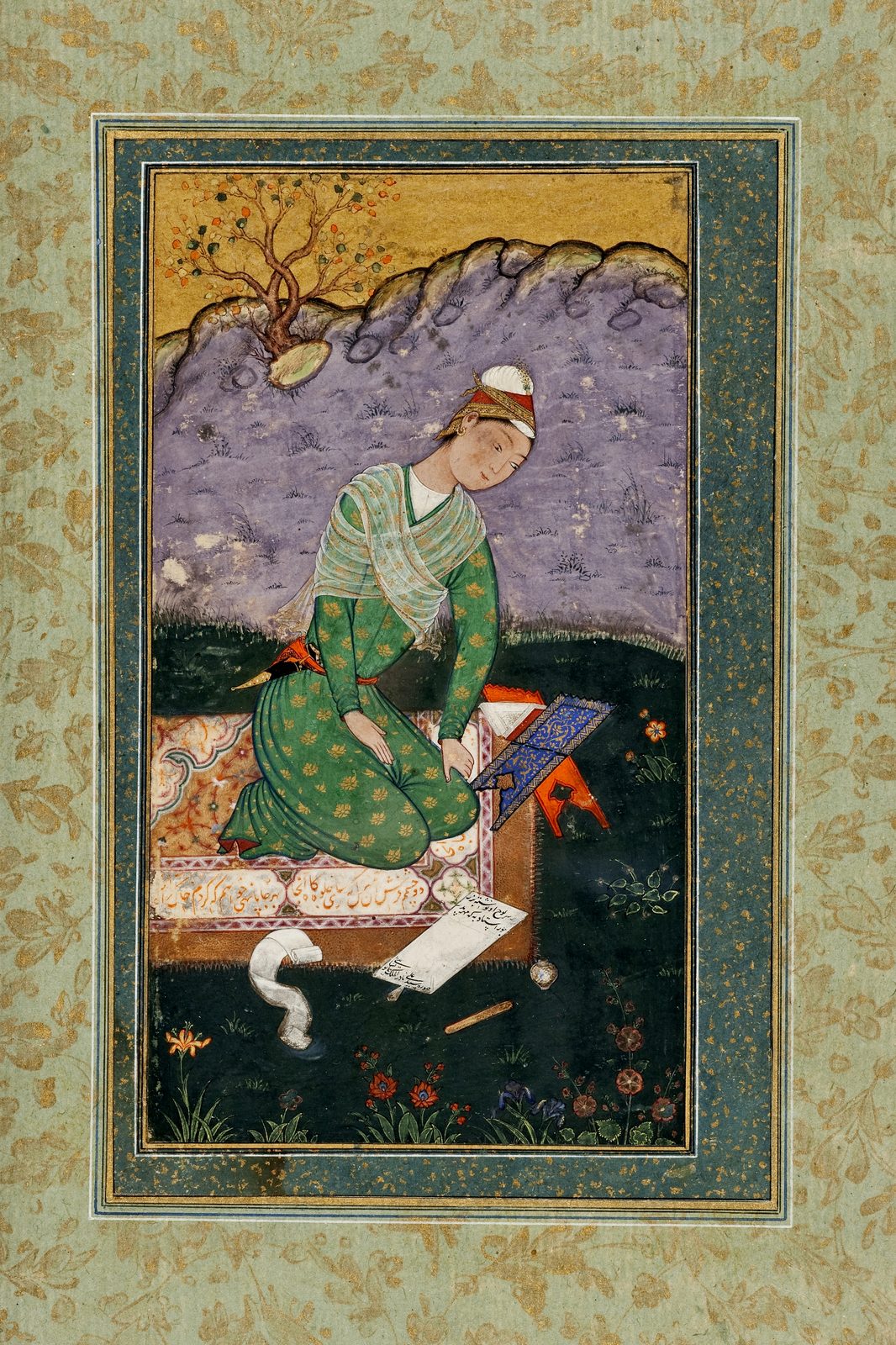
Before the reading there is an errand, and it takes one evening. Do it in a month when nothing is due. In the week before a decision has to be made, every piece of paper in the house looks like a sign; on a quiet Tuesday a piece of paper is only a piece of paper, which is the condition in which you want to handle this one. The errand is to find out what your family actually wrote down about the hour you were born, and to find it out honestly.
Most people have never looked. They have a number instead. It arrived through the air, from a mother or an aunt or a cousin who was told by somebody, and it has been repeated often enough to take on the finish of a fact. It may well be correct; you cannot say yet, because you have never asked where it came from, and there is a difference between a number you have and a number you can account for.
So, the drawer. Every family has one place where the documents live: a steel almirah with a key that only one person can ever find, a plastic folder holding the school leaving certificate and a wedding invitation from 1994, a cloth bundle at the back of a shelf. You are looking for three things, and you may find all three, or one, or none.
The first is hospital paper. A discharge summary, a case sheet, an old file with a nursing home's name printed on it, sometimes a slip handed over on the day with a weight and a time written on it. It is the paper closest to the event, and the likeliest to carry a clock time. The labour room register recommended by the health ministry has a line for the date and time of delivery. A few columns earlier, on the same line, it has another for the date and time of admission. Two times, one page. If the number your family uses was copied off a hospital document by a relative in a hurry, it is worth asking which of the two got copied.
The second is the municipal certificate, and one fact about it will save you an argument with a clerk. The birth report a registration is built from, Form 1 under the rules, asks the informant for the exact day, month and year the child was born. There is no line on it for the hour. Some states and some hospitals add a time of their own, so look at yours before concluding anything. But the certificate is built to prove a date, and across most of the country that is what it proves.
Which is still worth having: it settles the date, the place, and the fact of registration. Births are meant to be registered within 21 days, and where a birth happens in a hospital the head of the institution reports it, so the registrar's copy tends to outlive the hospital's. If the registration was late, that is information too. After 30 days it needs written permission and an affidavit; after a year, an order from a magistrate. An entry made under either came from somebody's memory months or years afterwards, and not from the ward.
Do not count on the hospital itself. The code of medical ethics that doctors here work under asks a physician to keep the records of indoor patients for three years. Three. If you were born in 1988, the file you are picturing stopped being anyone's obligation before you finished school. Many keep more than they must, so make the call; just do not build the evening around it.
The third document is the one people forget they own. A janma patrikā (जन्मपत्रिका), the horoscope your family had drawn up for you: a scroll, a stitched booklet, occasionally a folded sheet in a hand nobody in the family can now read. If yours exists, it is the most interesting of the three, and the one needing most care.
Two things about it. The time in it may not be a clock time at all. Older horoscopes record the birth as iṣṭa kāla (इष्ट काल), the amount of time that had passed since sunrise, counted in ghaṭī (घटी) and pala. A ghati is 24 minutes, and there are 60 of them in a day. A pala is 24 seconds. So "14 ghatis, 20 palas" is an exact statement, and it stays exact only as long as you know which sunrise it was counted from, which means the date and the place. Any competent practitioner can convert it. Nobody can convert it without the place.
The second thing is more delicate. The time on a family horoscope is not always a time anyone observed. These are often written up well after the birth, from what the household could remember, and where the reported time was shaky the astrologer may have settled on a figure himself. Astrologers have an old method for narrowing down an unclear birth time by working backwards from events in the person's life; whether it works is a question this essay is not taking up. What matters this evening is that the number may be a conclusion rather than an observation, and the scroll will not say which. If the person who wrote it is alive, that is one phone call.
Then the clock itself, which is duller and matters as much. Whoever wrote the time read it off something: a corridor wall clock, a wristwatch, in later years a phone. A wall clock in 1985 was as accurate as the last person who set it. People writing times by hand also drift towards round numbers, which has been measured in hospitals: recorded arrival and departure times cluster on the fives and the zeros. A birth written down as 4:15 may have happened at 4:13 or 4:19. Treat a tidy number as a number that may have been tidied.
Older records carry one more complication, easy to miss. Indian Standard Time came into force on 1 January 1906, and two cities went on keeping their own clocks for decades afterwards: Calcutta until 1948, Bombay until 1955, the Bombay clock running about 39 minutes behind IST. A birth in Bombay in 1950 was written down in the time that city was using, and a program today will assume otherwise unless told.
None of which is cause for alarm, and I am not asking you to become an archivist. An hour of doubt does move the edges of the long periods by months, which is why practitioners ask about the hour; ten minutes changes very little for most of the questions people bring. That arithmetic belongs to the people who do arithmetic. What follows from it for you is one habit.
Write the number down with its history attached. Not "15:40" but "about 3:40 in the afternoon, from the discharge slip, in my mother's handwriting". Or "somewhere between three and four, my mother's memory; she is sure about the light and unsure about the hour". The second sentence is not weaker than the first. It is more useful, because it tells the person across the table what they are allowed to lean on. A stated range is a fact. A false precision is not.
And if the search turns up nothing, write that down in those words. Nobody wrote it down. What can still be done from a date and a place alone deserves its own essay rather than a consolation paragraph here.
One side of one page
The paperwork is the smaller half. The other half is a page you write yourself, by hand, the night before, and it should fit on one side.
At the top, the decision in one line, with its two options and the date by which the world will decide for you if you do not. That line is the whole subject of bring a decision, not a fear, and I would rather send you there than compress it here. Underneath it, the birth data with its provenance, in the honest form described above.
Then three or four plain facts with dates on them, the ones the decision actually turns on. The offer arrived on the 9th. The lease ends in March. My father's operation is in the second week of August. Most people have never seen these in one place, and a fair share of the confusion was only the work of holding them in the head at once.
Then two sentences most people skip. What you have already decided, privately, even if you would deny it in company. And what would have to be true for you to change your mind about that. Write them for yourself; you are not obliged to show them to anybody. A person who has answered those two questions in their own handwriting is very hard to sell anything to.
What you leave at home matters almost as much. Leave the folder of screenshots: the readings from three apps, the forum thread, what the astrologer in your wife's family said in 2019. Bring one if a line in it genuinely puzzles you. Bring all of them and the hour becomes a comparison exercise, with your own situation left standing in the corridor. Leave the extra questions your family added on the way out; the hour is yours. Leave the expectation of a verdict, which nobody honest can give you; what an honest hour offers instead is a subject this series keeps returning to.
And while the papers are out: a birth time and place identify a person about as closely as a fingerprint. Keep the photograph on your own phone and out of the group chat.
Tonight's version of all this is very small. Find the drawer. Look at what is in it, rather than at what everyone has been saying for thirty years. Write one honest sentence about where your number came from and how much of it you would defend in front of a stranger. If that sentence turns out to be nobody wrote it down, then that is the sentence, and you should bring it in exactly those words.
Twice a week
Essays like this one, Tuesdays and Saturdays. One email per essay, and the archive is never mailed out. Subscriptions open shortly; the RSS feed is live now.
Nothing else arrives, ever.