Learning this yourself
An honest first year of study: the calendar before the chart, the arithmetic before the meanings, what month three feels like, and what a teacher is for.
Two ways in. The gist assumes you have never met any of this before.
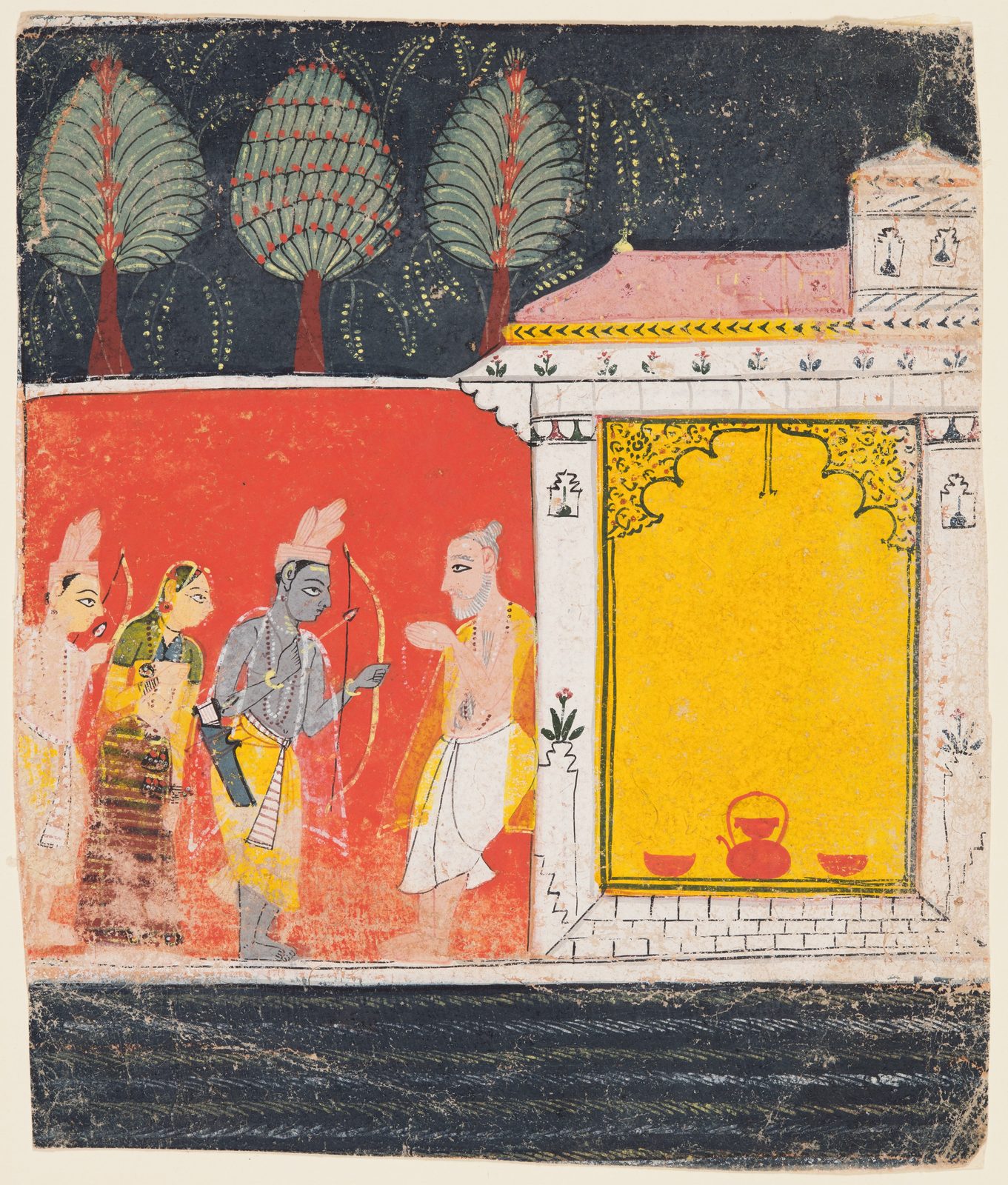
The first book most people buy on jyotiṣa (ज्योतिष), the old name for this whole field, gets chosen by the wrong test, and the wrong test is short enough to say out loud: does it tell me what things mean.
A shelf on the subject runs to about thirty spines, most of them cheaply printed, a few of them handsome, and the three you take down sort themselves in under a minute. The first is thin and confident and has a short chapter for each planet. The second has a photograph of a night sky on the cover and no tables in it anywhere. The third is a squat thing in small type, and when you open it there are columns of figures, a worked example about converting a date, and half a page of long division. The third one goes back. Of course it does. You came in to understand something about your own life, and that book appears to be about arithmetic.
There is a better test and it takes ten seconds, standing right there. Open the book somewhere near the middle. Does any page on the spread ask you to work something out? A table to read across, a date turned into a number, a division done and checked. If nothing in the middle of the book asks for a pencil, you are holding a dictionary of meanings. That is the pleasantest thing you can read in a first year, and very close to the least useful.
The reason is not that meanings are worthless. It is that they cannot correct you. Read that some placement makes a person careful with money, then think of your uncle, and you will find the carefulness, or you will find the exception that seems to prove the rule. Either way the book survives and you have learned nothing you could be graded on. Meanings fit forwards and backwards, and they fit best of all on people you already know.
The calendar does not behave like that. Neither does the arithmetic. Both of them will tell you, flatly, on a Tuesday evening, in front of nobody, that you have got it wrong.
So a sensible first year runs almost backwards from the usual order. It begins with the calendar and not the chart, and with the computation and not the doctrine.
Start with the pañcāṅga (पञ्चाङ्ग), the almanac. Buy the printed one for your region, the sort sold near a temple for the price of a bus ticket, and read one day at a time: the day you are actually standing in, at breakfast, before you have any use for it. What is in a panchang and how its columns work is Priya's subject rather than mine, and she has set it out column by column. What matters for the way you learn is duller than the content. A panchang is a sheet of statements that can be checked. It says a lunar day, which does not begin or end at midnight, finishes at 09:48 tomorrow, and either you can work out why or you cannot yet, and nothing about your sincerity will change the number. Read three months of days that way and you will have been corrected, quietly, several dozen times.
Then, one evening around the fourth month, do a piece of arithmetic with no meanings in it anywhere. Astronomers keep a plain running count of days, one number that no calendar argument can reach, and every ephemeris in the world agrees on it. Work it out on paper for the date you were born. Meghnad has done it forwards and backwards, so the method is there and the checking is the part that belongs to you. Then look up the same date in Horizons, the ephemeris service NASA runs at the Jet Propulsion Laboratory, which is free, needs no account, and does not care who you are. The first time your own pencil and a machine at JPL agree to the decimal, the subject stops being a rumour you have been reading about and becomes a thing you can do.
That is the shape of the work. What no syllabus mentions is what the work does to the person doing it, and that is the part people actually give up over, so it is worth saying in advance.
Somewhere around the third month you will become, for a while, insufferable. The vocabulary arrives all at once, which is what vocabulary does, and you can suddenly name the parts of a chart in front of people who cannot. You start asking friends for their birth times at dinner. You have opinions about software. None of this is a character flaw, and I am not going to be clever about it, because it has a plain mechanism: confidence tracks vocabulary, and vocabulary arrives long before judgement. You have learned the names of the pieces and you have not yet learned the size of the arguments between them.
Then, somewhere near the ninth month, if you have been doing the checkable work, something goes wrong in a useful way. You meet a disagreement you cannot close. Two programs put the same moon in different signs. Two respectable books begin the same planetary period on different dates. Two house systems give the same birth two different answers about where a planet sits. You will look for the right answer for about a week. What you find instead is that the disagreement is real, is old, is argued about by people who have read far more than you, and is not going to be settled by you this year. That week is worth more than the three months before it. It is the week you stop being a person who is learning the answers and start being a person who can see the shape of the questions.
There is no study I can give you for any of that. It is composite, assembled from watching people learn and from having been one of them, and the months in it are a rough shape rather than a schedule; plenty of people meet the ninth month in the third week. Take it as a description of a road, not a timetable for it.
One warning belongs here and gets one line, because it deserves an essay of its own: there is a point at which reading your own chart stops being study and becomes a way of checking whether you are all right, and this series will come back to it.
The teacher question
Can you learn this from books alone? Partly, and further than the people selling courses will tell you. But not all the way, and the reason is the one this essay started with. A book cannot mark your work. It cannot see the mistake you are about to repeat for four years, because the mistake will feel, from the inside, exactly like understanding.
That is the honest argument for a teacher, and there is a second one. A great deal of the practical judgement in this field was never written down: which rule yields to which when they point in different directions, how much weight a weak indication can carry, when to say nothing. That knowledge moves by paramparā (परम्परा), from teacher to student in a line, and it is a real thing rather than a mystique. It becomes something else the moment the line itself is offered as the reason to stop asking questions.
So, three plain things to want, none of them about lineage.
A teacher who gives you the reference. Not "this is what it means" but "this is in that chapter, go and look". Somebody who cites their sources is handing you the means to check them, and eventually to leave, which is what teaching is.
A teacher who teaches the computation and not only the conclusions. If the arithmetic is described as unnecessary for you, or as something the software handles, you are being trained to depend rather than to work.
And a course with a stated end. Ask what is in it and when it finishes. Open study, with the next stage always the one that will finally make the last stage usable, is not a syllabus. It is a subscription with a spiritual vocabulary.
Money here is simpler than it is in a consulting room. Charging for teaching is ordinary and honest, and good teachers are worth paying properly. What is not ordinary is a fee for secrecy, knowledge held in graded levels, each released on payment, where the thing you have already bought only becomes usable after the next purchase. I am not going to recommend a teacher, a school or a syllabus, and this house has nothing to sell you at this end of it.
What I can tell you is how little the first year needs to cost. A panchang is pocket money. The arithmetic is free. The nineteenth-century translations and handbooks are out of copyright and sitting on the Internet Archive, where The Indian Calendar of 1896, by Robert Sewell and Sankara Balakrishna Dikshit, will teach you more about how a Hindu date is actually built than any modern book of meanings will. Everything this blog computes, it prints the working for, which is the only reason I can point you at it without embarrassment.
Then go back to the shelf and pick up the book you nearly bought. Ask it the small question rather than the large one. Not: what will this tell me about my life. Only: how soon can this show me that I am wrong?
Twice a week
Essays like this one, Tuesdays and Saturdays. One email per essay, and the archive is never mailed out. Subscriptions open shortly; the RSS feed is live now.
Nothing else arrives, ever.