Kaal sarp: anatomy of a modern fear
A dosha the classical corpus does not contain, wearing borrowed serpent names. How a pattern anyone can spot in three seconds became an industry.
Two ways in. The gist assumes you have never met any of this before.
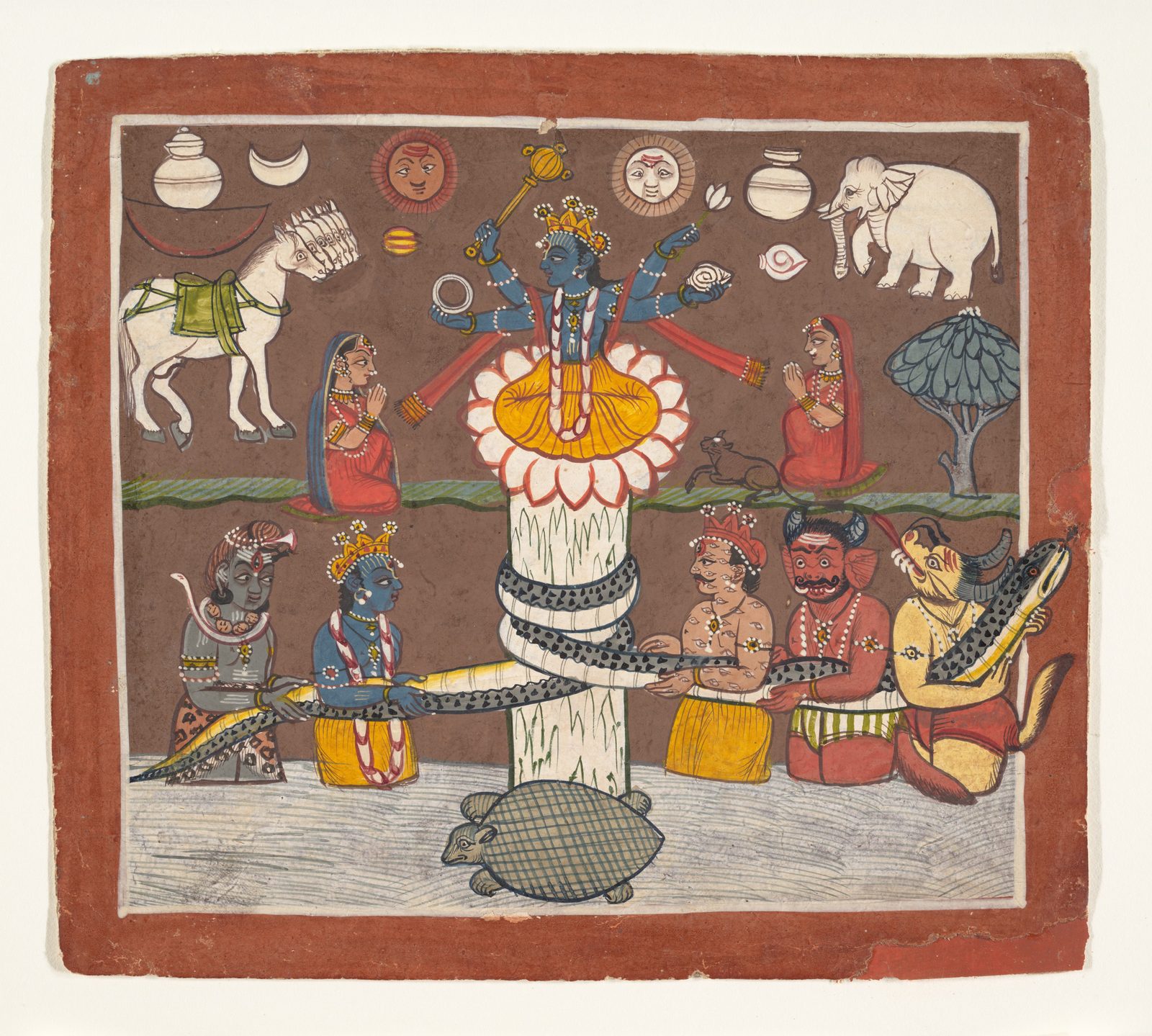
There is a fact about kāla sarpa (काल सर्प) doṣa that ought to be the first thing anyone tells you, and almost never is. Go through the standard classical corpus of jyotiṣa (ज्योतिष): Parāśara's Hora Śāstra, Varāhamihira's Bṛhat Jātaka, Kalyāṇavarma's Sārāvalī, Mantreśvara's Phaladīpikā. You will not find it.
You will find a sarpa yoga, and the collision of names deserves a paragraph, because it is where most of the defence gets made. Among the nābhasa yogas (Varāhamihira sets them out in the Bṛhat Jātaka, and the Parāśara material lists 32), sarpa is one of the two dala yogas: the angles occupied by malefics, the benefics sitting elsewhere. That is a statement about which planets fall in the kendras. It has nothing to do with Rāhu and Ketu, nothing to do with an axis, nothing to do with the arrangement now sold under a similar name. Same word, different object.
The modern article is this: all seven of the ordinary planets fall on one side of the line joining Rahu and Ketu. That is the whole test. No dignity, no lordship, no strength, no dasha: just which side of a line.
Why it travels
Consider what that structure gives a seller.
It is binary. Most of this discipline is graded and arguable, which is a nuisance if you are trying to move product. Here there is a yes and a no and nothing in between, and the yes can be delivered by a form that asks for a date of birth. The diagnosis needs no consultation at all. Only the cure does, and the cure is where the money sits.
It is visible. In the square North Indian diagram the axis is an actual line across the picture, and a person with no training can see for themselves that everything sits on one side. Fear you can verify with your own eyes outranks fear you have to take on trust, every time.
The name does the rest. Kāla is time and death. Sarpa is a snake. You do not need any Sanskrit at all to feel that, which is the point.
And the remedy trade was standing ready. There are twelve named varieties, sorted by which house the nodal axis occupies, and each comes with its own rite. Trimbakeshwar in Nashik (a Jyotirlinga at the source of the Godavari, an old and serious place of pilgrimage) has become the address for Kaal Sarp Shanti, and the puja now sits on the price list beside Narayan Nagbali, a rite of an entirely different kind, concerned with ancestors rather than with a pattern in a chart. Search the twelve types today and most of the first page of results is priests taking bookings. That is not an accusation, only a description of the page.
How common is the configuration? I do not know, and neither does anyone quoting you a figure. Here is the toy calculation and its correction, which is all I am prepared to offer. Seven bodies, one line: if they were scattered independently you would expect all seven on one side about once in 64 charts. But they are not independent. Mercury never strays more than about 28° from the sun and Venus never more than about 47°, so those three travel as a clump, and clumping makes lopsided arrangements substantially more likely than the coin-toss estimate suggests. The real rate is higher than one in 64. How much higher would need a proper count across a long ephemeris, and I have not run one. What I will say is that it is not rare, and that the pitch depends on you assuming it is.
If you have been told you have it, the useful response is neither relief nor alarm. It is one request: name the book. Not the school, not the lineage, not the guru: the book. Somebody who can name one is having a real conversation with you, and it may be an interesting one. Somebody who cannot, and who moves instead to the fee for the rite, has just told you which of the two of you the reading was for.
What the older books give the nodes
Rahu and Ketu are chāyā grahas (छाया ग्रह), shadow bodies. They are the two points where the moon's path crosses the sun's, which is why eclipses happen near them and why they were named for a swallowing. They have no disc. They are exactly opposite each other by construction, because two great circles drawn on a sphere meet at two opposite points and nowhere else.
Sit with that for a second. Every chart ever cast is cut in half by this line. Every one. The line is not a finding. The only question is where the other seven bodies happened to be standing when the picture was taken.
The classical writers do not ignore the nodes. They work them hard: results by house and by sign, conjunctions, aspects, and their own long stretches in the daśā (दशा) sequence (Rahu's 18 years and Ketu's 7, whose arithmetic Meghnad lays out in his piece on the vimshottari calculation). What the writers do not do, anywhere I have looked, is treat the arc between the two points as a cage, or attach consequences to one half of a chart being empty.
An argument from silence is worth exactly what the silence is worth, so let me be careful about the size of the claim. Texts omit things. Omission alone proves nothing. But this is not a marginal gap. The corpus is obsessive about combinations, cataloguing yogas by shape, by count, by ownership, many of them far more obscure and far harder to spot than a line with everything on one side of it. Writers who thought 32 nabhasa yogas worth naming individually are unlikely to have walked past the most visually obvious pattern a chart can produce. The silence here is loud in proportion to how loud the thing itself now is.
The date of its arrival I cannot establish. A decade invented to fill that hole would be worth about as much as the doctrine it propped up, so the hole stays. That is the more interesting question anyway: not when it appeared, but how anything appears. Texts accrete layers. Later material gets copied into older books and read back out again as though it had always been there. That process is Rukmini's ground rather than mine, and her piece on reading the Hora Shastra is where the case belongs.
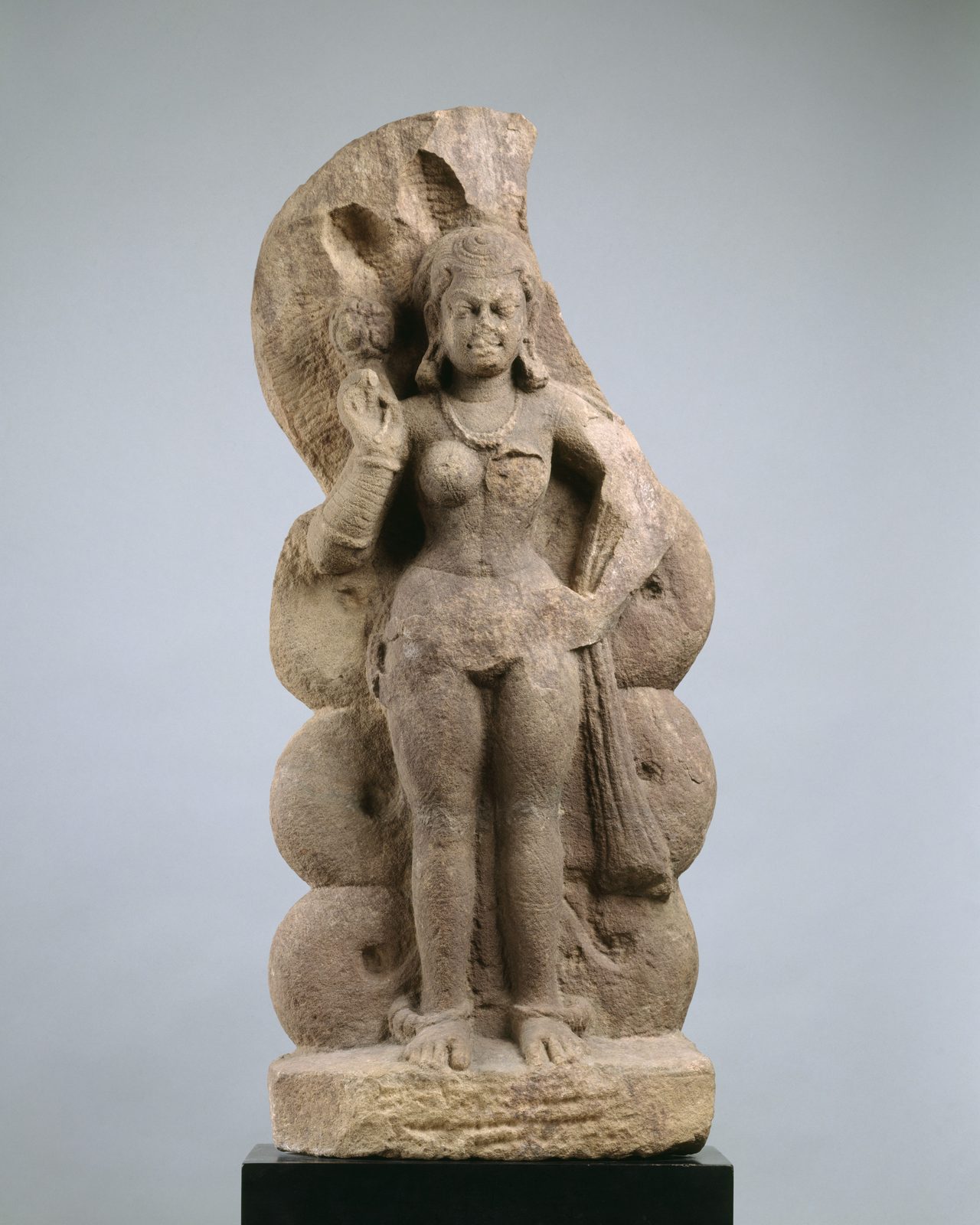
Those eight names are old. They belong to the great nāgas (नाग) of the Puranas and the epic, and they were carrying weight in this country long before anyone drew a line across a chart and charged a fee for crossing it: Ananta, Vasuki, Takshaka, Karkotaka, Padma, Mahapadma, Kulika, Shankhapala.
Twice a week
Essays like this one, Tuesdays and Saturdays. One email per essay, and the archive is never mailed out. Subscriptions open shortly; the RSS feed is live now.
Nothing else arrives, ever.