The first veto
A no given on chart grounds comes with its source attached. How to tell who announced it from who holds it, and what reopening the door costs.
Two ways in. The gist assumes you have never met any of this before.
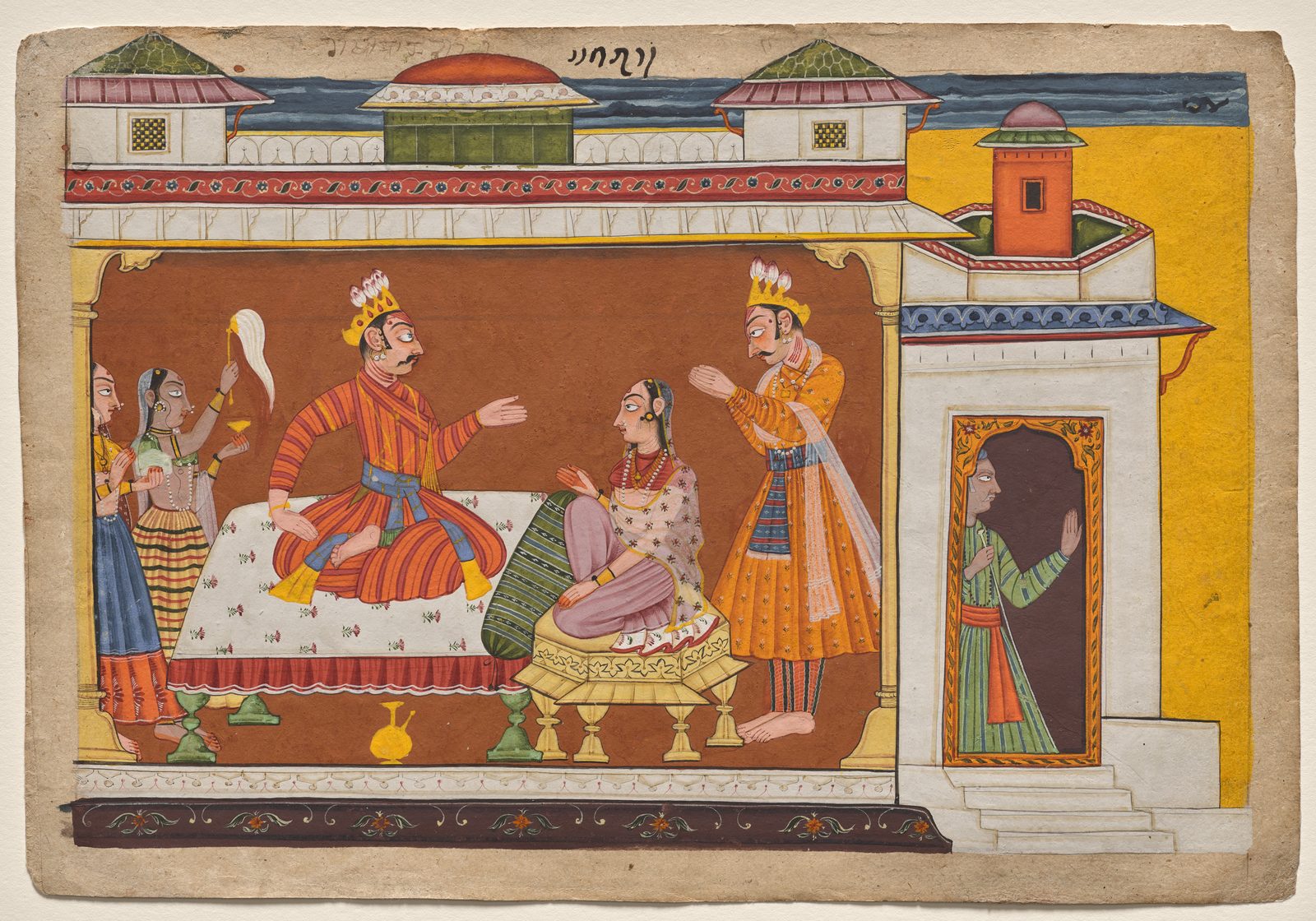
A no given on chart grounds arrives with its source attached, so nobody at the table has to own it. What that costs you is visible in the minute after it is said.
Take the minute as it usually goes. No particular family and no particular evening: this is roughly its shape in a house like the one I grew up in, and in a good many others.
The sentence is not addressed to you. Somebody says it to somebody else, across the table, while the dishes are being moved about. It has not matched. They are saying to wait until after the month turns. The horoscopes went across and it did not come out right.
Listen to the grammar of those. It has not matched. They are saying. It did not come out right. There is no person in any of them. Something has been reported, the way weather is reported, and the room takes it the way a room takes weather.
You say nothing, and nerves are only part of the reason. To object you would first have to make yourself the person being spoken to, and that is a bigger move than disagreeing. The sentence is phrased so that nobody has to answer for it.
Ninety seconds later the table is on to something else. The rice comes round again.
That speed is not coldness. It is an evening being protected by people who have decided the matter is closed and would rather it closed quietly. What it leaves you with, an hour later, is a refusal whose author you could not name if somebody paid you.
Somewhere in that house is the kundli (kuṇḍalī, कुंडली), the birth chart drawn up for you when you were a fortnight old. Until this week it was a keepsake. This week it was used.
So take the sentence apart before you take it personally.
There are three usual forms. One is a score: two sets of birth details go into the eight headings of guna milan (guṇa milāna, गुण मिलान), a total comes back out of a possible 36, and it has landed under whatever line this family uses. Nikhil has walked that grid heading by heading in thirty-six points, and what they actually weigh, and the arithmetic is his. One of those eight headings, bhakoot, can shut a match on its own, and he has called it the quiet veto. That veto is inside the arithmetic. The one in this piece is the kind a house imports and nobody signs. The second is a dosha (doṣa, दोष), a word that means fault or defect, named in a report and handed over with a page number somewhere behind it. The third is the calendar: the four monsoon months of chaturmas (cāturmāsya, चातुर्मास्य), in which weddings are traditionally not held, or the extra lunar month that some years carry, adhika masa (adhika māsa, अधिक मास), in which the same rites are put off.
Those three have one property in common, and it is not that they are false. None of them was produced in that room. Each arrived from outside the house, in writing or down a phone line, from somebody nobody present is going to contradict.
That is the useful fact of the whole evening. An imported reason tells you which door the answer came through, and doors have people standing behind them.
Who announced it, and who holds it
The person who tells you was chosen, usually by nobody in particular.
A household gives news to whoever can carry it with the least damage. The aunt you have never once fought with. The uncle who is on the morning train anyway. The parent whose job at that table has always been to say out loud what everybody has already agreed. Gentleness is why they were handed the sentence. It is not evidence that the sentence is theirs.
Asking who decided will get you nothing. Nobody answers that straight, and often nobody can. It happened in pieces over a fortnight, and no one person would recognise their own share of it.
Three smaller questions do the work instead.
Who knew before you did. The order in which a family is told is a fairly exact ranking of who counts in it, and somebody will let that slip on a different day, while talking about something else.
Whose words keep coming back unchanged. People relaying a decision paraphrase it. The person who meant it says the same six words every time, and by now the rest of the house is quoting them.
Whose face gets checked. Raise the subject in a room with four people in it and watch where the eyes go first. The holder of a veto is looked at before they speak.
You may not enjoy where the three of them point. It is often a grandmother whose disappointment nobody in the house is willing to risk. It is sometimes an uncle in another city with an old claim on the family. It is sometimes a parent who has not refused you anything in twenty years, and who has borrowed a reason because refusing you in her own voice is beyond her.
And sometimes the holder is not in your family at all. The other side said no first, for reasons of their own, and their refusal has been carried home and dressed in a chart so that nobody at your table has to tell you that you were turned down. That is more a mislabelled kindness than a lie. I would think twice before pulling the label off in front of everybody.
A veto, or a fear wearing one
At the table these two look identical. Across a fortnight they behave quite differently.
A veto has edges. Somebody will put a name to it. It can say what would have to change. It is willing to pay something to hold: an argument, a cousin's annoyance, a season of coldness. And it survives being asked about, because it was a position before it was a sentence.
A fear has no edges. Ask about it and the reason moves. The score, then the city, then the boy's mother, then the month, then the score again. The refusal itself does not move at all. Only its reason keeps changing seats.
One question tells them apart, and it belongs to an ordinary afternoon rather than to the table. If that part of it were all right, would we be going ahead? A veto answers with a condition. A fear answers with a story about somebody's cousin.
Neither answer is given in bad faith, and the fear is not the lesser of the two. What a parent is actually holding when they hold your chart I have been through in your chart, their hopes, and I am not going over it again here. Tonight's point is narrower. One of these wants terms. The other wants company. Run the wrong conversation and you can spend a month getting nowhere with somebody who already agrees with you.
What it would cost to change it
At the table, one sentence and no more. I would like to understand this properly, not tonight. Then eat what is in front of you, and let the evening close the way the room wants.
Then wait a week, possibly two. A no said in front of the whole family is expensive to take back the next morning, and every day that passes lowers the price a little.
Go to the announcer first, and go without an argument. Ask for directions instead. Who should I be talking to about this? That asks nothing of a person who was handed a sentence which was never theirs, and what comes back is a map.
With the person the map points to, do not ask for a reversal. A closed door reopens by asking for something smaller, not by winning the argument. Ask to see what was actually said rather than the verdict it turned into: which heading came out at zero, what the exact words were, who said them, in which week. Some of these evenings turn out to have no paper behind them at all, and finding that out changes the conversation more than any objection you could have raised at the table.
Then ask what would have to be true. A veto can answer that, and its answer is a price. The price is frequently smaller than the refusal sounded: a year, a meeting, one conversation with somebody's mother, a joining date moved by three weeks.
There is also the route the tradition keeps open for itself, and families use it constantly. Cancellations, a second reading, another month, another astrologer. It works, and it has a cost worth knowing before you spend it. If a better report is what reopens the door, you have agreed that reports get to decide, and you will have no grounds to object the next time one of them shuts.
The other sentence is harder to say and cheaper to keep. I want this, and I am asking you to trust me rather than the paper. It gives your family something to say yes to, which no rebuttal has ever done, and it leaves the document exactly where it was.
One more thing, because it is commoner than anybody admits. Sometimes the no lands and what you find underneath the anger is relief. The chart has refused something you did not want and could not work out how to refuse yourself. If that is where you are, handle it carefully. A borrowed reason works just as well in your hands as in theirs, and it costs the same later.
Some doors stay shut, and what a person does then is a longer subject than one evening.
Tonight ends the way these evenings end. The plates go into the sink, somebody turns the television up, and the room agrees to have had an ordinary dinner. Notice who stays behind in the kitchen, drying the same glass twice, in case you come in. Whoever that is has been dreading this evening for longer than you have.
Twice a week
Essays like this one, Tuesdays and Saturdays. One email per essay, and the archive is never mailed out. Subscriptions open shortly; the RSS feed is live now.
Nothing else arrives, ever.