Sade sati: a field guide
Saturn's seven and a half years over the natal moon. What the transit chapters actually say, and what to ask before you pay anyone for protection.
Two ways in. The gist assumes you have never met any of this before.
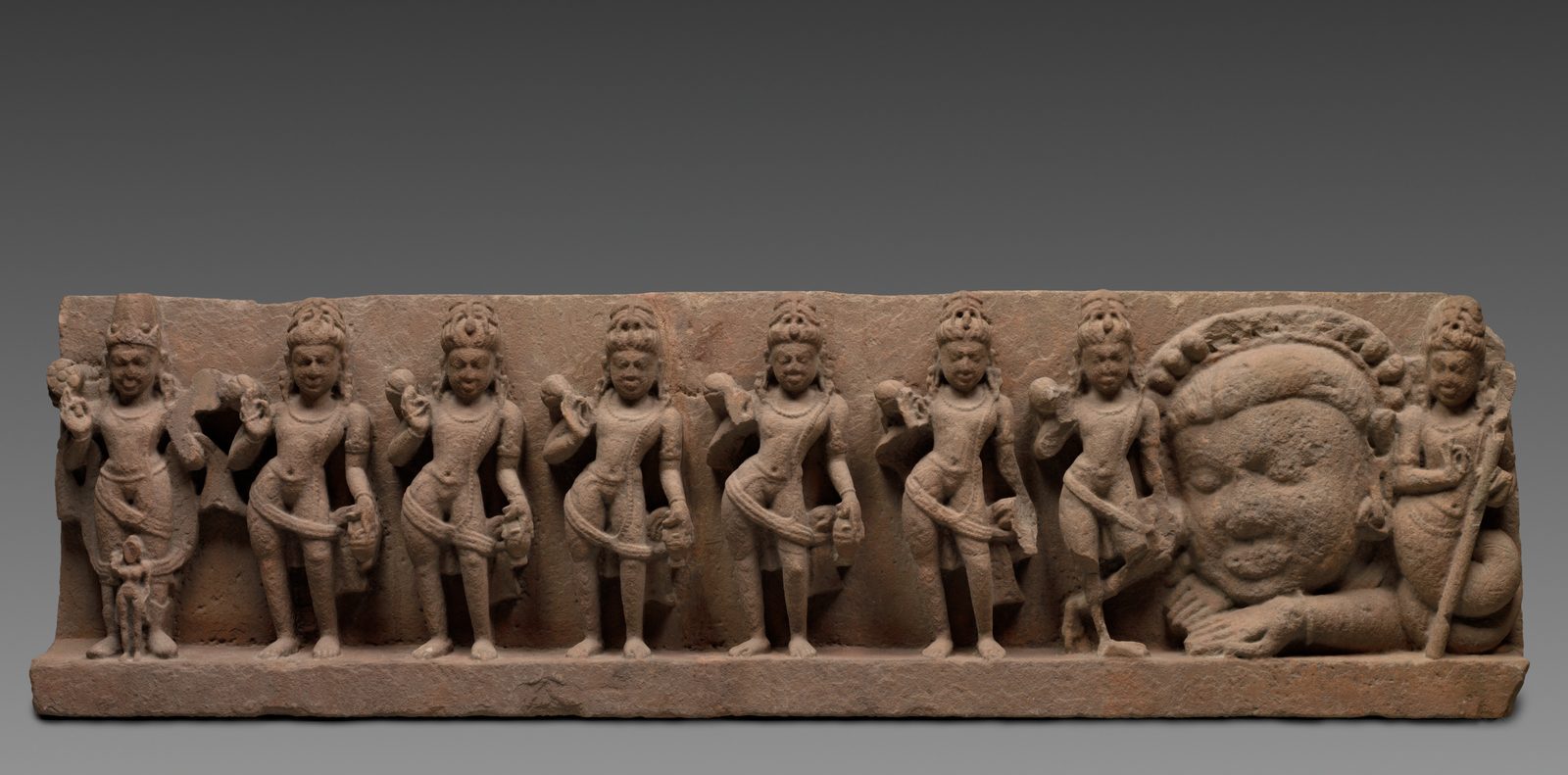
Sade sati is the stretch, about seven and a half years long, while Saturn crosses the sign before your natal moon, the sign holding it, and the sign after. What usually arrives first is not that. Here is a composite, assembled from versions I have watched more than once. A forward lands in the family group at half past eleven at night. Sade sati has begun for four moon signs; the next seven and a half years will test you as nothing has; here is a number to call. By breakfast someone has called it. By the weekend a payment has gone out, a puja is booked at a temple six hours away, and an aunt is asking everyone else whether they have checked their moon sign yet.
The transit is real. That is worth saying before anything else, because the temptation with a subject like this is to swing the other way and declare the whole business nonsense, which is neither true nor useful. Saturn is where the almanac says it is. It moves slowly. It will cross the sign holding your natal moon, and the signs on either side of it, and that will take roughly seven and a half years. None of this is in dispute.
The arithmetic is not complicated. Saturn's sidereal period is about 29.4 years. Twelve signs, so about two and a half years to a sign. The window is three signs wide: the one before your janma rāśi (जन्म राशि), the rashi itself, and the one after. Three times two and a half gives seven and a half, which is all the name means: sāḍhe sāt, a piece of vernacular counting rather than a Sanskrit technical term.
Two consequences follow at once, and the counter (my word for the trade that sells this, as distinct from the doctrine it claims to represent) mentions neither.
The first is that three signs out of twelve means one moon sign in four is inside the window at any given moment. Not one person in a thousand. One in four. Add the two-and-a-half-year passages over the fourth and eighth from the moon, sold as dhaiya or the small panoti, and five signs of twelve carry some Saturn label today. By the market's own rule, close to half the country is under one.
The second is that Saturn returns. Just under 30 years between visits means anyone who reaches 60 has already been through it twice. It is not a curse that singles you out. It is a hand passing a mark on a dial, about three times in a long life.
What the doctrine actually carries
Reading transits from the moon rather than the ascendant is old and ordinary. Gochara (गोचर) chapters in the standard texts (Mantreśvara's Phaladīpikā treats it, and the Parāśara material does too) work through each planet in each of the twelve positions counted from the natal moon, and mark the results good or difficult. Saturn in the twelfth, first and second from the moon sits among the difficult ones. That much the market reports accurately.
What it leaves out is everything the same chapters do next.
Classical gochara does not stop at the position. It applies vedha (वेध), obstruction: a result assigned to a transiting planet can be cancelled outright by another planet sitting in a specified counterpart sign. The system is built with brakes. A reading that gives you the position and skips the vedha check has given you half a rule and called it a verdict.
There is more apparatus behind that. The aṣṭakavarga (अष्टकवर्ग) scheme, set out at length in the Parāśara corpus, scores each sign for each planet, so that Saturn crossing a well-supported sign in your chart and Saturn crossing a poorly supported one are not the same event at all. The texts also make Saturn a particular kind of significator: age, labour, delay, endurance, the slow accumulation of consequence. A teacher with a heavy hand. Not an executioner.
So the doctrine offers a position, a set of cancellations, a scoring system that grades the position, and a temperament. Four things, and the market quotes one of them.
I want to be careful here. I am not claiming the classical writers thought Saturn's passage over the moon was pleasant. They plainly did not. I am claiming something narrower: the treatment is thinner, more conditional, and far less totalising than the seven-and-a-half-year sentence sold under its name. The number itself does the damage. A position with modifiers becomes a block of time, and a block of time can absorb anything you put into it.
The script
Follow the incentive. What does a fear have to be, structurally, to make a good product?
It has to be common enough to advertise. One in four qualifies, so the message can go to everyone and be true of a quarter of them, which is the closest thing to free targeting that exists. It has to be long. Seven and a half years is long enough that no honest person can say their window contained nothing bad. And it has to be unfalsifiable in both directions: hardship inside the window proves the affliction, and ease inside the window proves the remedy.
This is why the years get read backwards. Almost nobody notices sade sati while it is running. They notice it afterwards, when someone tells them they were in it, and then the period reorganises itself around the label. Any seven and a half years of an adult life will contain an illness, a bereavement, a job that ended badly, a relationship that did not hold. Handed a window that wide and a name for it, the mind does the rest at no charge. That is not credulity. That is how memory works on everybody, including me.
The script also needs a deadline, which is where the start dates come in. Saturn is retrograde for roughly 4.5 months out of every 12, so around a sign boundary it can enter, back out, and enter again: three defensible dates for one ingress, and the counter will use whichever one falls soonest. Worse, the boundary depends on the ayanāṁśa (अयनांश) your software uses, so two apps can put your moon in different signs and disagree about whether the window has opened for you at all. My colleague Meghnad has written about exactly that disagreement, and it is the single most useful thing to know before you accept anyone's dates.
Then weigh how much the reading is being asked to carry. When one transit is explaining the job and the marriage and the illness and the money all at once, it is no longer a reading; it is a single word laid over a life. Ankit has written about the trade that runs on precisely that move; his piece on fear as a business model covers ground I am not going to cover twice.
No one has ever sold a remedy by telling a customer their next seven years look ordinary.
The honest use of this transit is small and real. It says: for a stretch of years, the parts of life Saturn signifies (work, obligation, the slow things, the people who depend on you) will ask for more attention than usual. That is a planning input. Treat it the way you would treat a warning that a road will be under repair for a while: leave earlier, expect delay, do not sell the car.
If you are in the window now, you have almost certainly been in it before. Go and ask someone in the family who is around sixty what their thirtieth year was like. They will remember it as a year: a hard one, perhaps, with a name and a shape and things that came out of it. Not as a sentence. That is the correct size for this.
Twice a week
Essays like this one, Tuesdays and Saturdays. One email per essay, and the archive is never mailed out. Subscriptions open shortly; the RSS feed is live now.
Nothing else arrives, ever.