Believing a little
Between the aunt who believes everything and the friend who believes nothing there is a third place to stand: keep some of it, decline the rest, say so.
Two ways in. The gist assumes you have never met any of this before.
Believing a little is a position and not a stage on the way to somewhere else, and mine has not moved in years: I keep some of my family's astrology, I decline some of it, and the rest I have not settled and am not going to settle this year.
Here is the inventory, in case that sounds like a dodge. I know which star the moon stood in on the morning I was born, and I like knowing. I go home for the dates my mother keeps. I light my share of the lamps. I sit through the puja (pūjā, पूजा), the household prayer ritual, without reaching for my phone, and I am glad it happens. I have never had a chart consulted before making a decision, and I do not plan to start. I do not read anything in the morning that tells me about my day. When somebody at a wedding explains what my chart says about my temperament, I listen, and afterwards I change nothing.
That is not a compromise anybody negotiated. It is the actual shape of what I do.
Two people find it unacceptable, one from each side.
In a family like mine there is an aunt, and for her the matter is closed. She is not confused about what she thinks. She sends a message before seven in the morning about which evening I am expected, and a photograph of the sweets, and a reminder of the day I am supposed to be fasting. When I skip one of the fasts, she does not hear a fast being skipped. She hears the first line of a long departure: first this, then the dates, then a wedding held somewhere else, and then a grandchild she never gets to feed. That is worth understanding before you get irritated with her. What she is guarding is not a doctrine. It is the expectation that you will still be in the room in fifteen years.
The other pressure comes at a table where the bill has arrived and nobody has touched it. Somebody says, kindly, with a small laugh at the end of it, that I do not actually believe any of that. He is not being cruel. He thinks he is handing me an exit, and the exit is to say no, of course not, it is only family. Which is nearly true. I do not say it, because it is the kind of nearly true that costs a little more each time.
They want opposite things and they want them in the same way. Both would like the matter closed. Both read a small fact about how I spend a Tuesday evening as a large fact about the sort of person I am. And both reach for the same tool: one word.
What the word is doing
Believe has two jobs in English, and the jobs get mixed up.
The word did not begin as a word about facts. It comes down from an older Germanic word meaning to hold dear, to hold valuable, and it is a relative of the word lief, which meant dear or beloved. The sense we now reach for first, to accept a thing as true on the strength of authority or testimony, settles in later, in the 13th and 14th centuries. It won, and it took the word over. The older sense is still in there underneath.
The tradition's own word runs the same way. Shraddha (śraddhā, श्रद्धा) is usually put into English as faith. The standard Sanskrit dictionary opens its entry with trust, faith, belief, confidence, in that order. Trust comes first. Shraddha is closer to putting your weight on something than to judging a claim true.
None of this proves anything about the sky. Word histories are not arguments, and nobody ever won a disagreement at home with an etymology. It only shows that the word carries two loads. When my aunt asks whether I believe, she is mostly asking whether I am with her. When my friend asks, he is asking whether I would defend the claim against him in an argument. Those are two questions wearing one coat, and answering them differently is not lying.
There is also the plain fact that nobody holds anything at nought or at a hundred. When a weather service says 40 per cent, it is not sitting on a fence. It is telling you the odds that measurable rain reaches the point where you are standing, and you decide about the umbrella without first settling the deeper question of rain. You swallow a tablet whose mechanism you could not explain to a child. You trust a train timetable that was wrong last month. All day you act on partial confidence and it does not trouble you. Then a subject like this one comes up and the only two positions on offer are all and nothing.
I am comparing how strongly people hold a belief, not what the belief is about. A chart is not a forecast and I am not saying it is. I am saying the demand that a person be at nought or a hundred is a strange demand, and we do not make it anywhere else in adult life.
Keeping the calendar
That is the argument in the abstract, and abstractions are cheap. Here is what the middle actually consists of on a Tuesday: mostly a calendar, which is a smaller object than people take it for. A cosmology is a full account of how the universe is put together and what moves it. A calendar is a list of days that people you know are treating the same way.
You can keep the second without settling the first. Most people you have ever sat down to eat with are already doing exactly that.
In the house I grew up in, nobody once asked me what I believed. I was asked whether I had eaten, whether I had gone, whether I would be home on the day. Presence was the currency, and presence is a thing you can actually supply. The question "do you believe in it" reached me from outside the house entirely. It arrived in a hostel corridor, from somebody my own age, and it was shaped for a different kind of argument than the one my family was having.
A calendar is a coordination device. It is the mechanism by which a family scattered across four cities lands in one room twice a year. Turning up on the day is a statement about the people. It does not have to be a statement about the planets, and in my experience nobody at the door asks.
That is the generous version of partial belief. Now the part that keeps it honest, because the flattering version is the one that usually gets defended.
It goes wrong when the parts are chosen by whoever is in the room: devout at home, amused at dinner, embarrassed at work. That is not a position, it is audience management. It wears a person down, and nobody can help you keep it up. One test works: can I say the same sentence in both rooms. If I could not say, in front of the friend with the laugh, "I fast on that day because my mother does and I like the evening", then the arrangement is not honest yet, whatever else it is.
That test is what produced the two sentences I actually use. To the aunt: I do this one, I do not do that one, and it is not about you. Then the true reason for the part I keep, because there is one and it is usually her. I come for the evening. I like the house full. To the friend: it is my family's, I keep some of it, and I am not its lawyer. Said flatly, then on to something else. You are not required to defend a system you never signed, and you are not required to disown your people to prove you can think.
The other half of the rule is what I decline, and I wrote that down before it cost me anything. I keep the things that are cheap and shared: the dates, the lamps, the food, being present. I decline anything that would decide something for me. A chart that picks a job, a match, a person, a year I have to build around a window somebody else chose. Written in advance, when nothing is at stake, that line is easy to hold. Written in the week somebody is actually asking, it bends. Ankit did the same exercise for the company and published the results, on the grounds that a refusal is worth little unless it is on record before the pressure arrives: the refusal list. A household version is smaller. Mine is four lines in a notebook and nobody has ever seen it.
One thing my rule does not cover. If the keeping starts running you, if the day cannot begin until something has been checked and then checked again, that is a different subject and Raman has written it properly: astrology and the anxious mind. Believing a little is not a treatment for that and I am not offering it as one.
Neither the aunt nor the friend is owed a verdict, and this is worth saying straight out, because the pressure from both sides is real and what it is mostly pressing for is a declaration. Refusing to declare is not the absence of a position. It is one, and it is available to you at 22, and it costs less than either of the things being offered.
The question worth putting to yourself, then, is not which of the two is right about the sky. It is which of them you are more afraid of disappointing, and whether that fear has been choosing for you.
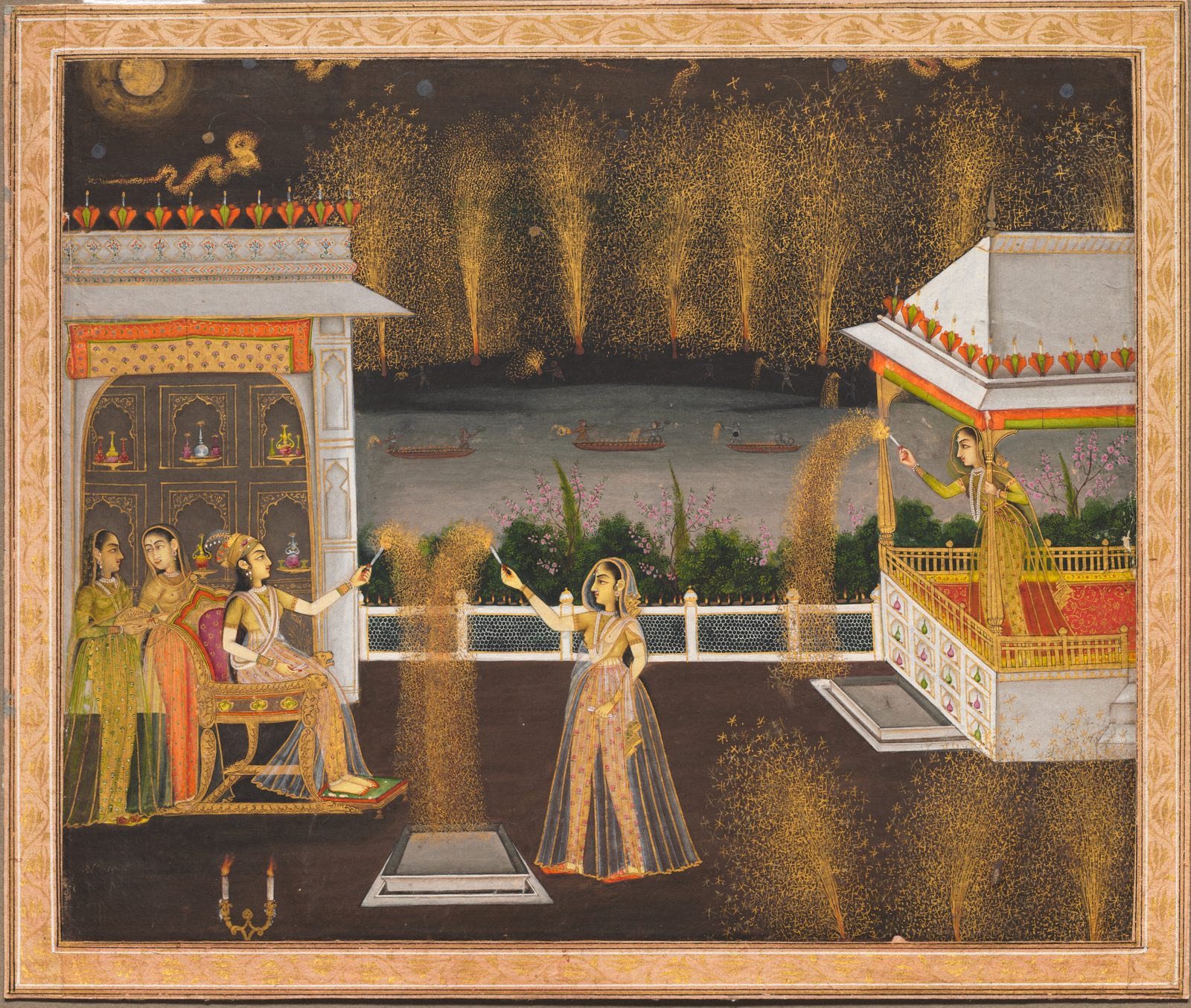
When the evening comes, the lamps along our wall get lit by whoever is standing nearest. Four people, no order, one matchbox going backwards down the line. Nobody has ever asked the person beside them what they think it does.
Twice a week
Essays like this one, Tuesdays and Saturdays. One email per essay, and the archive is never mailed out. Subscriptions open shortly; the RSS feed is live now.
Nothing else arrives, ever.