Disagreeing with your chart
A reading is a person's judgement, not the sky's verdict. What your objection is addressed to, and how to say it while the hour is still running.
Two ways in. The gist assumes you have never met any of this before.
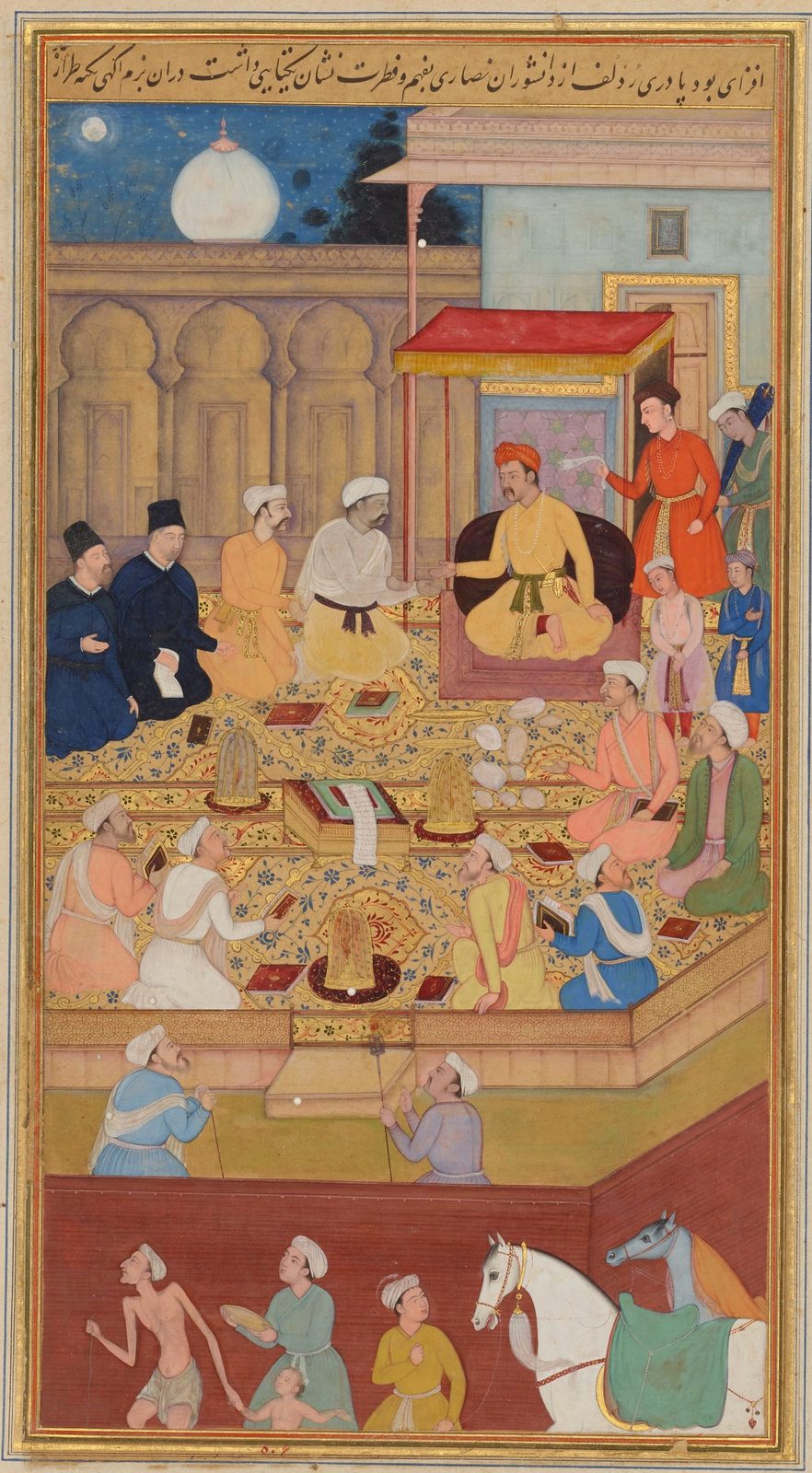
You are allowed to disagree with a reading about you. Out loud, in the hour you are paying for, with the person who gave it sitting a metre away, and without either of you having to settle first whether jyotiṣa (ज्योतिष) works at all. The permission is not a sceptic's concession handed down to a believer. It comes out of what a reading is.
It does not feel allowed, and the reasons are ordinary enough to name. The man across from you has spent years inside a difficult system and you have spent twenty minutes in his room. You are the one who booked, which quietly makes you the one who came to be told. And most of us were raised to think it discourteous to contradict somebody taking trouble over us, particularly when the trouble is being taken about our own life. So the objection stays where it started. It goes home in the car, and at nine in the evening it is finally said, at full volume, in a kitchen, to a person who was not there and cannot answer it.
Consider what you would be contradicting. Part of a reading is arithmetic. Where each planet stood at a given moment follows from a date, a time and a place, by rules anybody can run, and two people with the same inputs and the same settings either reach the same numbers or one of them has slipped. Meghnad has followed that computation to the point where it stops, and it stops a long way before anybody says anything about your marriage.
Past that point somebody is reading. A person looks at an arrangement of positions, weighs it against what he was taught and against the other lives that have been described to him, and produces a sentence about yours. That sentence is a judgement. The sky did not make it. It was made by a human being, inside a tradition, on a Tuesday, about somebody he met forty minutes ago. Judgements can be answered. That is not a weakness in them. It is what separates a judgement from a measurement, and it is the whole of your permission.
Which makes the chart says a phrase worth slowing down at, since a chart does not say. It is a set of positions, and positions have never told anybody anything. Every sentence attributed to one has come through a person, and so has the rule that person used to get there.
Which of the three you are arguing with
Three things stand between the sky and the sentence that landed badly, and picking the right one is most of the courtesy.
The first is the inputs and the sums. Two towns share a name and he has taken the wrong one, or your hour went in as 13 rather than 3, or a setting in his software puts your moon one sign along from where another program puts it. Ask. It takes four minutes, and it is the only disagreement of the day that ends with one of you plainly right.
The second is the rule he applied to those numbers. Rules belong to schools, and the schools have disagreed with one another for centuries about where to count the zodiac from and where the boundaries of the houses fall. That argument is real and it is not yours. You have not read the books, and an hour you are paying for is a poor place to start. What you can do is ask which school he works in and what the other one would say about the same chart. An honest answer to that is worth more than the argument would have been.
The third is his judgement about your life. Nearly all real disagreement lives here, and here you hold something nobody else in the room holds, which is that you were there.
Say he describes the last three years as a stretch that rewarded keeping hold of what you already had rather than reaching for anything new. In those three years you left a marriage, moved cities and started something with no money behind it. What you have is not an opinion about his description. It is evidence against it, and it deserves to be handed over in that form.
The other case is the uncomfortable one. The description fits, and you would rather it did not. On the day you may not be able to tell which of the two you are standing in, and neither can he. There is a rough sort, and it is the only one I trust: try to write the objection as a sentence with a date in it. If a date comes, you have evidence. If none will come, you have a report on how the sentence landed, which is still worth saying, provided you say it as that. That does not sound like me, and I notice I have nothing to put against it.
Say it when it arrives, not at the end. An objection produced in the last four minutes of an hour is not an objection, it is a review, and reviews are for friends. Kept back, it also changes character while it waits. It goes in as a remark about a sentence and comes out, an hour later, as a remark about the man.
And hand him material rather than a verdict. Not that is wrong, which is a wall, but that does not match the years I remember, and here is what happened in them, which is something a thinking partner can work with. If he is any good he wanted it half an hour ago. He has been describing a stranger and reading your face for whether he is anywhere near.
What comes back
The half minute after you speak is the most informative in the hour, and there are only three moves in it.
He can take it, and either adjust the reading or say plainly that it does not fit and he cannot account for why, which is an honest thing to be able to say out loud. He can tell you that your not seeing it is itself part of the picture. Or he can treat the disagreement as a fault in you: pride, or resistance, or not being ready to hear it.
The middle move deserves care, because it is not automatically dishonest. People are genuinely the last to know some things about themselves, and a description you reject on Tuesday can be one you accept in a year. That happens between old friends and it is not a swindle when it happens here. So the question is not whether the sentence was uncomfortable. It is whether anything you could have said would have counted against it, and you may ask that out loud, in an ordinary voice. If this were not true of me, what would I be telling you now? Somebody who has trained for years can answer that, because real skill has limits and he knows where his own sit. A claim that converts every counter-example into further support for itself has stopped being a claim about you.
None of this asks you to stop believing anything, which is the part people find hardest to credit. You can take the field seriously, pay the fee without resentment, thank him at the door and mean it, and still refuse one sentence about your own marriage. Those states sit together without strain. The books are stranger about this than the room is: a Sanskrit treatise will set out the opposing view first, in its own voice and at something like full strength, before the settled answer arrives, and the name for that objection, pūrvapakṣa (पूर्वपक्ष), means the prima facie view, the first objection raised in a discussion. A tradition that always makes room for the objection first can survive one more, yours, in a paid hour, about your own life.
There is another half to the permission, and skipping it costs you. Agreement given cheaply is worth nothing to either of you. If you nod at every sentence, your nod carries no information, and the person opposite is working blind, taking your politeness for recognition and building the next twenty minutes on it. Your yes is only useful because your no was available. And if you find you are contradicting everything from the fifth minute, before he has had the chance to be wrong about anything, it is worth asking what you walked in wanting confirmed.
Most disagreements in a consulting room are never settled, and that is a proper ending rather than a failed one. You said it, he heard it, neither of you moved, and the hour was still worth the money. A description you do not accept costs you nothing once you are through the door. What costs you is agreeing in the room to keep things pleasant, which is done with the face rather than the mouth, and then living for a year beside something you never actually accepted.
Then the ending where the room cannot hold it. Every objection comes back as further proof of the thing objected to. Or the disagreement is answered with a price: the description hardens into a defect, the defect arrives with a fix, and the fix is available this evening from the man who found it. The hour has become a different transaction by then, and the exits are set out separately. Leaving is not a verdict on jyotisha, and it need not be a verdict on him. It is the plain recognition that a conversation in which only one of you is permitted to be wrong is not a conversation.
Somewhere behind you is a sentence somebody with standing said about you, which you did not accept and let stand anyway. It has kept. Most of them do. The only difference between that sentence and the next one is that the next one will be said in a room you are paying for, with the man who said it still in his chair. Nothing in that room requires your agreement.
Twice a week
Essays like this one, Tuesdays and Saturdays. One email per essay, and the archive is never mailed out. Subscriptions open shortly; the RSS feed is live now.
Nothing else arrives, ever.