Asking about money first
Why the fee is easy to ask about at a dentist's counter and hard here, how to ask before you book, and what an evasive answer is actually telling you.
Two ways in. The gist assumes you have never met any of this before.
The price of an hour with an astrologer is the one number in the errand that nobody says out loud, and both people keep the silence, usually until the hour is over and somebody is standing in a doorway with a wallet in his hand.
Your half of it is mostly drafting, done in a few minutes on a Tuesday night. You have a name from a cousin who used him last year, and you open a message to ask what an hour costs. Typed alone, the question looks blunt. So you add who sent you, then a line about your situation. By the third draft it is buried in the middle of a paragraph where a busy person could miss it, and you arranged that without meaning to. Then you delete the message and ask the cousin instead, who tells you what she paid in 2023. Or you skip the asking, and at the end of the hour there is a small ugly minute in which a number has to be said out loud, and it is not going to be said by you.
At a dentist's counter none of that happens. What does the root canal cost: asked flatly, answered flatly. In a shop you ask the price of a shawl, then ask again in the tone that says the first answer was not serious, and the shopkeeper is not wounded; that exchange is what you both came for. Almost every trade in this country expects to be asked. This one does not, and the reasons come apart in the hand.
Notice which money questions are easy: the ones you put to somebody who is not the person who will be helping you. At a clinic the fee is settled at another desk, by somebody who will not be examining you. The separation works both ways: the person about to help you never has to name a price for his own attention, and you never have to bargain with somebody you are about to trust. An astrologer's room has no second desk. One man holds the counsel and the cash box, often in his own front room, so your question lands in the middle of something that feels like a kindness and makes you, out loud, a customer.
Underneath that sits an older arrangement which has not entirely left. What was handed over at the end of a rite, or of a course of study, was dakṣiṇā (दक्षिणा), which Monier-Williams renders as the fee or present made to the officiating priest. No board on the wall, no figure fixed in advance; the size of it sat between two people who could see each other. Ankit has written the seller's half of what becomes of that once the two are strangers at either end of a website, in how we set a price. The buyer's half stays in the body: a price feels like the wrong shape of thing to ask such a person for, and asking marks you as somebody who came to buy rather than to be taught.
Then the last one, which is real and which I will not talk you out of. What you are booking about is your mother, or your marriage, or the year you have just had. Asking the price sets a figure beside those things, and worse, concedes that there is a figure above which you would not pay. Nobody wants to meet that number about themselves at eleven at night with a booking form open.
Set the three side by side and notice what they share. Every one is about you. Not one is a fact about the man you are about to pay, and he was supposed to be the subject of the question. So let it shrink back to the dull size it deserves.
The dull version
Ask in writing, before you book, in whichever channel you found them through. Writing lets you be short without sounding cold, and lets the other side reply with a number and nothing else. Two sentences do the work. What does an hour cost, and what does a follow-up cost. Is anything charged separately.
Ask before you have handed over anything of your own. Once your birth details have gone across, or you have been listened to kindly for four minutes, a small debt of politeness exists on your side. A question that cost nothing at ten in the morning is slightly rude by ten past.
Do not explain why you are asking. An explanation invites reassurance instead of a number, and reassurance is what you are trying not to buy at this stage. Do not soften it with we can settle that afterwards, either. Afterwards is the whole problem.
Ask even when you think you know: your cousin's figure was quoted to a different person on a different day. Ask again yourself if a relative booked for you, since a fee arranged inside a family goes unexamined longest, everybody in the chain being generous with somebody else's discomfort.
What a clean answer sounds like
It comes back quickly, and the speed matters more than the size. A man who has said his number a few hundred times says it the way a conductor says a fare. It is a figure. It says what the hour includes. It arrives without a question back about how serious your matter is. And it is the same figure a week later.
A price that varies can be honest, so long as the variables are named first and there is a ceiling on them. An hour is this much; past 90 minutes it is that much; nothing else. It depends on the case names no variable, and leaves the case to be weighed by the man who is paid for weighing it.
A lower fee for people who cannot pay is honest in the same way, if it is announced in advance and to everybody. A discount that appears once you have described your circumstances is a price fitted to you while you talk.
Three ways of not answering
The sentences below are patterns rather than quotations: I have written the wording myself. The shapes are common enough that you will recognise one.
Blessings cannot be priced. Give whatever you feel is right. In plenty of mouths that is sincere. Here is what it does anyway. It moves the pricing from before the hour to after it, and from the person who knows what an hour of his attention is worth to the person who has just spent one. Look at the conditions you will do that arithmetic under: on your feet, grateful or shaken, somebody waiting behind you. It also turns the payment into a statement about how much you valued what you were told, an examination you never agreed to sit. And a stated price has handles on it: that is not the number in your message. Nothing handed over in a doorway has any.
Give what you feel. Most people give around so much. That is the same sentence with a figure standing beside it, and both halves are working. The freedom is what stops you arguing with the figure; the figure decides the answer. Tversky and Kahneman tested how hard one number pulls at the next. People watched a wheel stop on 10 or on 65, then guessed what share of United Nations countries were African. Those who saw 10 came in at about 25, those who saw 65 at about 45, taking the middle guess in each group (Science, 1974). That wheel was visibly arbitrary. A figure named by the man you are about to pay is not, and going below it has been quietly converted into a verdict on his hour rather than a fact about your bank balance. Treat the number as the price, because it is the price.
Let us look at the chart first, and then we can decide. The shortest of the three to judge. A fee settled after the chart is open can respond to what was found in it, and nothing else in the hour stands up straight once that is possible. What a fee should track, and what it must never track, is set out in how to choose an astrologer.
Now the part that stops this becoming a hunting guide. A good number of vague answers are not extraction. They are embarrassment, arriving from the same place as yours, and there is more of it among older practitioners, who learned the work in houses where money was handled by an uncle and never mentioned in the room. The first answer will not tell you which sort of person you have reached. The second one will.
So ask twice, and make the second ask easy to answer. I understand. What do most people pay for an hour, and what would you like me to pay? That hands an awkward man a number to say. Honest vagueness collapses into a figure inside one exchange, usually with relief. Managed vagueness comes back with a compliment, or with a short teaching about attachment to money. You asked something with a checkable answer and were handed something that cannot be checked, and that substitution rarely stays confined to the fee.
A person can be hopeless about money and good at the work, so none of this is a verdict on anybody. The fee is only the earliest thing you can know about him, and it costs one message.
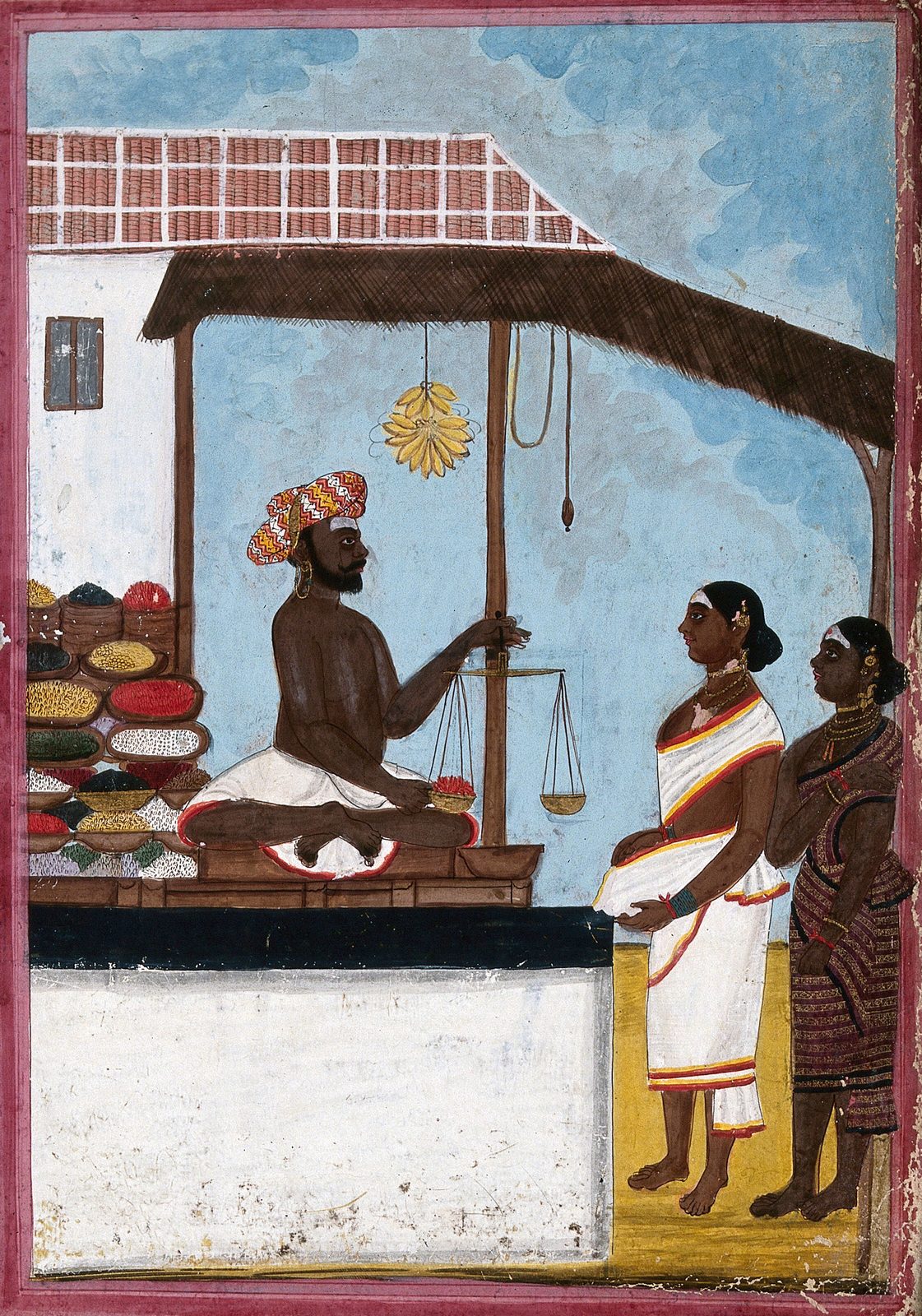
There is a version of this trade that manages none of it. The seller sits in the open with his goods in front of him, holds the balance up where you can both watch the beam settle, and says the figure while your hands are still empty. Nobody there is being crude about money; they are being ordinary about it, and the ordinariness leaves either of them free to be generous afterwards.
Two lines, then, tonight, before you have said a word about your mother. If what comes back has everything in it except the number, you have learned something about the hour you were about to book, and you still have your evening.
Twice a week
Essays like this one, Tuesdays and Saturdays. One email per essay, and the archive is never mailed out. Subscriptions open shortly; the RSS feed is live now.
Nothing else arrives, ever.